
What is Business Collaboration? Types, Benefits, and Best Tools
Business collaboration is about making connections in and out of your company to spark creativity, tackle problems, and hit those shared targets. The recipe for successful collaboration is simple – be open, honest, and productive in your communication, so everyone wins!
What Business Collaboration Looks Like in 2026
Business collaboration today is still about shared goals and open communication, but it increasingly runs on integrated digital workspaces where teams talk, meet, document, and track tasks in one place. Instead of juggling many separate tools, companies are standardizing on single collaboration platforms (like TrueConf, Microsoft Teams, Slack, etc.) that connect chat, video, documents, and workflows.
Modern research shows that teams using unified platforms reduce context switching, lower the risk of miscommunication, and speed up project cycles. The key is not which tool you pick, but how you structure collaboration around projects, roles, and data, rather than around scattered channels.
When collaboration is done well, companies typically see:
- faster decision-making and project delivery;
- fewer approval loops and information gaps;
- higher employee engagement and transparency.
Quick Reference: Collaboration Types at a Glance
|
Type |
Primary Goal |
Key Participants |
Typical Tools |
|---|---|---|---|
|
Internal Collaboration |
Align teams within one organization |
Departments, project squads |
Slack, TrueConf, Microsoft Teams |
|
External Collaboration |
Share insights beyond company walls |
Clients, vendors, freelancers |
melp, shared workspaces, email |
|
Strategic Alliance |
Pool resources for mutual growth |
Independent companies |
Proposal software, joint roadmaps |
|
Joint Venture |
Create new entity for specific objectives |
Two+ companies forming new legal entity |
Governance frameworks, shared P&L |
|
Network Collaboration |
Exchange knowledge across professional communities |
Individuals, thought leaders |
Social platforms, forums, blogs |
|
Supply Chain Collaboration |
Optimize end-to-end product flow |
Suppliers, manufacturers, 3PLs, retailers |
Integrated ERP, real-time data platforms |
|
Technology-Based Collaboration |
Enable seamless remote/hybrid work |
Distributed teams |
Cloud platforms, video conferencing, AI assistants |
Best Business Collaboration Tools
Choosing the right platform depends on your team’s size, security requirements, and the way people actually work day to day. Below are five tools that cover the most common collaboration needs in 2026.
TrueConf
TrueConf is a self-hosted video conferencing and corporate messaging platform built for organizations that need full control over their data. It supports up to 1,500 participants per conference and combines chat, file sharing, and meeting rooms in a single on-premises or hybrid deployment. Because it runs inside your own infrastructure, it is a strong fit for regulated industries such as banking, healthcare, and government. A free tier (TrueConf Server Free) covers teams of up to 1,000 users for chat and one-on-one calls, with 10 PRO users for group video conferences.
Best for: enterprises with strict data sovereignty or compliance requirements.
Take your team communication to the next level with TrueConf!
A powerful self-hosted video conferencing solution for up to 1,000 users, available on desktop, mobile, and room systems.
Microsoft Teams
Microsoft Teams is tightly integrated with the Microsoft 365 suite, making it a natural choice for organizations already using Outlook, SharePoint, and Office apps. It covers chat, video meetings, file co-editing, and project channels in one place. Because it is included in most Microsoft 365 business plans, Teams often comes at no additional cost for companies already in that ecosystem.
Best for: organizations running on Microsoft 365 who want a unified workspace without adding another vendor.
Slack
Slack is a channel-based messaging platform with one of the largest third-party app directories available. It excels at fast, structured communication across teams and integrates deeply with developer tools, CRMs, and project management software. Lightweight audio and video are available through Slack Huddles, though for heavier meeting workloads most teams pair Slack with a dedicated video tool.
Best for: developer teams, async-first cultures, and companies that rely heavily on tool integrations.
Notion
Notion combines a document editor, wiki, and project database in a single flexible workspace. Teams use it to build internal knowledge bases, track projects, and document processes — all without switching between apps. It is highly customizable through templates and linked databases, which makes it popular with product and operations teams that need structured information, not just a chat feed.
Best for: knowledge-intensive teams that prioritize documentation, wikis, and project visibility over real-time messaging.
Zoom
Zoom remains one of the most widely used video conferencing tools globally, known for its reliability and ease of use. Beyond standard meetings, it supports large webinars, AI-generated meeting summaries, and an expanding workspace suite (Zoom Workplace) that now includes chat and document collaboration. Its free tier allows unlimited one-on-one calls and group meetings up to 40 minutes.
Best for: teams that run frequent external meetings, webinars, or large-scale online events.
How to Choose
|
Your priority |
Recommended tool |
|---|---|
|
Data sovereignty and on-premises control |
TrueConf |
|
Already invested in Microsoft 365 |
Microsoft Teams |
|
Developer workflows and app integrations |
Slack |
|
Internal knowledge base and documentation |
Notion |
|
Webinars and large external meetings |
Zoom |
Why Collaboration Drives Measurable Business Outcomes
Employee engagement rises when collaboration is intentional. Teams that use structured feedback loops and shared goals report up to 18% higher sales productivity. When employees feel connected to outcomes—not just tasks—they contribute more creatively and consistently.
Learning accelerates through cross-functional exposure. Collaboration enables organic skill transfer: a marketer learns data basics from analytics peers; a developer understands customer pain points from support teams. This collective upskilling reduces dependency on external training and speeds problem resolution.
Workflow efficiency improves when handoffs are automated. Digital collaboration platforms reduce manual coordination by triggering approvals, syncing data across tools, and surfacing dependencies before they become blockers. The result: faster cycle times and fewer rework loops.
These types make up the overall collaboration:
- Business collaboration: a key aspect of outbound lead generation where companies join forces to share resources, knowledge, and skills. This results in new products, improved efficiency, and a wider market reach. It can usually be achieved by using email outreach tools, AI-powered prospecting platforms like Artisan, mutual connections, or networking events.
- Academic collaboration: when companies and academic institutions team up, knowledge and research get shared. This collaboration not only leads to innovative solutions and transforms academic research into real-world products but also provides opportunities for practical learning.
- Government collaboration: help from the government can be presented to your team through things like funding programs, setting up rules, or even providing platforms for collaboration.
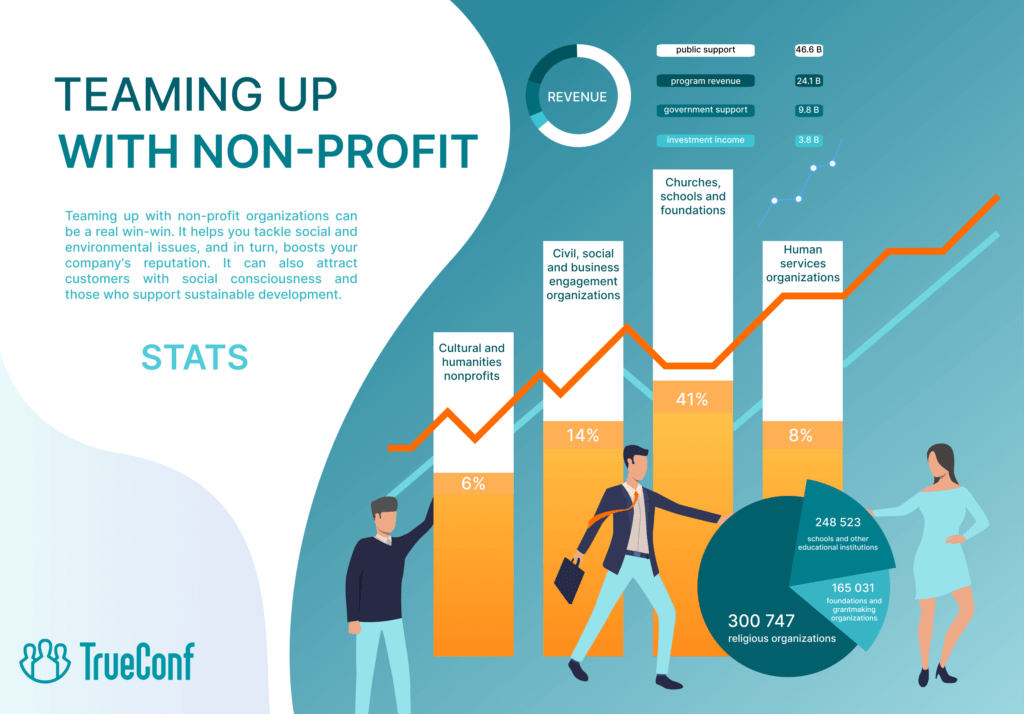
- Non-profit collaboration: teaming up with non-profit organizations can be a real win-win. It helps you tackle social and environmental issues, and in turn, boosts your company’s reputation. Organizations not only maintain meaningful connections with their constituents but also optimize operational efficiency and donor engagement through cutting-edge CRMs for nonprofits or donor management software.
Each type of collaboration is like a unique flavor, each with its own importance and benefits. Real-world examples, such as those found in marketing case study collections, demonstrate how different collaboration approaches lead to tangible results. This can level up innovation, toughen up resilience, and ultimately, pave the way to success in the interconnected world we live in. Starting a business requires patience, persistence, and time.
Let’s talk more about the first type. What is it? Business collaboration!
Forms of Business Collaboration
Internal Collaboration
Internal collaboration happens when teams and departments within the same company work together to solve problems, complete projects, and reach shared goals. It builds stronger team spirit, creates a more open and friendly atmosphere, and keeps sensitive information inside the organization.
Modern internal collaboration often runs through project-oriented channels and digital workspaces: instead of dozens of scattered chats, companies create dedicated spaces for each project or department. This reduces noise, speeds up onboarding for new employees, and makes it easier to find decisions, files, and meeting records later.
External Collaboration
External collaboration extends beyond company walls to include clients, vendors, freelancers, and partners. It helps organizations improve their processes, gather feedback, and co-create assets such as designs, content, or technology.
Typical examples include:
- collecting product feedback from customers via surveys or live chats;
- co-creating visual assets with agencies or freelance designers;
- running joint projects with partners while keeping internal systems secure.
Modern external collaboration increasingly uses secure project rooms or partner-specific channels, where guests see only what is relevant. This protects sensitive data while still enabling fast, transparent cooperation.
Strategic Alliances
Strategic alliances are formal agreements between independent companies to collaborate while remaining separate legal and operational entities. These alliances focus on shared goals such as entering new markets, developing products, or combining technology and distribution networks.
Common patterns:
- a tech-focused company contributes software or platforms, while a marketing-heavy partner brings customer reach;
- pharma companies team up with biotech firms to access research and intellectual property;
- suppliers evolve from simple vendors into long-term collaborative partners with shared growth targets.
Many modern strategic alliances track results through shared dashboards and joint KPIs, turning what used to be contract-based collaborations into data-driven partnerships.
Joint Ventures
Joint ventures are cooperative arrangements where two or more companies form a new, jointly-owned legal entity to pursue specific objectives. Each partner contributes resources—capital, technology, expertise—and shares profits, losses, and control.
Joint ventures are often used to:
- enter new markets quickly;
- launch new products or services;
- distribute financial and operational risk across partners.
In the digital economy, joint ventures may focus on areas such as mobile app monetization, SaaS-based platforms, or shared infrastructure. Success depends on clearly defined governance, aligned goals, and transparent communication between partners.
Network Collaboration
Network collaboration connects individuals and professionals who share similar interests, careers, or goals. It can happen in person (at events) or online (via communities, forums, and social platforms).
Participants exchange knowledge, advice, and experience, helping each other grow professionally. Automation tools and analytics help individuals and companies manage outreach, track engagement, and refine their strategies.
The main objective of network collaboration is to create a mutually helpful ecosystem where everyone brings value—whether it’s expertise, contacts, or resources.
Cloud Collaboration
Cloud collaboration refers to the use of cloud-based tools and platforms that let teams work together regardless of location.
Common features include:
- real-time document editing;
- shared workspaces and chat channels;
- tight integration with business systems (CRM, HR, finance).
Surveys show that a large share of organizations now rely on cloud collaboration apps to manage projects, coordinate remote teams, and automate routine tasks. For companies with strict data-security requirements, on-prem or hybrid collaboration platforms (such as TrueConf) combine this flexibility with full infrastructure control.
Marketing Collaboration
Marketing collaboration occurs when companies combine forces to create stronger campaigns, co-launch products, or amplify brand visibility. The core idea is to leverage each partner’s strengths: one brings audience, another brings content or technology.
Typical results include:
- wider reach and higher brand awareness;
- more leads and stronger campaign performance;
- richer customer experiences through integrated tools such as inbound marketing software and analytics.
Iconic real-world examples—like Uber and Spotify joining forces—show how marketing collaboration can create memorable, value-driven experiences for users.
Outsourcing and Freelance Collaboration
Outsourcing and freelance collaboration involve delegating certain tasks to external experts or agencies instead of doing everything in-house. This can include design, development, customer support, or content creation.
Benefits:
- access to specialized skills;
- faster scaling without heavy hiring;
- lower fixed costs compared with full-time employees.
With remote-work tools and project management platforms, coordinating with freelancers and outsourced teams has become more transparent and efficient. Clear contracts, expectations, and quality-control processes remain essential for long-term success.
Supply Chain Collaboration
Supply chain collaboration means companies across a value chain—suppliers, manufacturers, 3PL providers, retailers—coordinate to improve efficiency, reduce costs, and respond faster to market changes.
Typical activities:
- sharing demand forecasts and inventory data;
- aligning production and logistics schedules;
- using integrated platforms for real-time tracking and reporting.
Modern supply chain collaboration increasingly relies on cloud-based ERPs, print-on-demand systems, and automation tools, making the entire chain more agile and data-driven.
Technology-Based Collaboration
Technology-based collaboration describes how digital tools enable teams to communicate, share files, and manage projects in real time, no matter where they are located.
Common components:
- video conferencing and messaging apps;
- cloud-based document editors and whiteboards;
- project-management and workflow-automation tools.
For companies with strict security or compliance requirements, self-hosted collaboration platforms like TrueConf offer a secure alternative to public SaaS tools, keeping data under full control while still supporting modern remote and hybrid workflows.

Benefits of Business Collaboration
- Employee engagement: engaged employees actively contribute to their teams and company. A collaborative workplace motivates engagement, leading to better productivity and customer satisfaction — especially when feedback is regularly gathered using well-designed survey templates.
- Learning and skill development: collaboration allows employees to learn from each other organically, expanding their collective skill set. This helps in effectively solving new challenges.
- Workflow efficiency: collaboration can level up problem-solving, making production faster and more efficient. It encourages open communication, ensures even workload distribution, and reduces workplace stress.
What is TrueConf Collaboration Role in Business?
Upgrading your business collaboration with software like TrueConf is way easier than you might think. The solution has customizable public and private channels, just like your favorite messaging apps, but it’s all neatly packed into the TrueConf app. It works for any type of business.
Each team member can jump into groups, and they can choose whether to get notifications for each chat. This keeps everyone in the know and in line with the company’s plan. When you’re working on a specific project, all the chat happens right in the relevant group.
Try TrueConf Server Free!
- 1,000 online users with the ability to chats and mske one-on-one video calls.
- 10 PRO users with the ability to participate in group video conferences.
- One SIP/H.323/RTSP connection for interoperability with corporate PBX and SIP/H.323 endpoints.
- One guest connection to invite a non-authenticated user via link to your meetings.

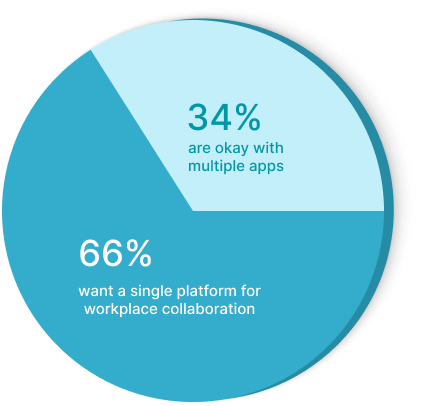
Don’t let messy data and confusing communication slow your team down. When you manage your info strategically in a collaborative environment, it’s adding fuel to your business. Did you know that 66% of employees are willing to have a single platform for workplace collaboration to cut out the chaos? It’s time to make a change. Make business collaboration a breeze with TrueConf.
Ready to go deeper? Explore self-hosted video conferencing as the secure communication layer.
FAQ
What is the main benefit of business collaboration today?
Business collaboration helps teams reach shared goals faster and with fewer mistakes. In 2026, the main advantage is having tasks, communication, and documents in one managed environment, which reduces delays and lowers the risk of information loss.
What is the difference between internal and external collaboration?
Internal collaboration happens within one company, between employees and departments. External collaboration connects the company with partners, clients, or suppliers in controlled workspaces. The main difference is who has access and how much of the internal infrastructure is exposed.
Why do companies need a single collaboration platform like TrueConf?
A single platform reduces the number of tools employees must use daily, cutting down on switching costs and confusion. With one environment for chats, video calls, and project channels, companies can standardize workflows and make onboarding easier.
Which types of collaboration are most popular now?
In 2026, the most relevant types are digital workspaces, AI-assisted collaboration, and data-driven partnerships. Companies increasingly build joint projects on shared analytics and integrated platforms instead of relying only on emails and contracts.
Is self-hosted collaboration (TrueConf Server) only for large companies?
Self-hosted solutions are often used by regulated industries (banking, government, healthcare) where data control is essential. Small and mid-sized businesses can start with cloud-based tools and later adopt self-hosted models when they face stricter security or compliance requirements.
How can a company measure the impact of collaboration?
Key metrics include project-cycle time, number of repeated approvals, and employee feedback on communication quality. For external partnerships, companies track joint KPIs such as revenue, customer satisfaction, and campaign conversion.
Does AI replace human collaboration?
No: AI supports collaboration by automating routine tasks like meeting summaries, reminders, and context search. Human teams still define goals and build relationships; AI only helps them work faster and more accurately.
About the Author
Nikita Dymenko is a technology writer and business development professional with more than six years of experience in the unified communications industry. Drawing on his background in product management, strategic growth, and business development at TrueConf, Nikita creates insightful articles and reviews about video conferencing platforms, collaboration tools, and enterprise messaging solutions.


Follow us on social networks