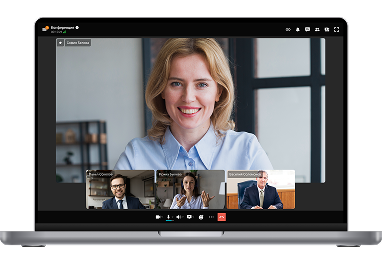
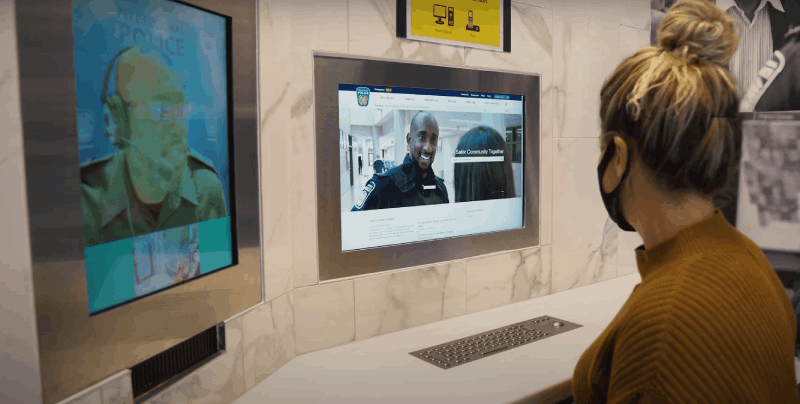
A secure corporate communication platform for conducting remote court hearings and interagency collaboration.
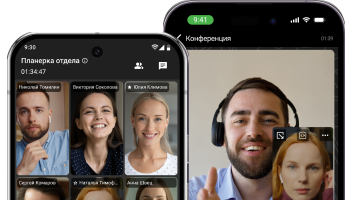
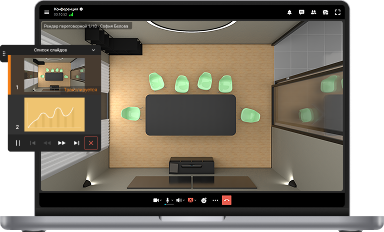
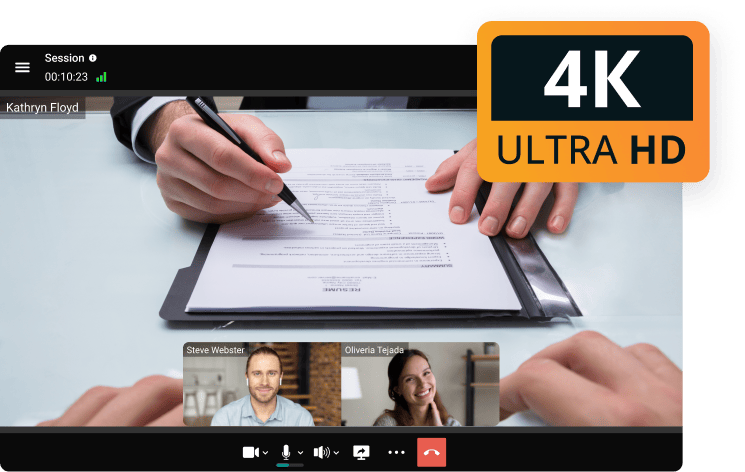
Conduct remote sessions in 4K resolution and share case materials in high quality! Show photos, videos, and documents needed to reach a verdict in real-time.
Thanks to a multi-level security system that includes data exchange over SSL and TLS protocols, as well as end-to-end encryption of media streams, the video conferencing system ensures the confidentiality of remote court sessions.
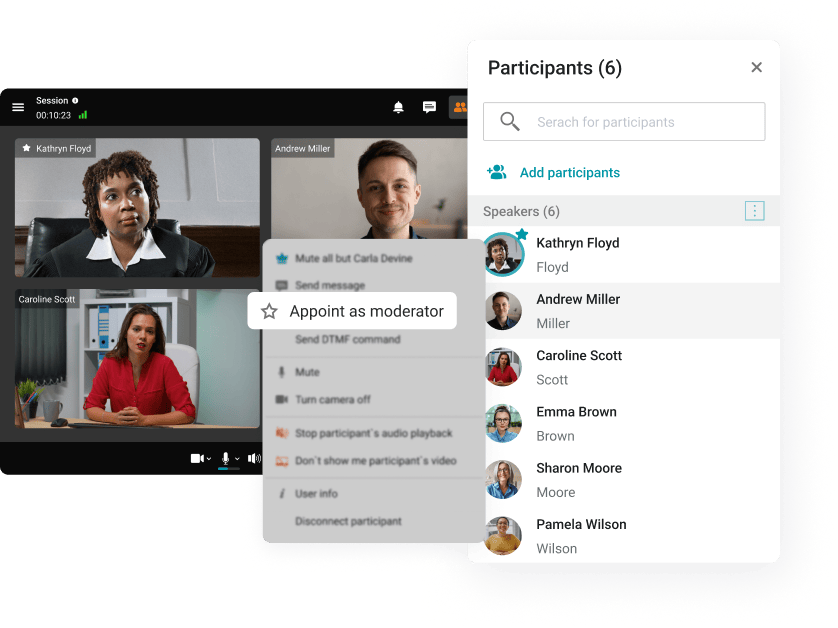
Conduct remote case reviews in accordance with the regulations! Appoint one or more moderators of online meetings who can invite speakers to the podium and control the microphones and cameras of participants.
Utilize smart algorithms' advanced capabilities: host seamless remote meetings even with external noise, blur or replace the background, and convert recordings of online discussions into detailed transcripts.
Smart Noise Suppression
Blurring and Replacing the Background
Automatic Transcriptions of Meetings
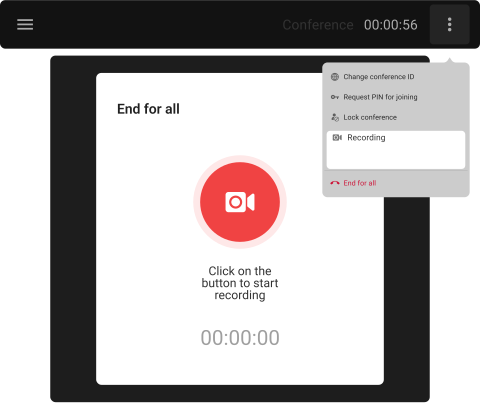
Take an active part in remote meetings without being distracted by keeping minutes! Record conferences and easily share the required recordings with colleagues.
Organize remote meetings even with an unstable Internet connection! Thanks to scalable video encoding (SVC) technology, each participant of the remote meeting will receive optimal video and sound quality.
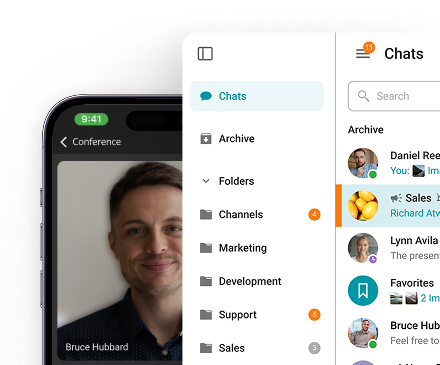
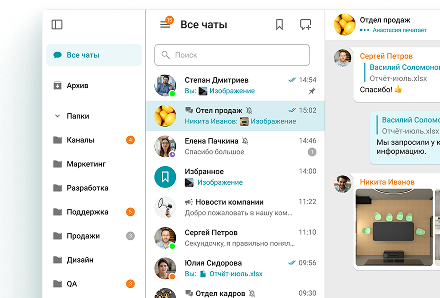
A corporate messenger for online meetings and secure communication, running on popular operating systems and browsers.
Organize remote meetings and discuss current affairs in chat rooms wherever you are - all corporate communications in one mobile application!
Create your own solutions for online meetings using TrueConf API and SDK! Integrate video conferencing into your own applications for remote communication of court staff.
In addition to the aforementioned advantages of introducing video conferencing for traditional court proceedings in a remote format, practicing lawyers identify the following opportunities:
Advantages
Prompt involvement of witnesses, interpreters, specialized experts, and case materials in the process, the need for which arises during the proceedings;
Free access to the entire evidence base (codes of laws, normative legal acts), if necessary, provide additional arguments in favor of the position;
Centralization of communication lines for defense and prosecution into one system;
Representing the interests of several plaintiffs and defendants simultaneously;
Protection of the rights and freedoms of persons with disabilities and incapacitated individuals.
Disadvantages
High costs for the implementation and technical support of the video communication system;
Absentee participation in the hearing can distort the perception of what is happening, affecting the participant's engagement in the process, which can lead to a biased outcome of the case;
The risk of violating the confidentiality of legal proceedings and intercepting confidential data due to information leakage;
The probability of a technical failure (Internet or electricity outage, problems with technical equipment, etc.) is a concern.