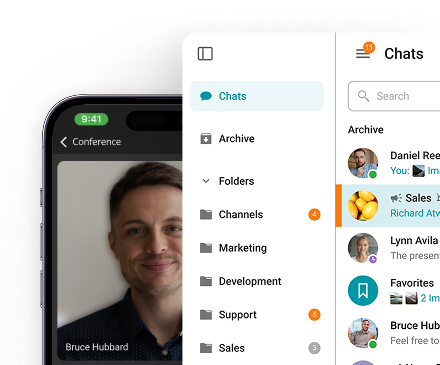
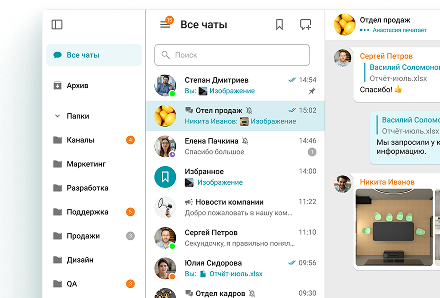
Experience comfortable collaboration even in crowded places, thanks to the suppression of third-party sounds and background noise.
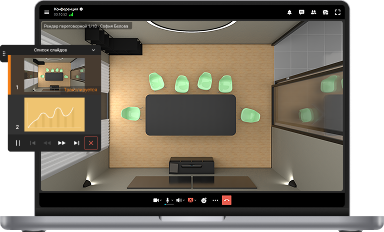
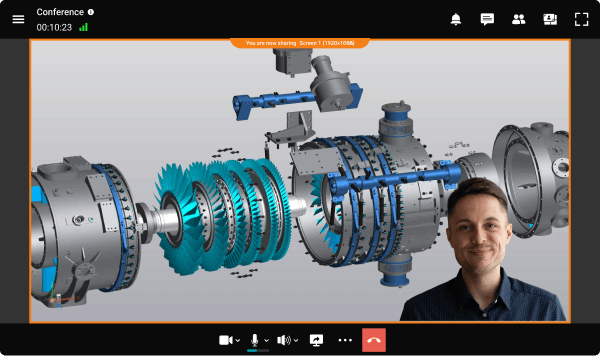
Learn moreBoost your speech by substituting the background with a presentation or other shared content.
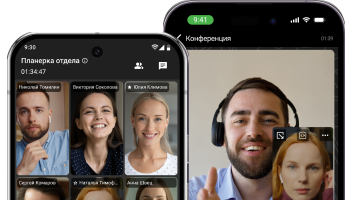
Learn moreDuring the conference, the layout is automatically generated based on the active speakers and the content being demonstrated.
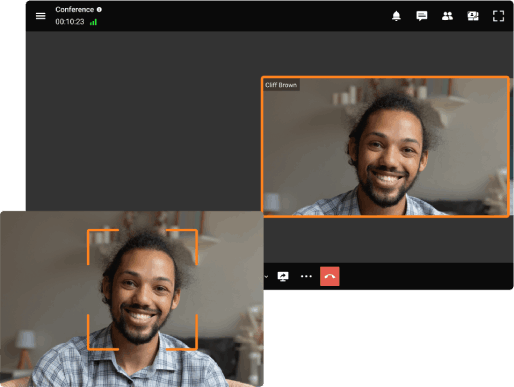
Learn moreThe smart algorithm automatically detects users' faces and positions them in the center of the frame, eliminating any unnecessary space.
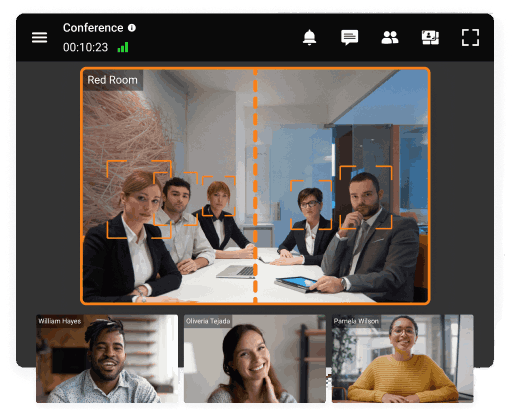
The AI-based algorithm brings together multiple remote users and places them within a single frame.
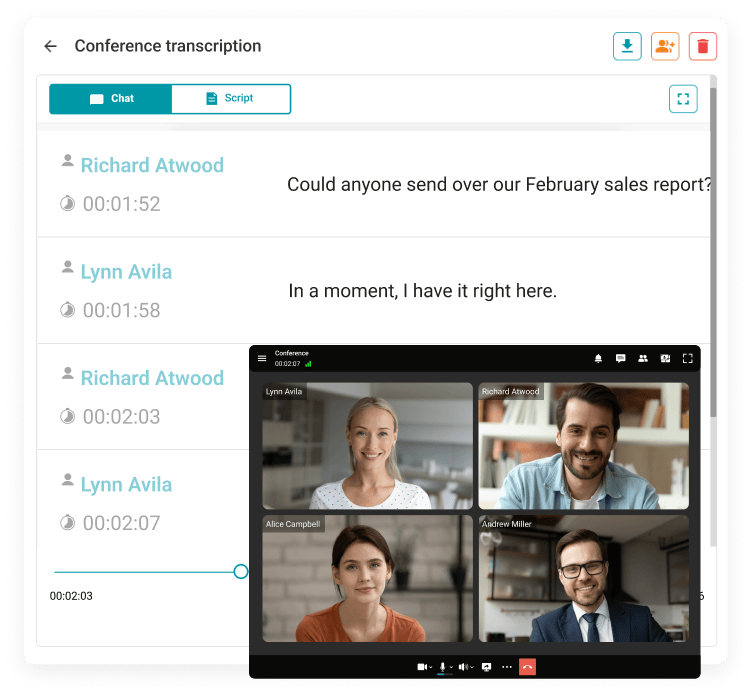
An artificial intelligence-based conference transcription server ensures secure data processing within the corporate network.
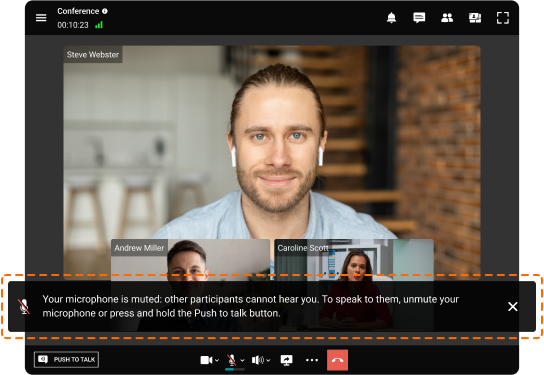
Learn moreIn the event of technical or common issues, the smart assistant will promptly provide hints so that you can continue your communication without having to contact the administrator.
Learn moreTools for blurring and replacing the background, along with an intelligent noise reduction system, help to keep the focus on the lesson topic, thereby increasing productivity in remote education.
During a remote consultation, smart algorithms take over certain tasks of the doctor, such as protocolling a patient's medical history. At the same time, communication takes place in a private atmosphere thanks to the ability to blur or replace the background.
The combination of automatically protocolling conferences and smart layouts greatly simplifies the conduct and management of remote meetings.
AI in video conferencing integrates intelligent technologies into meeting platforms to automate and enhance communication. It helps improve meeting quality, accessibility, and efficiency by performing tasks that usually require human attention — such as noise suppression, auto framing, real-time transcription, and meeting summarization.
Modern AI tools can analyze speech, recognize participants, adjust layouts dynamically, generate captions and translations, and even provide contextual hints or notifications during calls. These features create a seamless experience where participants focus on collaboration while AI manages the technical details.
Integrating AI into meetings brings tangible benefits for both hosts and participants:
Increased productivity: AI automates routine tasks such as note-taking and organizing transcripts, allowing participants to stay focused on collaboration.
Clearer communication: AI enhances audio and video quality by removing background noise and automatically adjusting camera settings, ensuring smooth conversation.
Accessibility: Real-time transcription and translation make meetings inclusive for participants with hearing challenges or language differences.
Higher engagement: Auto-framing and smart speaker tracking help remote participants feel more connected and reduce fatigue.
Cost efficiency: AI-based compression and optimization reduce bandwidth use and shorten meeting durations through clearer communication.
Convenience: Automatic recording, summaries, and background adjustments simplify the meeting process and reduce user effort.
AI transforms virtual meetings across multiple industries by improving efficiency, communication, and collaboration.
Education: AI-powered transcription and real-time captioning make online classes accessible to students with hearing impairments and those speaking different languages. Auto framing and noise suppression help teachers focus on interaction instead of managing equipment.
Healthcare: During telemedicine sessions, AI automatically records and transcribes patient consultations, ensuring accurate medical documentation while allowing doctors to focus on care rather than note-taking.
Corporate and business meetings: Intelligent assistants summarize discussions, identify action items, and send follow-up notes automatically, reducing administrative workload and meeting fatigue.
Engineering and design: Smart video layouts and background enhancements make remote project reviews and 3D model presentations clearer and more interactive.
Customer service and support: AI analyzes conversations to detect sentiment, highlight issues, and generate post-call summaries that improve response quality and training efficiency.
Public sector and government: Automated transcription and summarization tools streamline meeting records and increase transparency in council or committee sessions.