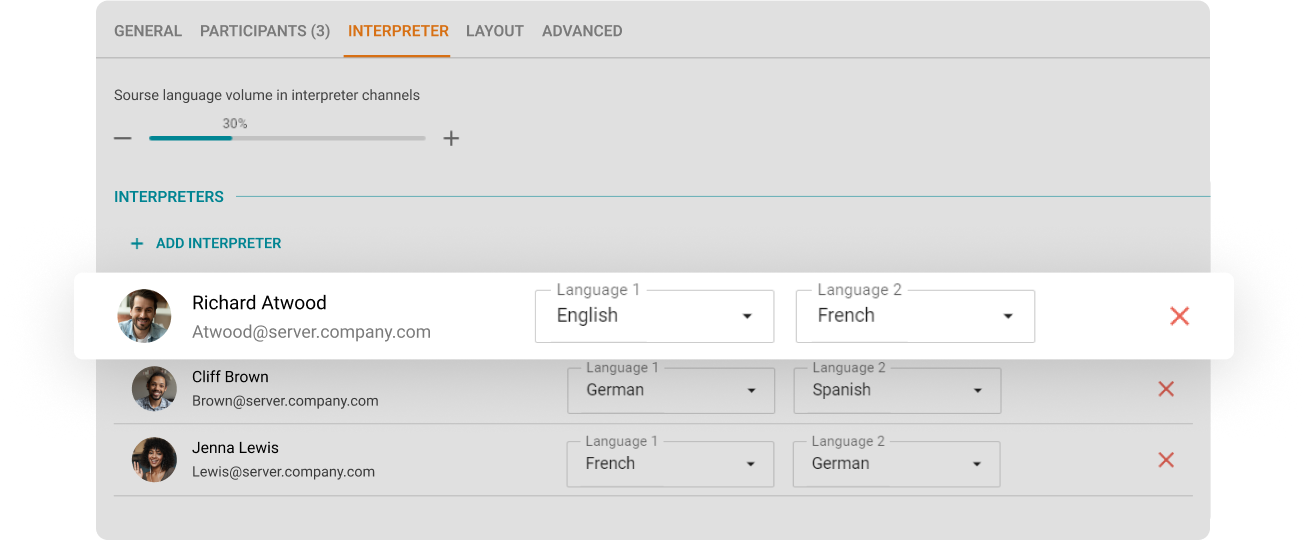
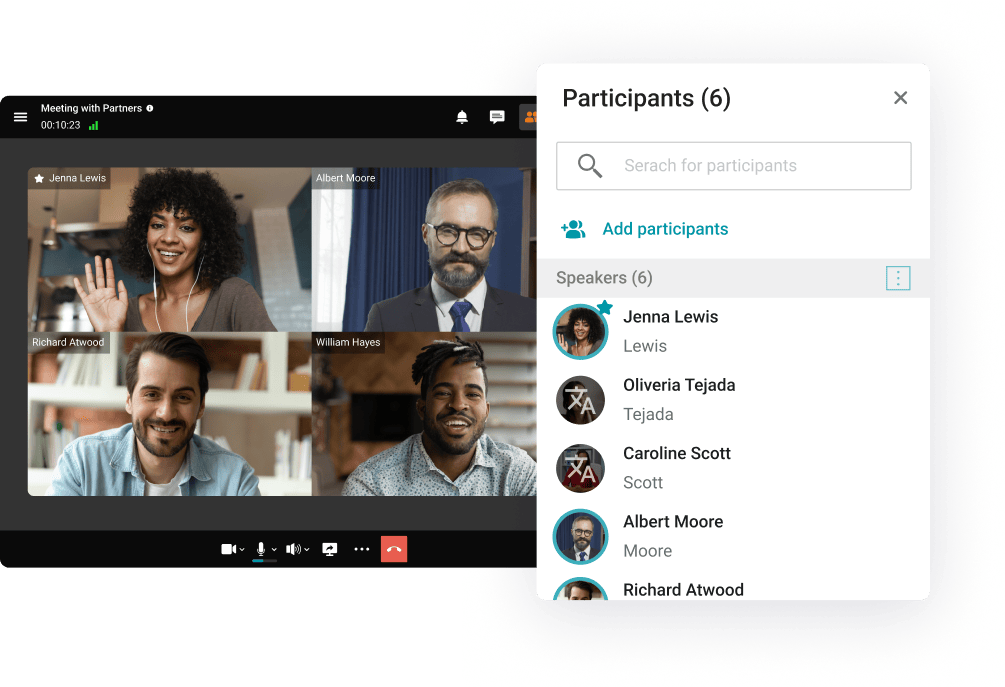
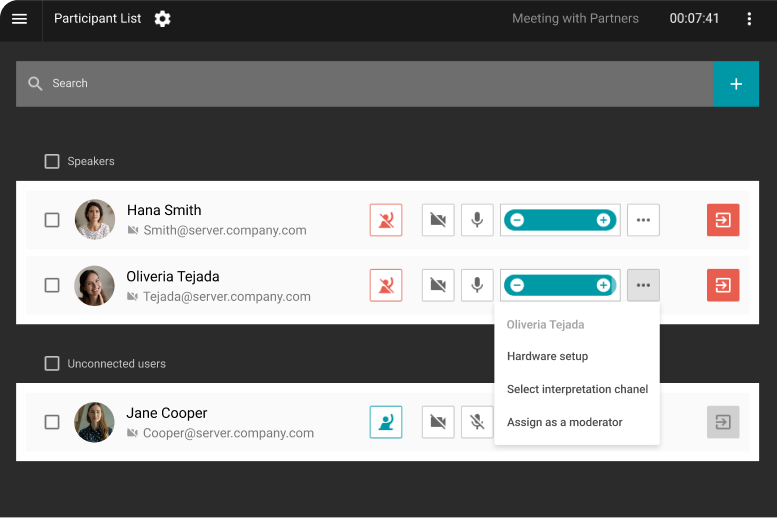
Assign a source and target language for each interpreter participating in the conference.
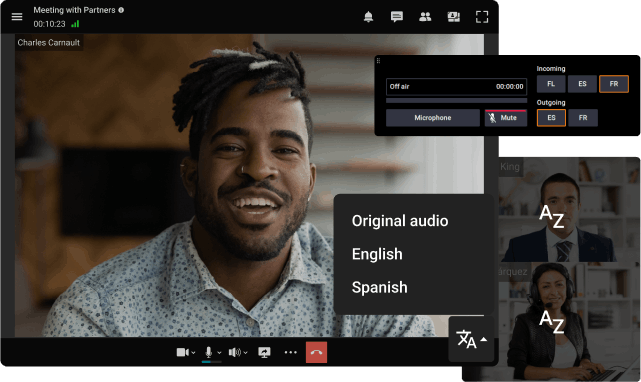
Interpreters are automatically hidden from the layout and can only be heard when the appropriate audio track is selected.
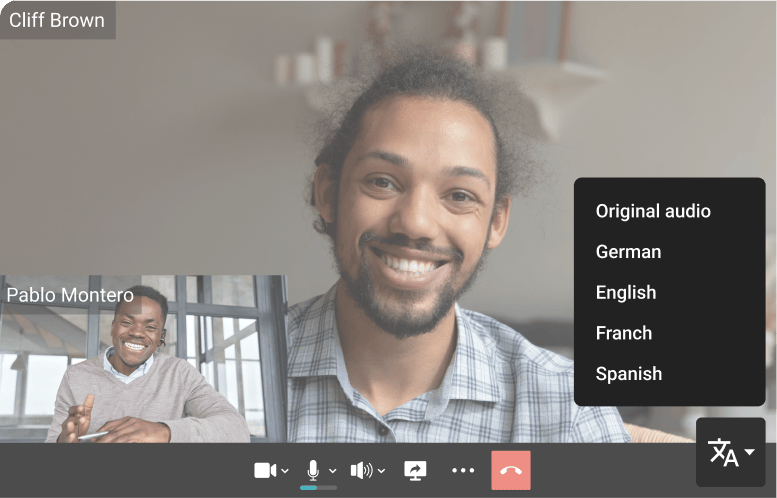
Easily switch between available audio tracks by changing interpreters on the fly and adjust their volume!
Conference owner can control users' audio tracks, switch them remotely, and adjust the volume.
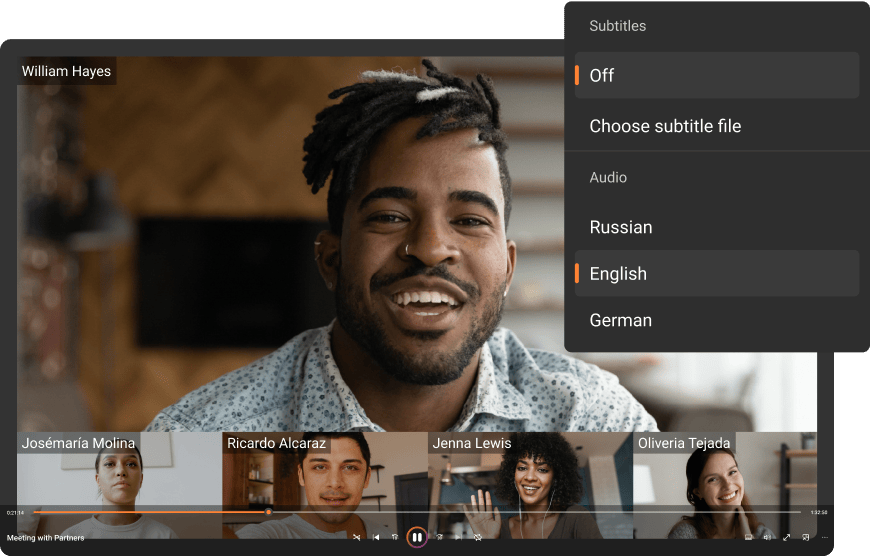
Record conferences on the server, followed by the ability to select language tracks.
Online negotiations with foreign partners
Distance learning at international universities
International press conferences
Court sessions with the involvement of professional translators
Master classes with foreign specialists
Collaboration with colleagues from other countries
Experience the cutting-edge capabilities of TrueConf Server right away.
Interpretation is the translation of speech by a person, in which a specialist translates the original language while listening.
Simultaneous translation involves the almost instantaneous translation of speech from the original language as it is being listened to by the interpreter.
Remote interpretation, or remote simultaneous interpretation, is the translation of video conferences by professional interpreters from anywhere in the world.
To add interpreters to an online meeting or webinar, it is sufficient to create a scheduled conference and assign the appropriate language pair. As soon as the online meeting starts, the translators will be automatically added to the conference, but they will not be reflected in the layout.
To manage your role as a translator, it is enough to select the necessary source language for further translation and turn on the microphone. The application also includes a special multilingual panel for translators to work comfortably in real-time.
Simultaneous interpretation for video conferencing is a way to provide live language interpretation during an online meeting. Interpreters listen to the original speaker and translate the speech in real time into a separate audio channel that participants can select. In TrueConf, this workflow can be used to organize multilingual video conferences with dedicated interpretation tracks.
The host assigns interpreters to specific language pairs. Interpreters listen to the original audio and speak into dedicated interpretation channels. Participants then choose the language track they want to hear. TrueConf supports this model by allowing interpreters to work with separate language channels during a video conference.
Yes. In a video conference with multiple interpretation channels, participants can select the language track they need instead of listening only to the original speaker. In TrueConf, users can switch between available interpretation tracks during the meeting.
Yes. Different interpreters can be assigned to different source and target languages, allowing one meeting to support several interpretation channels at the same time.
Yes, if the platform supports multi-channel recording. TrueConf can preserve multiple audio tracks, which makes it possible to keep the original speech and interpreted language tracks for later use.
Simultaneous interpretation usually involves a human interpreter who translates speech live into a separate audio channel. AI real-time translation uses speech recognition and machine translation to translate automatically. These approaches solve similar language-access problems but use different workflows.
Yes. Simultaneous interpretation is commonly used for multilingual webinars, conferences and large online meetings where participants need to follow the same event in different languages. TrueConf can support this through dedicated interpretation channels within the conference.