
Stages of Team Development: Is Your Team Forming, Storming, Norming or Performing?
Research from McKinsey shows that organizations with effective team collaboration are 1.9 times more likely to outperform their competitors financially. Still, most leaders can’t pinpoint exactly where their teams stand on the developmental curve.
Grasping team dynamics goes beyond textbook knowledge: it separates groups that simply share workspace from those that deliver outstanding results. Whether you’re leading virtual colleagues across multiple time zones or managing people in the same building, identifying your team’s present phase allows you to adapt your leadership style and establish achievable goals.
Take your team communication to the next level with TrueConf!
A powerful self-hosted video conferencing solution for up to 1,000 users, available on desktop, mobile, and room systems.
Tuckman’s Team Development Model: A Guide to the 5 Stages
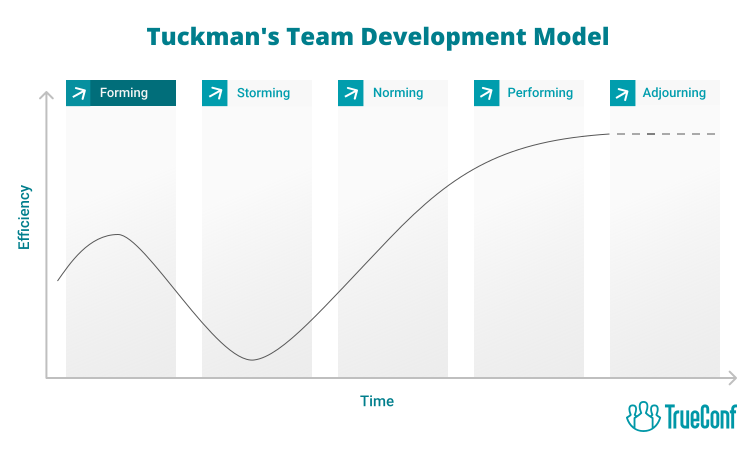
In 1965, psychologist Bruce Tuckman presented a framework that remains relevant decades later. He outlined four phases that every team experiences: forming, storming, norming, and performing. Ten years afterward, he introduced a fifth phase — adjourning — to round out the cycle.
Consider these phases like weather patterns. You can’t bypass the cold months and arrive at warm weather instantly, regardless of your preferences. Each phase has a function, and attempting to skip ahead frequently creates problems.
The Forming Stage
Your team’s initial phase resembles a first date. Everyone displays their most courteous side, discussions remain pleasant, and people avoid controversy. Members are determining the expectations, both explicit and implied.
During this phase, people wonder: Where do I fit? Who leads us? What exactly are we working toward?
Example:
A newly assembled product development team begins their first project together. Early meetings consist of background sharing, tentative proposals, and frequent agreement. Jennifer from engineering hasn’t yet discovered that Alex from product management values blunt honesty over sugar-coated criticism. Everyone looks to the project manager for approval, including trivial choices.
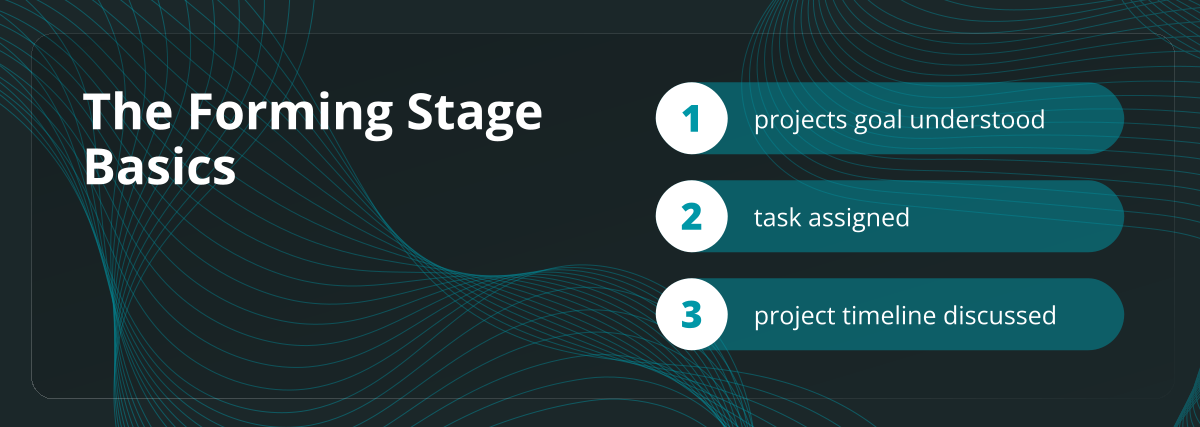
How to lead effectively: Offer concrete guidance. Establish specific objectives and clarify responsibilities without ambiguity. This moment calls for certainty, not exploratory “let’s discover as we go” methods. Your team requires framework.
Build chances for personal connections outside formal assignments. A casual video hangout or a dedicated channel for personal interests helps people recognize each other as individuals, not merely colleagues.
The Storming Stage
Prepare for rough waters. This phase brings the end of superficial politeness and the arrival of authenticity. People begin voicing genuine perspectives, disagreements surface, and some participants might challenge the project’s fundamental approach.
Storming creates discomfort, but it signals progress. It shows people are invested enough to push back.
Example:
The product development team reaches their fourth week. Jennifer delivers technical specs that Alex believes ignore user feedback entirely. Alex revises the requirements independently. Jennifer feels undermined. A third colleague believes their input was overlooked during planning. Meeting atmospheres become tense.
Some leaders react to this phase by attempting to eliminate all friction. Don’t fall into that trap.
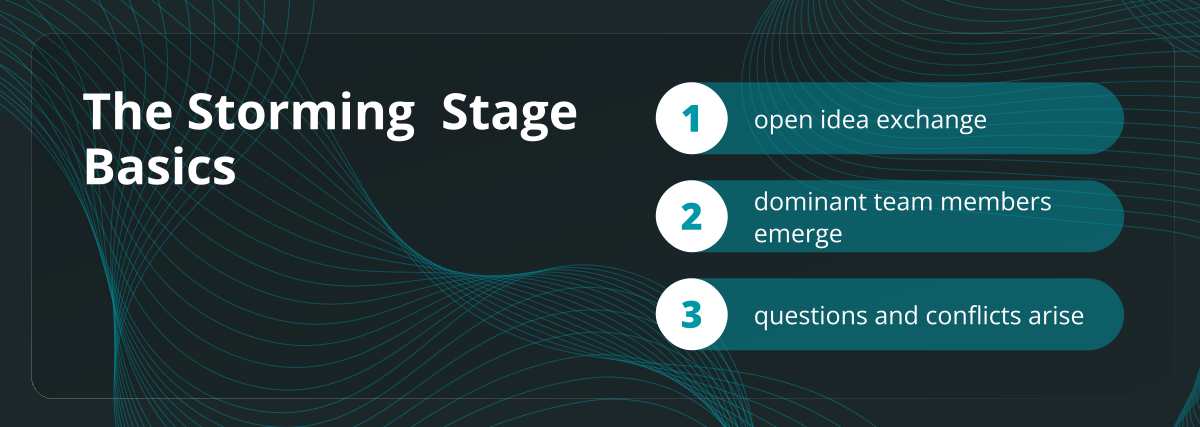
How to lead effectively: Enable discussions rather than silencing them. When disagreements emerge, tackle them head-on. “I see we’re struggling with our decision-making process. Let’s work through it” proves more effective than ignoring obvious tension.
Define explicit communication guidelines. Who holds final authority? How should colleagues deliver criticism? What happens when people can’t reach consensus?
Keep in mind that conflict doesn’t automatically mean failure. Constructive debate generates superior solutions.
The Norming Stage
The turbulence subsides. Team members have navigated their early friction and created functional collaboration patterns. They’ve built common understandings and genuine regard for one another.
Throughout this phase, the team creates its distinctive character and informal conventions. People understand who handles what, which platforms work most effectively, and how to work with different personality types. Teams at this stage often use PLM software to keep collaboration and workflows better organized.
Example:
The product team discovers its groove. Jennifer now alerts Alex before finalizing technical documentation. Alex circulates preliminary concepts for input. They’ve created a feedback loop that serves everyone. When disputes occur, they’re settled efficiently because the framework is understood.
The group begins creating shared references. They recall previous projects together. Newcomers immediately sense the unity.
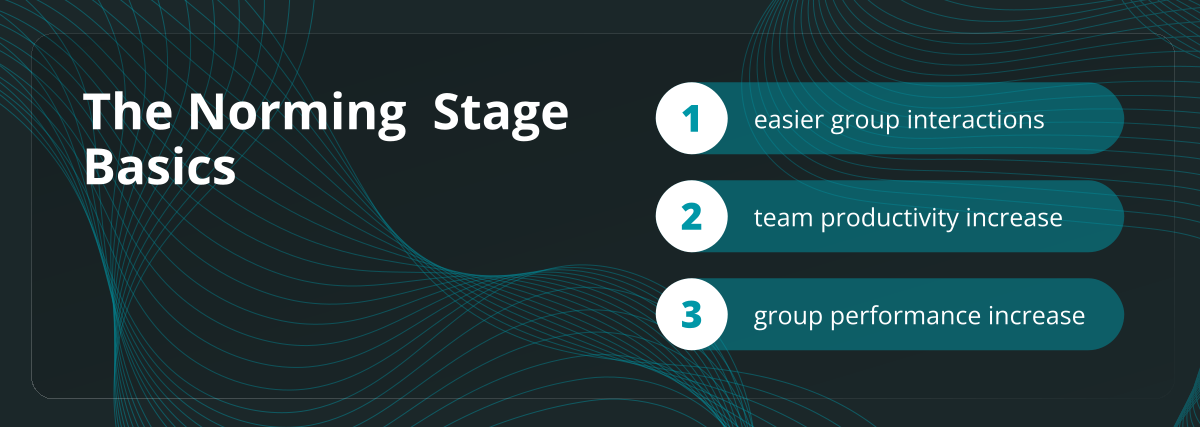
How to lead effectively: Reduce your involvement somewhat. Your team requires less constant supervision now. Concentrate on clearing barriers instead of controlling every move.
Acknowledge and strengthen constructive actions. When someone manages a disagreement skillfully or assists a teammate, mention it. This strengthens the patterns you want repeated.
Guard against settling, though. Norming can sometimes translate to accepting mediocrity when greatness is within reach.
The Performing Stage
You’ve reached your destination. The team functions like precision machinery. Members predict each other’s requirements, manage disagreements constructively, and accomplish objectives with limited supervision. At this stage, organizations often choose to hire dedicated team models to maintain this level of efficiency and ensure consistent performance across projects.
High-performing teams don’t squander resources on interpersonal conflicts or power struggles. They direct all effort toward outcomes. They often align their efforts using the OKR framework, ensuring every task contributes directly to measurable goals.
Example:
The product team delivers release after release successfully. When Jennifer takes time off, teammates handle her work without extensive briefings. Alex independently refines features based on analytics without prompting. The group spots issues and resolves them before management becomes aware.
They’re not flawless, disagreements continue, but they’re constructive disagreements that strengthen results.
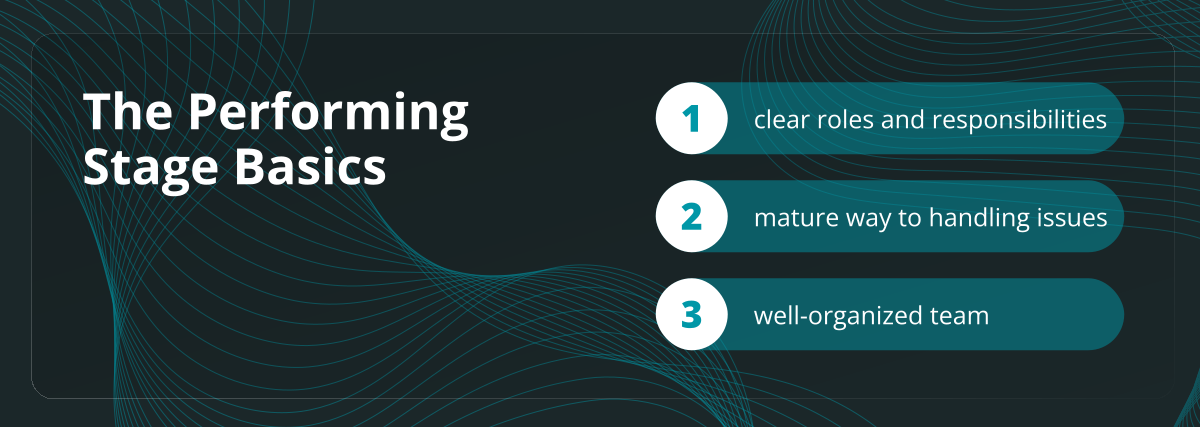
How to lead effectively: Grant them independence. High-performing teams struggle under excessive oversight. Define ambitious targets and trust their execution.
Present appropriate challenges. Stagnation destroys excellent teams. Bring in fresh initiatives, interdepartmental partnerships, or ambitious objectives that maintain engagement.
Safeguard their resources. Block unnecessary meetings, bureaucratic tasks, and corporate distractions so they can concentrate on impactful work.
The Adjourning or Mourning Stage
Every team reaches an endpoint. Projects finish, agreements conclude, people transition to different positions. Tuckman included this phase because he understood that endings deserve attention.
Some teams separate with festivities, others with relief, and some with authentic grief. The emotional reaction reflects the team’s journey and bonds.
Example:
Following a triumphant product release, the development team dissolves. Jennifer transfers to another department. Alex begins a different initiative. Some members feel enthusiastic about upcoming opportunities. Others experience genuine loss — they’d created something meaningful together.
Without appropriate closure, participants might feel undervalued or uncertain.
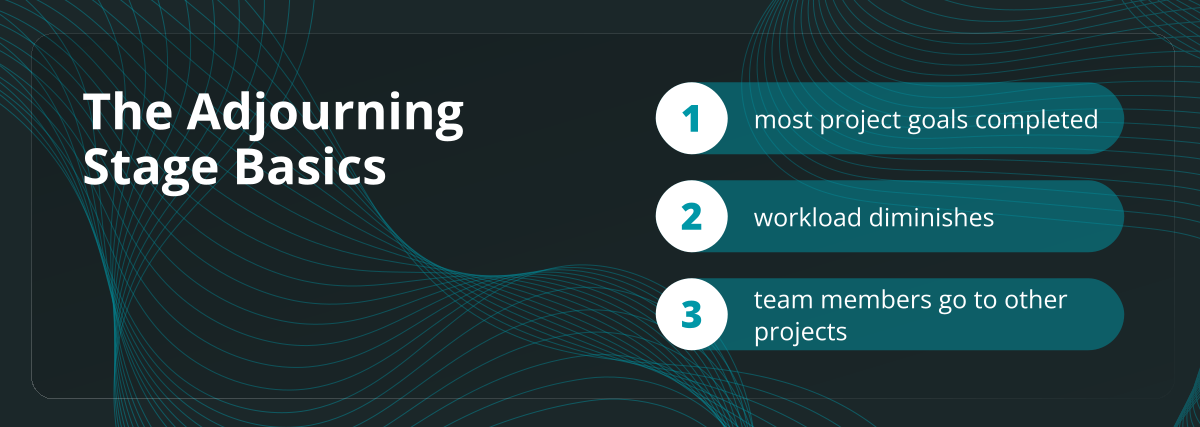
How to lead effectively: Provide time for looking back. Organize a debrief where people can express lessons learned, appreciation, and takeaways.
Acknowledge achievements clearly. Record wins, communicate results, and highlight individual efforts.
Support transitions. Link team members with future opportunities or offer endorsements. Preserve connections when valuable.
Some Extra Things to Bear in Mind
Progress isn’t a straight line. You might achieve peak performance, then welcome a newcomer and return to conflict. A significant strategy change can restart the sequence. Company restructuring can upset even the strongest teams.
Context determines the phase. Your team might excel on one assignment while just getting started on another. The phases relate to particular situations, not teams overall.
Distributed teams encounter distinct obstacles. The initial phase extends when people seldom interact personally. Conflict might appear differently — cryptic messages instead of vocal disagreements. Virtual teams require more deliberate connection-building.
This is where appropriate tools create genuine impact. TrueConf delivers video collaboration platforms built specifically for dispersed teams moving through these development phases. With capabilities including high-definition video, content sharing, and session recording, TrueConf enables remote teams to establish the connections and interaction rhythms required to advance from initial formation through peak performance—no matter where people are located.
Try TrueConf Server Free!
- 1,000 online users with the ability to chat and make one-on-one video calls.
- 10 PRO users with the ability to participate in group video conferences.
- One SIP/H.323/RTSP connection for interoperability with corporate PBX and SIP/H.323 endpoints.
- One guest connection to invite a non-authenticated user via link to your meetings.

Background diversity influences dynamics. Teams comprising members from varied cultural contexts might experience prolonged conflict as people work through distinct communication approaches, perspectives on authority, and methods for resolving tension.
Conclusion
Identifying where your team exists within Tuckman’s framework isn’t about classification. It’s about knowing what your team requires at this moment.
New teams need direction. Conflicting teams need mediation abilities and tolerance. Stabilizing teams need encouragement of productive habits. Peak teams need ambitious goals and freedom. Ending teams need acknowledgment and gratitude.
The leader who expects a struggling team to already function flawlessly creates mutual disappointment. The manager who over-controls a capable team limits their possibilities.
Observe your team’s interactions. Notice what people ask, how they approach disagreements, and whether collaboration energizes or depletes them. These indicators reveal everything about your current phase and what follows.
Outstanding teams aren’t accidentalz: they’re cultivated, phase by phase.
FAQ
How long does a team typically stay in the storming stage?
The duration of the storming stage varies greatly depending on the team’s complexity, but it usually lasts anywhere from a few weeks to several months. Leaders can shorten this phase by establishing clear communication guidelines and using reliable video conferencing tools like TrueConf to resolve conflicts face-to-face, even remotely. Open, transparent discussions help teams navigate disagreements faster and transition smoothly into the norming stage.
Can a team skip the storming stage and go straight to performing?
While it might seem possible, skipping the storming stage usually leads to artificial harmony where underlying issues and resentment remain unaddressed. Without working through initial conflicts, a team cannot build the genuine trust required for high performance. Facilitating honest debates through secure, high-quality video meetings in TrueConf ensures that all voices are heard, helping the team authentically progress rather than just avoiding conflict.
What happens to a high-performing team when a new member joins?
When a new member joins, the team often temporarily regresses to the forming or storming stages as they integrate the new person and adjust their established workflows. Leaders should guide the team through this transition by clearly defining the newcomer’s role and encouraging open introductions. Utilizing collaborative platforms like TrueConf for inclusive team meetings and informal virtual hangouts helps the new hire build rapport and accelerates the return to peak performance.
How can leaders properly facilitate the adjourning stage for fully remote teams?
Closing out a project remotely requires intentional effort to ensure team members feel valued and receive proper emotional closure. Leaders should host dedicated virtual wrap-up sessions to celebrate achievements, share lessons learned, and say goodbye. Tools like TrueConf make these farewell meetings more meaningful by providing high-definition video and screen sharing, allowing the team to review project highlights together and part on a positive, connected note.
What communication strategies help a team move quickly from forming to norming?
To accelerate the shift from forming to norming, leaders must prioritize frequent, transparent communication and create opportunities for informal social interactions. Establishing regular check-ins and collaborative brainstorming sessions helps team members understand each other’s working styles. Implementing a robust self-hosted solution like TrueConf ensures that these daily interactions are seamless, secure, and highly engaging, which is especially critical for building trust in distributed teams.
How can a manager identify if their team is stuck in the norming stage and becoming complacent?
A team stuck in the norming stage may avoid necessary conflicts, resist innovative ideas, and settle for mediocre results just to maintain the peace. Managers can disrupt this complacency by introducing new, challenging goals and encouraging constructive debate. Using interactive features in TrueConf, such as live polling and dynamic content sharing during meetings, can re-energize the team and stimulate fresh, critical thinking.
About the Author
Olga Afonina is a technology writer and industry expert specializing in video conferencing solutions and collaboration software. At TrueConf, she focuses on exploring the latest trends in collaboration technologies and providing businesses with practical insights into effective workplace communication. Drawing on her background in content development and industry research, Olga writes articles and reviews that help readers better understand the benefits of enterprise-grade communication.


Follow us on social networks