
Asynchronous Video Meeting: What It Is and How It Works
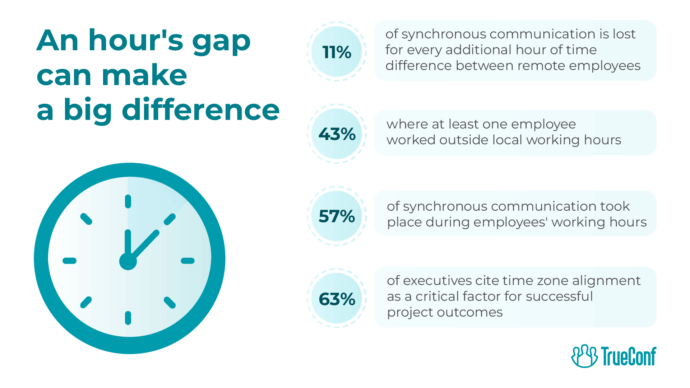
Remote working has changed the usual rhythm of interaction in organisations. Imagine a team spread across the globe, with one employee finishing the day in Singapore and another just starting work in San Francisco. In fact, Buffer’s research shows that 22% of employees cite flexibility as the top benefit of remote working.
But even this convenient format has its challenges. Imagine a manager trying to coordinate a meeting when some people are up at night and others are in the middle of the workday. Or employees spending hours on discussions that may never have taken place.
This is where asynchronous video communication comes in. It’s like a memo, but in video format: everyone can express their thoughts, share ideas without wasting anyone else’s time. This approach turns communication into a convenient and flexible tool that fits perfectly into the new reality of remote working.
What is Asynchronous Video Meetings?

Asynchronous video calling is a way of exchanging video messages that does not require the sender and receiver to be online at the same time. Unlike traditional video conferencing, asynchronous video calling allows you to record, send and view video at your convenience. This format is ideal for modern businesses where teams may work across time zones or where workflow disruption needs to be minimised.
Asynchronous video messaging is growing in popularity due to its flexibility and ability to provide personalised communication while maintaining high levels of efficiency and convenience. A video to GIF converter can also be useful for turning short video clips into easily shareable GIFs for quick communication and visual content.
6 Advantages of Asynchronous Video Meetings
- Time flexibility: Participants can interact without being tied to a specific time, which is especially important for distributed teams.
- Reduced stress through synchronous communication: No need to adjust to other people’s schedules or feel pressured by limited discussion time.
- Efficient use of time: Avoid long discussions and focus on key points.
- Support working across time zones: Ideal for international teams working asynchronously.
- Save recordings: Video can be played back for easy learning and documentation.
- Reduce meetings: Helps reduce the number of synchronous meetings, freeing up time for other tasks.
Asynchronous Video Meetings vs. Synchronous Video Meetings
|
Characteristic |
Asynchronous video meetings |
Synchronous video meetings |
|---|---|---|
|
Time limits |
No, the participants interact at a convenient time for them |
Requires the simultaneous presence of all participants |
|
Suitable for tasks |
Training, reports, discussion of ideas |
Emergencies, live discussions, brainstorming |
|
Effectiveness |
High, as it allows you to focus on key aspects |
May decrease due to distractions |
|
Geographical independence |
Great for working in different time zones |
Limited by time zones |
|
Documentation |
Video messages can be saved and reviewed |
Requires recording of meetings for later viewing |
|
Dynamics of communication |
Less dynamic as responses are not instantaneous |
High thanks to instant feedback |
5 Best Asynchronous Video Meeting Tools for Any Business
TrueConf
TrueConf is a versatile solution built to support both real-time and asynchronous video meetings, making it a powerful tool for modern communication. Its asynchronous video feature allows users to record, share, and store video messages in the cloud, enabling team members to review updates at their convenience. This flexibility is perfect for distributed teams juggling different time zones.
With a user-friendly interface and extensive customization options, TrueConf easily adapts to diverse business needs. Companies that prioritize security will appreciate its top-tier data encryption, ensuring sensitive communications remain protected. Additionally, TrueConf integrates seamlessly with enterprise tools like CRM systems, making it an excellent choice for embedding asynchronous video meetings into daily workflows.
For example, businesses in the jewelry industry can pair TrueConf with jewelry CRM software to streamline customer interactions and ensure seamless coordination between sales and support teams.
Slack
Slack is widely recognized as a collaboration powerhouse, and its asynchronous video meeting feature enhances team communication by providing a flexible way to share updates. Users can record short video messages and enrich them with text comments, emojis, or attachments, making interactions more engaging.
This feature is especially useful for quick project updates or walkthroughs when live meetings aren’t practical. Slack’s ability to integrate with tools like Google Workspace and Trello further streamlines workflows, allowing teams to link video messages to specific tasks. For example, a product manager might record a video explaining the next development sprint, attaching relevant documents and Trello cards for added clarity.
Twist
Twist is designed specifically for asynchronous communication, making it an ideal platform for teams that prioritize structured and distraction-free interactions. Its asynchronous video meeting feature allows users to record concise video updates and organize them into thematic threads, ensuring discussions stay focused and accessible. This setup works particularly well for remote teams managing multiple ongoing projects.
Chanty
Chanty is an excellent choice for small and medium-sized businesses looking to incorporate asynchronous video meetings into their workflows. With its simple interface, users can record and share video messages that make day-to-day collaboration smoother and more efficient. Chanty integrates seamlessly with project management tools, enabling teams to link video updates to specific tasks.
For instance, a developer can record a short video explaining a bug fix and attach it to a Jira ticket for the team’s reference. By combining video messaging with task management, Chanty helps teams stay organized and productive without requiring constant live meetings.
RocketChat
RocketChat stands out as a flexible, open-source platform that supports asynchronous video meetings, catering to the unique needs of various organizations. Its video messaging feature enables users to record updates, share instructions, or provide feedback, all while allowing teammates to view and respond at their own pace. RocketChat’s customizability ensures the platform can be tailored to specific workflows, making it suitable for teams with diverse requirements.
Conclusion
Asynchronous video meeting is a modern communication method that meets the requirements of flexibility, efficiency and convenience, especially in the context of remote working and distributed teams. The use of asynchronous video calling tools can improve employee interaction, reduce workload and reduce the number of synchronous meetings.
Solutions such as TrueConf, Slack, Twist, Chanty and RocketChat are helping businesses adapt to new communication standards, providing convenience and productivity.
Boost your team’s productivity with TrueConf Server Free!
FAQ
How do asynchronous video meetings help reduce meeting fatigue and improve productivity?
By allowing team members to record and watch updates on their own schedule, asynchronous communication eliminates the need to align multiple time zones for routine status checks. Platforms like TrueConf make this seamless by providing intuitive tools to record, store, and share high-quality video messages directly within your workflow. This ensures employees spend less time in live calls and more time on deep, focused work.
Is it safe to share sensitive business information through asynchronous video messages?
Security depends heavily on the platform you choose, as basic chat apps may lack enterprise-grade protection for stored media. TrueConf addresses this by offering top-tier data encryption and secure storage, ensuring that your recorded video messages and sensitive communications remain strictly protected. This makes it a reliable choice for industries that require strict compliance and data privacy.
Can asynchronous video be used effectively for employee training and onboarding?
Yes, asynchronous video is highly effective for training because it creates a permanent, searchable library of instructional content that new hires can review at their own pace. Using a robust platform like TrueConf, managers can record detailed walkthroughs, store them securely, and easily share them with distributed teams. This significantly reduces the time trainers spend repeating the same live onboarding sessions.
How do asynchronous video tools integrate with existing CRMs or project management software?
Modern async platforms allow you to embed video updates directly into your existing workflows, linking visual context to specific tasks or customer profiles. For instance, TrueConf integrates seamlessly with enterprise tools and CRM systems, allowing sales or support teams to attach personalized video messages directly to client records. This eliminates context switching and keeps all relevant communication centralized in one place.
What is the difference between sending an asynchronous video message and just recording a live meeting?
A recorded live meeting often includes off-topic chatter, technical delays, and requires viewers to scrub through a long timeline to find relevant information. In contrast, an asynchronous video message recorded via TrueConf is intentionally concise, focused, and structured specifically for the viewer to consume quickly. This purpose-built format respects the viewer’s time and delivers key updates much more efficiently.
Can asynchronous video completely replace live synchronous meetings for remote teams?
While async video drastically reduces the need for live calls, it cannot entirely replace them, as real-time brainstorming and complex crisis management still require synchronous interaction. The best approach is a hybrid model where routine updates are handled asynchronously via TrueConf, reserving live meetings strictly for high-value, collaborative discussions. This balance maximizes both flexibility and team connection.
Follow us on social networks