
Is Slack Encrypted? Slack Security Explained
Updated April 2026
Here’s a quick overview of the most critical updates and takeaways on Slack’s security in 2026:
|
Insight |
Details |
|---|---|
|
No Universal E2EE |
Slack still lacks end-to-end encryption (E2EE) for core channels and DMs; EKM for Enterprise Grid offers key control but Slack can access data. |
|
Recent Breaches Highlight Gaps |
2024 API flaw exposed workspace data; emphasizes need for app audits amid rising AI-driven threats. |
|
Admin Access Persists |
Workspace admins retain full visibility into messages, files, and history—train teams on this reality. |
|
Compliance Evolution |
Enhanced GDPR/HIPAA tools added, but multi-region data storage complicates sovereignty for global firms. |
Unique Insight #1
AI integrations in Slack now amplify risks—bots like custom LLMs can inadvertently leak data via prompt injection vulnerabilities, a rising concern in 2026 audits.
Is Slack Fully Encrypted? Slack End-to-End Encryption
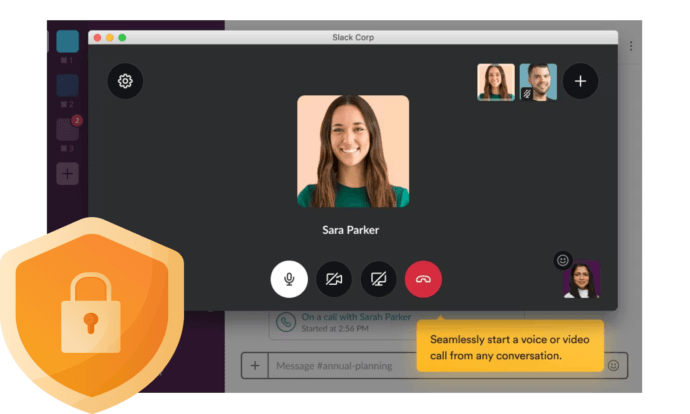
Slack uses encryption, but not the end-to-end variety that many security-conscious users might expect. The platform encrypts data in transit using TLS (Transport Layer Security) and encrypts data at rest in their data centers. This means your messages are protected as they travel across the internet and while stored on Slack’s servers.
However, Slack maintains the encryption keys themselves. This architectural choice means that Slack, as a company, has the technical ability to access your messages. They can read communications if required by law enforcement, for compliance purposes, or potentially during internal security reviews. The company states they only do so when legally obligated or for specific operational reasons, but the capability exists.
End-to-end encryption, by contrast, would mean that only the sender and recipient hold the keys to decrypt messages. Not even Slack would be able to read the content. Popular messaging apps like Signal and WhatsApp use this model. Slack has not implemented true end-to-end encryption for its standard messaging features, though they introduced Slack Connect DMs with end-to-end encryption for specific external communications in 2021. This feature remains limited in scope and doesn’t extend to regular channel conversations or workspace messages.
For Enterprise Grid customers, Slack offers Enterprise Key Management (EKM), which gives organizations more control over their encryption keys. This provides additional security layers but still doesn’t achieve true end-to-end encryption where messages remain unreadable to Slack itself.
New in 2026
Slack’s EKM now integrates with external key providers like AWS KMS and Azure Key Vault, allowing hybrid key management. Yet, audits show 40% of Enterprise users underutilize it due to setup complexity.
Some Concerns and Notable Incidents
Slack’s security track record includes several incidents that raised eyebrows in the business community. In 2015, the company experienced a breach where attackers accessed a database containing user profile information. While Slack responded by implementing two-factor authentication and resetting passwords, the incident highlighted vulnerabilities in their systems.
Updated Incident Log
|
Year |
Incident |
Impact |
Response |
|---|---|---|---|
|
2015 |
Database breach |
User profiles, hashed passwords exposed |
2FA enforced, passwords reset |
|
2024 |
Third-party API flaw |
Workspace data leaked via misconfigured apps |
API permission overhaul, audit tools added |
|
Ongoing |
AI bot vulnerabilities |
Prompt injection risks in canvas/apps |
Enhanced sandboxing for AI features |
More recently, questions have emerged about data access policies. Workspace administrators have extensive permissions to view direct messages, download entire conversation histories, and monitor employee communications. While this serves legitimate business purposes like compliance and dispute resolution, it creates privacy concerns for employees who might assume their direct messages are private.
Third-party integrations present another challenge. Slack’s ecosystem includes thousands of apps and bots that can access workspace data. Each integration potentially expands the attack surface. Organizations must carefully audit which apps have access to what information, but many businesses install integrations without fully understanding the permissions they grant.
The platform has also faced criticism regarding data retention policies. Even after messages are deleted by users, they may remain accessible through backups or administrative tools. For companies in regulated industries with strict data handling requirements, this creates compliance complications.
Unique Insight #2
In 2026, quantum computing threats loom—Slack’s TLS 1.3 is post-quantum ready in beta, but full rollout lags, leaving early adopters exposed to hypothetical harvest-now-decrypt-later attacks.
5 Potential Risks Users Must Know
Administrative Oversight
Workspace owners and administrators can access virtually all communications within their Slack workspace, including messages employees consider private. Direct messages between coworkers, conversations in private channels, and even deleted content may be visible to admins. This level of oversight, while sometimes necessary for legal or HR reasons, means employees have less privacy than they might assume. Sensitive discussions about workplace issues, personal matters, or confidential concerns could be monitored.
Legal Data Requests
Because Slack holds encryption keys and can decrypt messages, they must comply with law enforcement requests and subpoenas. Your business communications could become part of legal proceedings, regulatory investigations, or government surveillance programs. For companies operating internationally, this becomes more complex as different jurisdictions have varying data request laws. The content you share on Slack isn’t protected by the same barriers that end-to-end encrypted platforms provide.
Third-Party Application Vulnerabilities
Slack’s app directory contains thousands of integrations that enhance functionality, but each one represents a potential security weak point. These apps often request broad permissions to read messages, access files, or monitor user activity. A vulnerability in any connected third-party service could expose your Slack data. Businesses sometimes install multiple integrations without conducting thorough security assessments, creating a web of access points that are difficult to monitor and secure.
Data Residency and Compliance
Slack stores data in cloud infrastructure across multiple geographic locations. For organizations subject to regulations like GDPR, HIPAA, or industry-specific compliance requirements, this creates challenges. You may not have complete visibility into where your data physically resides or how long it persists in backups. Companies in healthcare, finance, or government sectors often discover that Slack’s architecture doesn’t align with their regulatory obligations.
Session Hijacking and Account Compromise
Like any cloud platform, Slack accounts can be compromised through phishing attacks, credential stuffing, or malware. Once an attacker gains access to a legitimate user account, they inherit all that user’s permissions and can read historical messages, download files, and monitor ongoing conversations. Without robust multi-factor authentication enforcement and a security awareness training platform, businesses remain vulnerable to these attacks. The impact extends beyond the compromised account, potentially exposing entire team communications and sensitive business information.
Quick Security Checklist
|
Action |
Why It Matters |
How to Implement |
|---|---|---|
|
Enforce 2FA |
Blocks 99% of account takeovers |
Workspace settings > Authentication |
|
Audit integrations |
Limits app risks |
Admin dashboard > Apps > Permissions review |
|
Set retention policies |
Reduces data exposure |
Workspace settings > Retention & deletion |
|
Limit admin roles |
Least privilege principle |
Manage members > Custom roles |
|
Train on AI risks |
Counters prompt injection |
Use built-in security hub resources |
Tips for Protecting Your Business
Security on Slack requires active management rather than passive trust. Start by enforcing two-factor authentication across your entire workspace without exception. Many breaches occur through compromised passwords, and adding this extra layer stops most unauthorized access attempts.
Conduct regular audits of your third-party integrations. Remove apps your team no longer uses and scrutinize the permissions of those you keep. Question whether each integration truly needs the access it requests. Sometimes a seemingly helpful bot has far more data access than its function requires.
Establish clear policies about what information belongs on Slack and what doesn’t. Financial data, customer personal information, legal documents, and other highly sensitive materials often deserve more secure channels. Train employees to recognize what constitutes appropriate platform use.
For organizations with serious security requirements, consider implementing Enterprise Key Management if you use Enterprise Grid. While not perfect, it provides more control over your encryption keys than standard Slack offerings. Alternatively, evaluate whether Slack remains the right tool for your most sensitive communications.
Review and adjust administrator permissions regularly. Not everyone needs full workspace admin rights. Implement a principle of least privilege where users and admins only have access necessary for their roles. Document who has elevated permissions and why.
Create retention policies that automatically delete messages after appropriate timeframes. While Slack’s search functionality makes historical messages valuable, keeping years of communications increases your risk exposure and may violate data minimization principles in various regulations. Lastly, internal safeguards can be complemented by threat intelligence services that provide additional context on emerging campaigns, malicious infrastructure, and indicators of compromise outside the organization’s own environment.
Why TrueConf Is a Secure Alternative to Slack
Organizations seeking stronger security guarantees might consider platforms built with different architectural philosophies. TrueConf provides communication tools with an emphasis on data protection and compliance that differs fundamentally from Slack’s approach.
For teams that want a Slack-like experience with self-hosting, see the self-hosted Slack alternative overview.
The platform offers on-premises deployment options, allowing businesses to maintain complete control over their communication infrastructure. Your data never leaves your servers, eliminating concerns about third-party access or cloud storage vulnerabilities. For industries handling sensitive information, this architectural difference proves crucial.

TrueConf implements stronger encryption protocols throughout the communication chain. The platform supports end-to-end encryption for video conferences and secure messaging, ensuring that even TrueConf cannot access the content of your communications. This provides genuine privacy rather than the managed encryption model Slack employs.
Compliance becomes simpler when you control where data resides. Organizations subject to strict regulations can configure TrueConf to meet specific requirements around data sovereignty, retention, and access controls. The platform supports various compliance frameworks including GDPR, HIPAA, and regional data protection laws.
The system includes comprehensive administrative controls without sacrificing security. Businesses can implement access policies, audit trails, and monitoring capabilities while maintaining encryption that protects communications from external threats. You gain visibility into platform usage without compromising the underlying security architecture.
Self-Hosted Team Messenger with Video Conferencing
A cutting-edge team collaboration server with personal and group chats, UltraHD video conferences, and advanced AI-powered features — free for up to 1,000 users!
For companies operating in regions with challenging internet connectivity or those requiring isolated networks, TrueConf functions effectively in air-gapped environments. This capability matters for government agencies, defense contractors, and businesses in critical infrastructure sectors where network isolation is mandatory.
Conclusion
Slack provides useful collaboration tools that many businesses have integrated into their workflows. The platform implements reasonable security measures including encryption in transit and at rest. However, understanding the limitations of Slack’s security model helps organizations make informed decisions about what communications belong on the platform.
The absence of true end-to-end encryption means Slack can access your messages when required or compelled to do so. Administrative oversight, third-party integrations, and compliance challenges create risks that some businesses can accept while others cannot. Your industry, regulatory environment, and the sensitivity of your communications should guide your assessment.
No single platform suits every organization’s needs. Slack works well for teams prioritizing ease of use and extensive integrations over maximum security. For businesses where data protection is paramount, alternatives like TrueConf offer architectural advantages that better align with strict security requirements.
Try TrueConf Server Free!
- 1,000 online users with the ability to chat and make one-on-one video calls.
- 10 PRO users with the ability to participate in group video conferences.
- One SIP/H.323/RTSP connection for interoperability with corporate PBX and SIP/H.323 endpoints.
- One guest connection to invite a non-authenticated user via link to your meetings.

Does Slack have E2EE for all messages? No, only limited to Slack Connect DMs. Core channels use server-side encryption where Slack holds keys. Can admins read my private DMs? Yes, workspace admins can access all DMs, channels, and history for compliance. How secure are Slack AI features? AI tools like Slack Canvas encrypt data at rest and in transit but risk prompt injection; audit bots carefully. What’s new in Slack compliance for 2026? Added Data Residency Dashboards and EKM integrations, but multi-region storage persists. Is Slack safe for regulated industries like finance? Marginal—EKM helps, but lacks full E2EE and on-prem; consider alternatives for HIPAA/GDPR. How to mitigate third-party risks? Audit apps monthly, revoke unused permissions, and use Enterprise app approval workflows. Does Slack support post-quantum encryption? TLS 1.3 beta is ready; full rollout expected soon—monitor updates for quantum threats.FAQ
About the Author
Olga Afonina is a technology writer and industry expert specializing in video conferencing solutions and collaboration software. At TrueConf, she focuses on exploring the latest trends in collaboration technologies and providing businesses with practical insights into effective workplace communication. Drawing on her background in content development and industry research, Olga writes articles and reviews that help readers better understand the benefits of enterprise-grade communication.

Follow us on social networks