
Unified Communication Platform: How to Choose the Right One
Updated in September 2026
A unified communication platform brings calling, video conferencing, messaging, presence, and content sharing into a single system, so employees and IT teams stop juggling separate tools with separate logins, admin consoles, directories, and security policies.
For enterprise buyers, the decision is rarely about features alone. The more important questions are how the platform is deployed, where communication data is processed, how identity and administration are controlled, which existing systems must remain compatible, and which compliance or data-residency requirements apply. Cloud, on-premise, and hybrid platforms can provide similar collaboration features while creating very different operational and governance models.
The practical selection rule is to start with constraints before comparing feature lists.
Organizations that can use a managed public cloud usually benefit from faster deployment and lower infrastructure overhead. Organizations that require customer-controlled infrastructure, local-network operation, or tighter control over communication data should evaluate self-hosted or hybrid platforms such as TrueConf before comparing secondary features.
Executive Summary
|
Buyer Priority |
What It Means for Platform Selection? |
|---|---|
|
Fast deployment |
Cloud UCaaS platforms such as Zoom, Microsoft Teams, RingCentral, 8×8, and GoTo Connect generally require less infrastructure work |
|
Customer-controlled infrastructure |
Self-hosted or hybrid platforms such as TrueConf, 3CX, Mattermost, and Element provide more deployment control, although their communication coverage differs |
|
Existing Microsoft ecosystem |
Microsoft Teams usually has the strongest workflow fit where Microsoft 365, Outlook, SharePoint, and Microsoft identity services are already standard |
|
UC plus contact center |
RingCentral and 8×8 combine internal communications and customer-facing contact-center products in one vendor portfolio |
|
Air-gapped or isolated networks |
Platforms with genuine self-hosted operation, including TrueConf and Mattermost, are the relevant category to evaluate |
|
Primary selection test |
Choose the deployment and governance model first; then compare communication coverage, integrations, administration, migration effort, and total cost |
How We Rated These Platforms?
Editorial ratings use six enterprise-oriented criteria: deployment flexibility, security and data control, communication coverage across voice, video, and messaging, integrations, administration, and value/TCO considerations. The rating is a comparison aid rather than a substitute for an organization’s own technical, compliance, and procurement requirements.
Quick Answer: Summary Table
|
Vendor |
Deployment model |
Best for |
Security / control highlight |
|---|---|---|---|
|
TrueConf |
On-premise, hybrid, cloud |
Government, defense, healthcare, isolated networks |
Customer-controlled deployment and local-network operation |
|
Microsoft Teams |
Cloud |
Organizations standardized on Microsoft 365 |
Enterprise identity and Microsoft compliance ecosystem |
|
Zoom |
Cloud |
Fast rollout and general business communications |
Encrypted meetings with optional end-to-end encryption modes |
|
Cisco Webex |
Cloud, hybrid |
Security-conscious enterprises and regulated use cases |
Enterprise security controls and government-oriented offerings |
|
RingCentral |
Cloud |
Mid-size and large businesses wanting UC plus contact center |
Broad cloud UC and contact-center portfolio |
|
Mattermost |
On-premise, self-hosted |
Engineering, public-sector, and defense messaging |
Self-hosted messaging and isolated-network deployments |
|
8×8 |
Cloud UCaaS/CCaaS |
Organizations consolidating UC and contact center |
Cloud communications and contact-center services |
|
Element |
On-premise, hybrid |
Organizations prioritizing federation and encrypted messaging |
Matrix-based federation and end-to-end encrypted messaging |
|
3CX |
On-premise, hybrid, hosted |
SMB and mid-market telephony-centric UC |
Self-hosted PBX and secure SIP/SRTP support |
|
GoTo Connect |
Cloud |
Small and mid-size businesses wanting managed UC |
Cloud-managed phone, meetings, and messaging |
Best for
- Strict infrastructure and data control: evaluate customer-operated platforms such as TrueConf where core communications need to remain inside controlled infrastructure
- Microsoft-centric enterprise: Microsoft Teams is usually the natural fit where Microsoft 365 already provides identity, productivity, calendars, and document collaboration
- UC and contact center under one vendor: RingCentral and 8×8 are relevant when employee and customer communications are being procured together
- Telephony-first SMB: 3CX and GoTo Connect suit organizations where phone-system requirements are stronger than advanced enterprise video requirements
- Federated or self-hosted messaging: Element and Mattermost are better aligned with organizations prioritizing messaging architecture rather than a full UC stack
- Air-gapped or restricted networks: evaluate platforms such as TrueConf that can operate without continuous public internet connectivity
What Is a Unified Communication Platform?

A unified communication platform is software that consolidates voice calling, video conferencing, instant messaging, file sharing, and presence status into one interface with one identity and one administrative layer. Instead of managing a separate PBX, video conferencing tool, and chat application, IT teams can manage a more consolidated communication environment with common security and identity policies.
The category is closely related to UCaaS, or unified communications as a service, which describes the cloud-delivered version of this model. A unified communication platform can be delivered as UCaaS, as software installed on the customer’s infrastructure, or as a hybrid architecture combining locally controlled and provider-operated components.
For organizations with strict security or data-residency requirements, deployment model is often the first major decision point because it affects where communication services operate, who administers the infrastructure, which external dependencies remain mandatory, and how much responsibility stays with internal IT.
Core Components of a Unified Communication Platform
Every full UC platform typically combines several functional layers:
- Voice: VoIP calling and, where supported, PSTN connectivity or integration with existing telephony
- Video conferencing: one-to-one calls, group meetings, webinars, and larger events
- Messaging: private chats, group conversations, channels, and persistent team spaces
- Content collaboration: screen sharing, file exchange, whiteboarding, or co-editing depending on the platform
- Presence and directory: user availability, contacts, identity integration, and organizational directories
- Integrations: calendars, CRM, helpdesk, identity systems, telephony, and business applications
- Administration: user lifecycle, roles, policies, monitoring, recording, security settings, and audit controls
History and Evolution of Unified Communications
Unified communications grew out of the convergence of three previously separate industries: enterprise telephony, internet-based messaging, and video conferencing. For years, these functions commonly ran through separate networks, products, vendors, directories, and management consoles.
The move toward IP telephony made it practical to carry voice, video, and data over common network infrastructure. Cloud computing then enabled providers to deliver many UC functions as centrally operated subscription services, creating the UCaaS market. Large-scale remote and hybrid work further accelerated the shift from occasional conferencing toward persistent digital communication environments.
TrueConf’s product evolution reflects the same convergence: the platform developed from video conferencing into a broader communications environment combining video, messaging, telephony integration, enterprise administration, and self-hosted deployment.
How Unified Communications Technology Works?
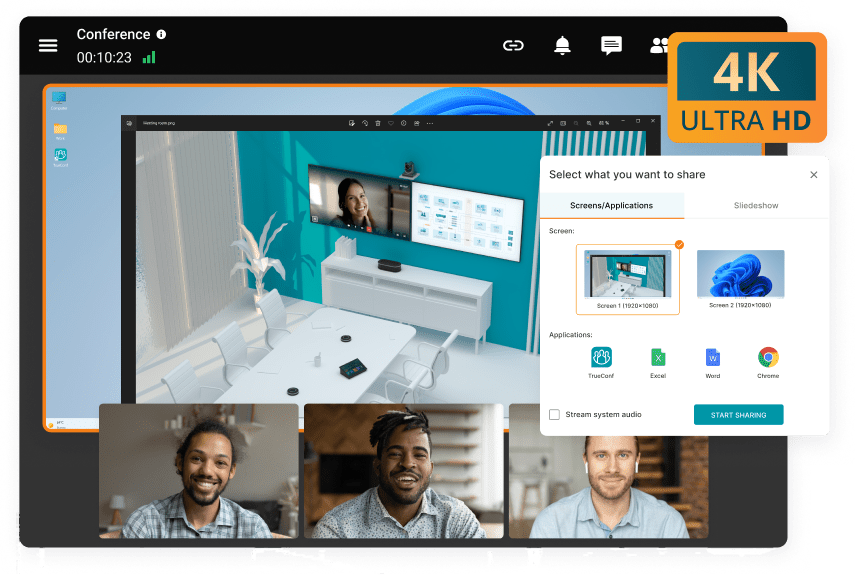
At a technical level, unified communications relies on multiple protocols and services working together. SIP is commonly used for call signaling and telephony integration, while RTP and secure variants such as SRTP transport real-time audio and video. Browser-based communications may use WebRTC, while messaging and presence commonly use persistent real-time connections and vendor-specific application protocols.
A signaling and media layer coordinates calls and conferences. This is where architecture becomes important. In a cloud platform, much of this infrastructure is operated by the service provider. In an on-premise platform such as TrueConf, central communication services can run within infrastructure controlled by the customer.
Hybrid architectures divide responsibility between local and provider-operated components. The important buyer question is not simply whether a platform is labeled “hybrid”, but which individual planes actually remain local: media, signaling, identity, administration, recording, logs, licensing, integrations, and updates may follow different paths.
Insight 1: Deployment model is more than server location.
Two platforms can both be described as hybrid while creating very different control boundaries. Enterprise buyers should map media, identity, administration, logs, updates, and external dependencies separately instead of treating “cloud”, “hybrid”, and “on-premise” as sufficient architecture descriptions.
Cloud Delivery Model Explained
In the cloud delivery model, the vendor operates the primary service infrastructure, applies platform updates, manages capacity, and exposes communication services through applications and browsers. Billing is generally subscription-based.
This minimizes internal infrastructure work. The tradeoff is that customers have less direct control over the underlying service, update timing, and some aspects of data handling than they would in a self-hosted deployment.
UC vs. UCaaS vs. CCaaS: Key Differences
|
Term |
What it covers |
Primary users |
Examples |
|---|---|---|---|
|
UC |
Voice, video, messaging, presence, and related internal communication capabilities regardless of hosting model |
Employees and internal teams |
TrueConf, 3CX and other deployable UC platforms |
|
UCaaS |
Cloud subscription delivery model for unified communications |
Employees and internal teams |
Microsoft Teams, Zoom, RingCentral, 8×8 |
|
CCaaS |
Cloud contact-center functions including routing, IVR, queues, agent tools, and customer interactions |
Customer service and sales teams |
RingCentral and 8×8 contact-center products |
Many enterprises eventually need both UC and contact-center capabilities. UC serves internal collaboration, while contact-center software manages customer-facing routing, queues, agent workflows, and service operations. RingCentral and 8×8 offer both under one vendor relationship; organizations using TrueConf for internal communications may instead combine it with a specialized contact-center platform.
Business Process Integration
A unified communication platform delivers more value when it connects with the systems employees already use. Common integration points include CRM platforms, so communications can be associated with customer records; helpdesk and ticketing systems, so support workflows remain connected; calendars, so meetings can be scheduled from existing workspaces; identity providers, so access and permissions follow corporate account lifecycle; and telephony infrastructure, so existing numbers, trunks, and calling systems can coexist during migration.
Platforms differ in integration philosophy. Microsoft Teams integrates most deeply with Microsoft 365 and related Microsoft services. Cisco Webex and RingCentral provide broad enterprise integration ecosystems. Self-hosted environments such as TrueConf often connect to existing telephony through SIP and to corporate systems through APIs, directories, calendars, and enterprise connectors.
The tradeoff is important: deep ecosystem integration can reduce implementation friction but increase switching costs. A more modular architecture may require additional integration work while leaving the organization less dependent on a single productivity ecosystem.
Insight 2: Integration depth and exit cost usually grow together.
The platform that fits an existing software stack most naturally may also become the hardest to replace later. Buyers should evaluate not only which integrations exist, but which workflows, identities, archives, phone numbers, bots, APIs, devices, and business processes would need to be migrated if the vendor changes.
Benefits of a Unified Communications Platform
|
Benefit |
What it means in practice? |
|---|---|
|
Lower software sprawl |
Fewer overlapping communication tools, contracts, and admin consoles |
|
Faster onboarding |
Users can receive a common communication identity and more consistent application experience |
|
Consistent policy |
Identity, access, retention, and administration can be managed more consistently |
|
Remote and hybrid work |
Employees use the same communication environment across office and remote locations |
|
Simplified vendor management |
Fewer contracts and support relationships when overlapping products are actually retired |
|
Data control in self-hosted deployments |
Organizations using platforms such as TrueConf can operate core communication infrastructure within customer-controlled environments |
Pros and Cons of Unified Communications Technology
Unified communications is not a universal win without tradeoffs. Consolidation can reduce licensing and administration overhead when redundant products are retired, simplify policy management, and reduce application switching for employees.
The same consolidation can increase blast radius. If voice, video, messaging, and file collaboration depend on one platform, a platform-wide outage or administrative failure can affect several communication channels at once.
Vendor dependence can also increase as identities, workflows, telephony, archives, devices, and integrations become embedded in one ecosystem. Cloud platforms transfer more infrastructure responsibility to the provider, while self-hosted platforms such as TrueConf retain more control but require greater internal operational responsibility.
Unified Communications Risks and Security Issues

The consolidation that makes unified communications convenient also concentrates risk. Because voice, video, messaging, files, identity, and administration can converge on the same platform, a security or availability failure may have a broader effect than the failure of a single point solution.
Enterprise security teams should evaluate unauthorized meeting access, identity and offboarding controls, administrative privileges, data interception, recording and file retention, external integrations, logging, update processes, vendor access, and where communication data is processed.
Security controls commonly include SSO, MFA, role-based administration, meeting access controls, integration reviews, encryption, logging, and network segmentation. In self-hosted environments such as TrueConf, organizations can additionally control the network boundary and deployment environment directly, but they also become responsible for securing and maintaining that infrastructure.
Deployment Models Compared: Cloud, On-Premise, and Hybrid
|
Deployment model |
Infrastructure control |
Internal effort |
Typical buyer |
Examples |
|---|---|---|---|---|
|
Cloud/UCaaS |
Primarily provider-operated |
Lower |
Businesses prioritizing rapid deployment and managed infrastructure |
Zoom, Microsoft Teams, RingCentral, 8×8, GoTo Connect |
|
On-premise |
Primarily customer-operated |
Higher |
Organizations requiring local infrastructure control or isolated operation |
TrueConf, Mattermost, 3CX |
|
Hybrid |
Split between customer and provider |
Depends on architecture |
Enterprises combining sensitive local workloads with selected cloud services |
TrueConf, Cisco Webex, 3CX, Element |
Insight 3: The deployment model should be the first filter when it represents a hard constraint.
A platform can win on features and deployment speed yet still fail a data-residency, isolation, infrastructure-control, or procurement requirement. When those constraints are mandatory, comparing every vendor on the same feature checklist wastes time because part of the market is disqualified before functionality is considered.
Who Should Choose TrueConf, and Who Should Choose the Alternatives?
TrueConf is designed for organizations that want video, messaging, administration, and communication services deployed on customer-controlled infrastructure rather than relying entirely on a vendor-operated public cloud. This is relevant to government, defense, healthcare, finance, critical infrastructure, and other environments where network architecture and data control are important procurement factors.
It is also relevant to organizations that need communication inside isolated or restricted networks where continuous public internet access cannot be assumed.
- Zoom and Microsoft Teams fit organizations prioritizing managed cloud delivery and low infrastructure overhead
- Cisco Webex fits large and regulated enterprises that want cloud or hybrid enterprise collaboration
- RingCentral and 8×8 fit organizations combining UC and contact center procurement
- Mattermost and Element fit buyers whose priority is self-hosted or federated messaging rather than full UC coverage
- 3CX fits telephony-centric organizations wanting deployment flexibility
- GoTo Connect fits smaller businesses that prefer a managed phone-and-meetings service
A Better Buyer Test: Control Planes, Not Just Features
|
Control Area |
What to Check? |
Why It Matters? |
|---|---|---|
|
Media |
Where audio and video are processed and routed |
Determines exposure and network dependency |
|
Identity |
Directory, SSO, MFA, account lifecycle |
Defines who remains authoritative for access |
|
Administration |
Who can change policy, users, recordings, and system configuration |
Determines operational control |
|
Updates |
Provider-driven vs. customer-scheduled changes |
Affects change-management responsibility |
|
Observability |
Logs, monitoring, diagnostics, audit evidence |
Affects incident response and governance |
|
External dependencies |
Licensing, DNS, cloud services, internet connectivity, third-party integrations |
Shows whether the platform can operate under required failure or isolation scenarios |
Vendor Analysis
1. TrueConf

TrueConf is a video conferencing and unified communications platform built around self-hosted and hybrid deployment. TrueConf Server can run inside customer-controlled infrastructure without requiring core audio, video, and messaging traffic to be routed through a vendor-operated public cloud.
TrueConf combines video meetings, messaging, enterprise administration, webinars, directory integration, and interoperability with existing SIP/H.323 communication infrastructure. Customer-operated deployment also gives IT teams greater control over network segmentation and update timing.
The tradeoff is operational responsibility. A self-hosted platform requires internal resources for infrastructure, monitoring, updates, backup, scaling, and disaster recovery. TrueConf is therefore strongest where control and local operation justify that additional responsibility.
Boost your team’s productivity with TrueConf Server Free!
2. Zoom

Zoom began as a cloud video conferencing platform and expanded into a broader communications portfolio including phone, messaging, webinars, and workplace collaboration.
Zoom fits organizations that want a managed service with relatively low deployment friction and are comfortable with a cloud-first operating model. Its selection boundary is infrastructure control: it is a stronger fit when meeting usability and managed cloud delivery matter more than operating the core UC environment on customer infrastructure.
3. Microsoft Teams

Microsoft Teams is a natural fit for organizations standardized on Microsoft 365 because of its integration with Outlook, SharePoint, Microsoft identity services, Teams Phone, and the wider Microsoft compliance and administration ecosystem.
Its strongest differentiator is ecosystem fit. The advantage is greatest when Microsoft 365 already anchors identity, productivity, calendars, documents, and workflow; it becomes less decisive for organizations without a dominant Microsoft stack or with hard requirements for locally operated core communications.
4. Cisco Webex

Cisco Webex targets large enterprises and security-conscious organizations with meetings, messaging, calling, devices, administration, and hybrid enterprise integration options.
Webex is relevant where buyers want a broad enterprise communications stack with Cisco’s network and collaboration ecosystem. It is particularly useful when organizations want cloud collaboration while retaining selected hybrid integration with existing telephony, rooms, or enterprise infrastructure.
5. RingCentral

RingCentral is a cloud UCaaS provider combining business communications with contact-center capabilities. It is aimed at organizations that want phone, messaging, meetings, and customer-facing communications within one broader vendor portfolio.
Its value is strongest when the organization wants to consolidate employee communications and contact-center procurement under one provider. Buyers that need customer-operated infrastructure should treat this as a more important boundary than feature breadth.
6. 8×8

8×8 combines UCaaS and CCaaS for internal collaboration and customer interactions. Its main buyer proposition is vendor consolidation across voice, meetings, messaging, and contact-center operations.
It fits organizations that prioritize a cloud communications portfolio and a single-vendor commercial relationship. Its advantage is less distinctive where a buyer needs deep customer control of infrastructure or only internal UC without broader contact-center consolidation.
7. Mattermost

Mattermost is a self-hosted messaging and collaboration platform aimed at engineering, government, defense, and other environments requiring infrastructure control or isolated-network operation.
Mattermost should not be evaluated as a like-for-like replacement for every full UC suite because messaging and workflow collaboration are its center of gravity. Organizations that need richer video conferencing or telephony may combine it with another platform such as TrueConf.
8. Element

Element is built around the Matrix protocol and focuses on federated, encrypted messaging with self-hosted deployment options.
Its strongest fit is where protocol openness, federation, and messaging architecture matter more than an all-in-one telephony, video, and contact-center portfolio. Buyers should therefore compare it primarily against messaging-led collaboration architectures rather than only against full UC suites.
9. 3CX
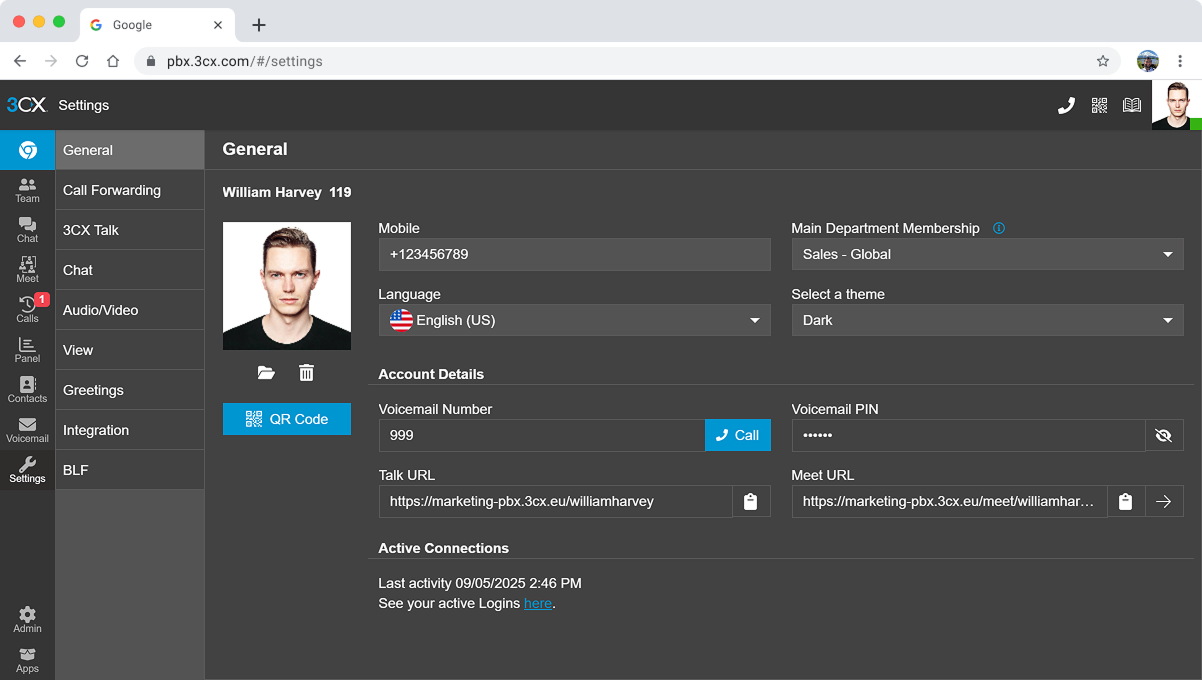
3CX is a PBX-centric communications platform that can be deployed on customer infrastructure, private cloud infrastructure, or as a hosted service. It combines telephony with messaging, meetings, and related communication functions.
3CX is particularly relevant to SMB and mid-market organizations where telephony is the primary requirement and video collaboration is secondary to the phone system. Buyers whose priority is richer enterprise video and collaboration may evaluate broader UC suites instead.
10. GoTo Connect
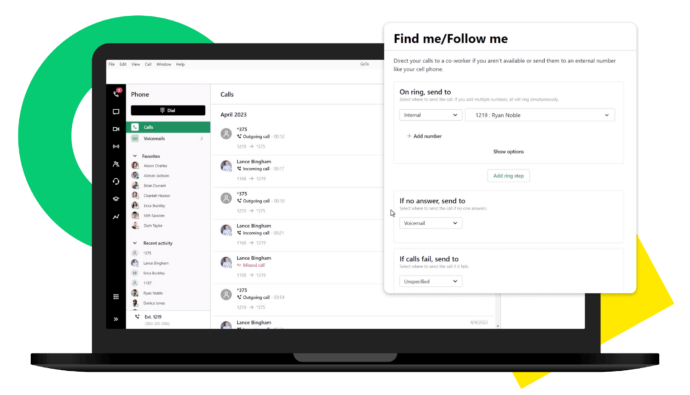
GoTo Connect is a cloud communications platform aimed at small and mid-size businesses that want phone, meetings, and messaging in a managed service.
It fits organizations that value relatively simple cloud deployment and low infrastructure responsibility. It is less aligned with buyers whose primary selection criterion is customer-operated UC infrastructure or isolated-network operation.
Feature Comparison Table
|
Vendor |
Video |
Messaging |
Telephony |
Self-hosted option |
Primary architecture |
|---|---|---|---|---|---|
|
TrueConf |
Yes |
Yes |
Via integration |
Yes |
On-premise / hybrid |
|
Zoom |
Yes |
Yes |
Yes |
No full self-hosted UC deployment |
Cloud |
|
Microsoft Teams |
Yes |
Yes |
Teams Phone |
No full self-hosted UC deployment |
Cloud |
|
Cisco Webex |
Yes |
Yes |
Yes |
Hybrid components |
Cloud / hybrid |
|
RingCentral |
Yes |
Yes |
Yes |
No |
Cloud |
|
8×8 |
Yes |
Yes |
Yes |
No |
Cloud |
|
Mattermost |
Not a full native UC video suite |
Yes |
No |
Yes |
Self-hosted messaging |
|
Element |
Available |
Yes |
Not primary focus |
Yes |
Federated / self-hosted messaging |
|
3CX |
Yes |
Yes |
Yes |
Yes |
PBX-centric flexible deployment |
|
GoTo Connect |
Yes |
Yes |
Yes |
No |
Cloud |
Real-World Examples of Unified Communications in Use
- Hospital network: uses an on-premise platform such as TrueConf for staff meetings, messaging, and video workflows where communication infrastructure must remain under internal control
- Government ministry: uses self-hosted communications for internal collaboration and isolated networks for more restricted workflows
- Distributed software company: uses Microsoft Teams because development and productivity workflows already sit inside Microsoft 365
- Retail chain: uses RingCentral to combine store telephony, head-office communications, and customer-contact services
- Large enterprise: uses Cisco Webex where broad enterprise collaboration and Cisco integration are more important than fully self-hosted operation
These examples illustrate the same pattern: the right platform depends less on which vendor has the longest feature list and more on how deployment, existing infrastructure, communication workflows, administration, and compliance requirements interact.
How to Set Up and Roll Out a Unified Communications Platform?
Implementing unified communications is a migration project rather than a one-time software installation. A phased process reduces integration and adoption risk:
- Audit current tools and traffic. Catalog phone systems, meeting platforms, messaging applications, endpoints, integrations, and usage patterns.
- Define requirements before evaluating vendors. Document deployment constraints, data residency, telephony requirements, integrations, identity, user scale, compliance, and operational ownership.
- Plan the architecture. For on-premise and hybrid platforms, define server, network, firewall, telephony, storage, backup, and redundancy requirements. For cloud services, test WAN readiness, identity integration, and external dependencies.
- Run a real pilot. Test the platform with an actual department rather than relying only on a demo environment.
- Validate administration and security. Include IT, security, compliance, and service owners before production rollout.
- Manage organizational change. Provide role-specific training and explain which legacy tools are being retired.
- Roll out in phases. Migrate teams or functions incrementally while maintaining appropriate coexistence with legacy systems.
- Measure adoption and retire duplication. Consolidation produces savings only when redundant systems are actually decommissioned.
Migration Risk by Workstream
|
Workstream |
Common Failure |
What to Validate in the Pilot? |
|---|---|---|
|
Identity |
Duplicate accounts or incorrect permissions |
Provisioning, SSO, offboarding, groups, roles |
|
Telephony |
Numbering, routing, trunk, or emergency-calling gaps |
Inbound/outbound calling, routing, PBX coexistence |
|
Meetings |
Poor room or external-participant interoperability |
Rooms, browsers, guests, recording, bandwidth |
|
Messaging |
Users continue using legacy shadow channels |
History, search, files, notifications, retention |
|
Integrations |
Critical workflows depend on unsupported connectors |
Calendars, CRM, APIs, bots, helpdesk, directories |
|
Operations |
IT cannot monitor, recover, or support the platform effectively |
Logs, backup, failover, support process, admin access |
Insight 4: Migration risk is usually concentrated in dependencies, not core calling and messaging features.
Most enterprise UC products can make calls, host meetings, and send messages. Projects fail when identity, telephony, rooms, archives, workflows, integrations, or operational responsibilities are discovered too late. A realistic pilot should therefore test the surrounding system, not only the user interface.
Cost and Total Cost of Ownership Considerations
Subscription price per user is only one part of unified communications cost. Cloud buyers should also consider telephony charges, advanced administration or compliance features, premium support, contact-center licensing, migration work, integration development, and any legacy platforms kept in parallel.
For on-premise and hybrid platforms such as TrueConf, more cost shifts toward customer infrastructure, private cloud resources, internal administration, support, backup, redundancy, and maintenance. Whether this is more or less expensive than UCaaS depends on organization size, existing infrastructure, staffing, contract terms, and how long the platform is modeled.
A major temporary TCO driver is coexistence. During migration, an organization may be paying for the legacy PBX, existing meeting and messaging tools, new UC licenses, SIP infrastructure, integration work, and migration support at the same time.
A fair comparison should therefore use the same multi-year horizon and include licensing, implementation, integration, training, operations, support, coexistence, migration, redundancy, and decommissioning of legacy systems.
TCO Responsibility by Deployment Model
|
Cost/Responsibility |
Cloud UCaaS |
Self-Hosted UC |
|---|---|---|
|
Core infrastructure |
Provider-operated |
Customer-operated or customer-selected hosting |
|
Software updates |
Primarily provider-managed |
Customer schedules and applies according to product model |
|
Capacity planning |
Mostly abstracted into subscription |
Customer responsibility |
|
Backup/disaster recovery |
Depends on service and contract |
Customer designs platform recovery architecture |
|
Administration |
Customer manages tenant and policy |
Customer manages platform and underlying environment |
|
Vendor dependency |
Higher for runtime service availability |
Lower for runtime cloud availability, but software and support dependencies remain |
Insight 5: Consolidation value appears only when legacy tools are actually retired.
Buying one UC platform does not automatically reduce software sprawl. If the legacy PBX, existing conferencing tools, messaging apps, recording systems, and duplicate licenses remain active indefinitely, the organization has added another layer rather than consolidated. Decommissioning milestones should therefore be part of both the migration plan and the TCO model.
The Future of Unified Communications
Artificial intelligence is becoming a native part of communication platforms through transcription, translation, summaries, search, meeting assistance, and workflow automation. These capabilities increasingly affect both productivity and data-governance decisions because AI processing may introduce additional services, data flows, or infrastructure dependencies.
The important procurement question is not only whether a platform provides AI transcription or summaries, but where that processing occurs and what data leaves the organization’s normal communication boundary.
Buyers should check whether audio, transcripts, prompts, summaries, or metadata are sent to an external AI service and which retention and administration policies apply.
Deeper CRM, calendar, ticketing, identity, and business-system integration is turning communication platforms into workflow infrastructure rather than a separate communications silo.
Security and deployment control are also becoming stronger differentiators. Buyers increasingly examine data residency, administrative access, encryption scope, AI data processing, external dependencies, and whether sensitive communication workloads can remain inside customer-controlled environments.
This distinction matters when using analyst coverage focused primarily on UCaaS. Cloud-market comparisons are useful for cloud-first buyers, but organizations requiring self-hosted or isolated infrastructure need to evaluate a broader set of architecture criteria than cloud market position alone.
Security and Compliance Considerations
CISOs and compliance teams evaluating a unified communication platform should look beyond broad “enterprise security” claims and check concrete architecture and governance questions: where data is processed and stored, which communication paths are encrypted, who controls identity and administration, what logs are available, which external services are mandatory, and which certifications or regulatory controls apply to the exact service being purchased.
Self-hosted platforms such as TrueConf give the organization more direct control over infrastructure and network boundaries. Cloud platforms such as Zoom, Microsoft Teams, RingCentral, 8×8, and Cisco Webex instead rely more heavily on provider-operated infrastructure, certification programs, contracts, and shared-responsibility models.
Insight 6: “Enterprise-grade security” is not a useful procurement criterion by itself.
A better evaluation asks who controls each layer, which protections apply to each communication path, and which evidence applies to the exact deployment. Cloud and self-hosted platforms can both be appropriate, but they distribute trust, evidence, and operational responsibility differently.
Our Rating: How the Platforms Stack Up
|
Vendor |
Ease of deployment |
Security / control depth |
Feature breadth |
Rating |
|---|---|---|---|---|
|
TrueConf |
Medium |
Very high for customer-controlled deployment |
High |
4.6 |
|
Microsoft Teams |
High |
High |
Very high |
4.5 |
|
Zoom |
High |
Medium to high |
High |
4.4 |
|
Cisco Webex |
Medium to high |
High |
High |
4.4 |
|
RingCentral |
High |
Medium to high |
High |
4.3 |
|
Mattermost |
Medium |
High for self-hosted messaging |
Medium |
4.2 |
|
8×8 |
High |
Medium |
Medium to high |
4.1 |
|
Element |
Medium |
High for federated encrypted messaging |
Medium |
4.1 |
|
3CX |
Medium |
Medium |
Medium |
4.0 |
|
GoTo Connect |
High |
Medium |
Medium |
4.0 |
Strengths of TrueConf for Unified Communications
- Customer-controlled deployment for organizations that do not want core communications dependent on a public UCaaS service
- Video conferencing, messaging, presence, administration, and enterprise collaboration within one platform
- Operation inside private and isolated networks where public internet access may be restricted
- Integration with enterprise directories and compatible SIP/H.323 telephony and room infrastructure
- Greater customer control over network architecture, administration, and update timing
Limitations to Plan For
- Self-hosted deployment requires more internal IT responsibility than a fully managed UCaaS subscription
- Infrastructure sizing, backup, monitoring, redundancy, updates, and disaster recovery remain customer responsibilities
- Organizations already deeply standardized on Microsoft 365 may find Microsoft Teams easier to integrate into everyday productivity workflows
- Businesses wanting UC and a full contact center from one cloud vendor may prefer RingCentral or 8×8
- A self-hosted architecture does not eliminate operational or supply-chain risk; it changes who owns more of that risk
How to Choose the Right Unified Communication Platform
- Start with hard deployment constraints. Decide whether public cloud, hybrid, or customer-controlled infrastructure is acceptable before comparing secondary features.
- Map communication scope. Determine whether you need only meetings and chat or a broader platform covering telephony, messaging, rooms, webinars, external calling, and administration.
- Map the existing software stack. Include identity, calendars, CRM, ticketing, productivity suites, telephony, SIP trunks, room systems, devices, and archiving.
- Define governance requirements. Specify data location, administrator access, logs, retention, update policy, external dependencies, and incident-response requirements.
- Compare total operating responsibility. Cloud reduces infrastructure work; self-hosting provides more direct control but requires internal operational capability.
- Run a real pilot. Test call quality, messaging, identity, rooms, integrations, telephony, administrator workflows, and recovery procedures with actual users.
- Plan migration and exit before signing. Understand how users, numbers, message history, recordings, workflows, and integrations could be migrated both into and out of the platform.
Empower your video conferencing experience with TrueConf!
FAQ
What is the difference between a unified communication platform and UCaaS?
A unified communication platform is the broader category combining voice, video, messaging, presence, and related communication functions regardless of deployment model. UCaaS specifically describes cloud-delivered unified communications. TrueConf can be deployed on customer-controlled infrastructure, which distinguishes it from cloud-only UCaaS products.
Which unified communication platform fits strict data-residency or isolated-network requirements?
The relevant shortlist is usually platforms with genuine self-hosted or hybrid deployment rather than cloud-only UCaaS. TrueConf is designed for customer-controlled deployment and can operate inside private networks, making it relevant where communication infrastructure must remain under organizational control.
Can a hybrid unified communication platform still depend on the public cloud?
Yes. A hybrid label does not mean that media, identity, administration, licensing, integrations, or other critical services are all local. A TrueConf deployment should therefore be evaluated by which specific communication and control functions remain inside customer-controlled infrastructure.
Can a unified communication platform replace a traditional PBX?
A UC platform can replace or integrate with parts of a traditional PBX environment when it supports the required calling, numbering, routing, and SIP connectivity. TrueConf integrates with compatible telephony infrastructure, so organizations can include existing PBX and SIP systems in a broader UC architecture rather than replacing everything at once.
What should a CISO check before approving a unified communication platform?
A CISO should verify data flows, identity and administrator control, encryption scope, logs, retention, external dependencies, update governance, and which compliance evidence applies to the actual deployment. With TrueConf, customer-controlled deployment gives security teams more direct control over infrastructure, but the organization must also secure and maintain that environment correctly.
What is the biggest mistake when migrating to unified communications?
A common mistake is evaluating only core calling, meetings, and messaging while discovering identity, telephony, room, integration, archive, or governance problems after rollout. A TrueConf pilot should therefore test the full surrounding environment, including directories, SIP infrastructure, administration, network conditions, and recovery procedures.
When is TrueConf a better fit than Microsoft Teams, Zoom, or RingCentral?
TrueConf is a stronger fit when customer-controlled deployment, private-network operation, existing SIP/H.323 infrastructure, or tighter control over communication architecture is a hard requirement. Microsoft Teams, Zoom, and RingCentral are generally easier choices when managed cloud delivery and ecosystem convenience are more important than operating the communication infrastructure directly.
About the Author
Nikita Dymenko is a technology writer and business development professional with more than six years of experience in the unified communications industry. Drawing on his background in product management, strategic growth, and business development at TrueConf, Nikita creates insightful articles and reviews about video conferencing platforms, collaboration tools, and enterprise messaging solutions.


Follow us on social networks