
Communication Security: The Complete Guide to Protecting Your Data in Transit
Summarize article with AI



Quick Summary (What You Need to Know First)
Before diving deep, here are the most critical takeaways from this guide:
|
Key Point |
Takeaway |
|---|---|
|
Biggest threat in 2026 |
Man-in-the-Middle (MitM) attacks, responsible for approximately 35% of data breaches |
|
Most effective single control |
End-to-end encryption (E2EE) stops over 99% of passive eavesdropping attempts |
|
Fastest win for organizations |
Enforce TLS 1.3 across all internal and external communications immediately |
|
Most overlooked vulnerability |
Metadata leakage — even encrypted messages expose who talks to whom and when |
|
Regulatory impact |
GDPR, HIPAA, and PCI-DSS all require documented communication security policies. For organizations in banking and fintech specifically, API security compliance for financial services adds another layer — covering requirements like PCI DSS 4.0 and DORA that go beyond general communication security policy. |
|
Emerging priority |
Post-quantum cryptography migration should begin now for long-lived sensitive data |
Bottom Line: Communication security is not a product you buy — it is a practice you embed into every layer of your technology stack and organizational culture. Most breaches happen not because encryption does not exist, but because it is misconfigured, optional, inconsistently applied, or skipped entirely for the sake of performance or convenience.
What Is Communication Security?
Communication security (COMSEC) is the discipline of preventing unauthorized interception, disruption, manipulation, or exploitation of information as it travels between parties — across networks, devices, applications, or physical channels.
Originally a military term, NATO formally defined COMSEC in the 1950s during the Cold War as nation-states invested heavily in securing diplomatic and military communications against adversarial interception. The discipline encompassed cryptographic devices, secure telephone units, and classified document handling procedures. Over the following decades, as digital networks became the backbone of commerce, governance, and personal life, the principles of COMSEC expanded far beyond military application.
Today, communication security applies universally: from a hospital transmitting patient records between departments to a financial institution settling transactions across continents, from a journalist communicating with a whistleblower to a manufacturing company coordinating with its supply chain, often supported by Application Security Posture Management (ASPM) solutions to identify and reduce security risks across applications. The underlying challenge remains identical — ensuring that information reaches its intended recipient intact, unread by unauthorized parties, and originating from a verified source.
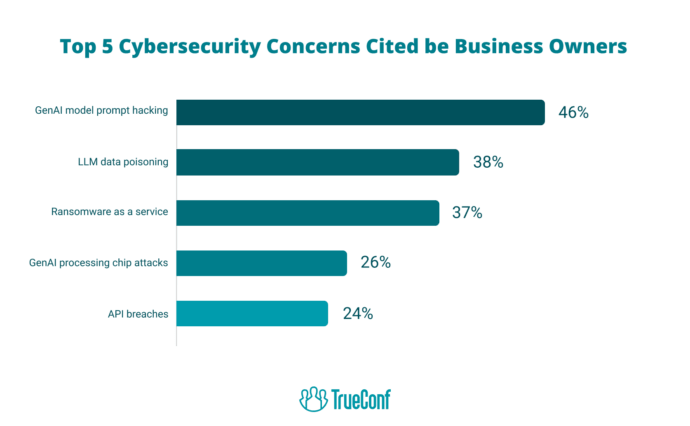
Core Goals of Communication Security
Communication security is built on four foundational principles that define what “secure communication” actually means in practice:
Confidentiality ensures that only intended recipients can access and read the communicated information. This is the most commonly understood goal and is primarily achieved through encryption. Without confidentiality, any party positioned on the network path between sender and recipient can read the message content.
Integrity ensures that the message has not been altered, either accidentally through transmission errors or deliberately by an attacker. A communication system without integrity guarantees can expose organizations to corrupted data, falsified instructions, or manipulated financial records — all without any obvious indication that tampering has occurred.
Availability ensures that communication channels remain operational and accessible to authorized users when needed. Denial-of-service attacks, infrastructure failures, and intentional jamming all represent threats to communication availability. In critical sectors like healthcare or emergency services, availability failures can have life-threatening consequences.
Authentication ensures that communicating parties are genuinely who they claim to be. Without authentication, an attacker can impersonate a trusted server, a colleague, or an executive, leading to credential theft, fraudulent transactions, or unauthorized access. Authentication is the dimension of communication security most frequently exploited in social engineering and phishing attacks.
These four properties are interdependent. A system that provides confidentiality but not authentication is vulnerable to impersonation. A system that provides integrity but not confidentiality reveals its content to any observer. Robust communication security requires all four properties simultaneously.
Why Communication Security Matters More Than Ever
The Threat Landscape at a Glance
The financial and operational stakes of communication security failures have reached levels that make investment in protective measures not merely advisable but existentially necessary for most organizations.
|
Metric |
Value |
Source |
|---|---|---|
|
Global cost of cybercrime |
$9.5 trillion annually |
Cybersecurity Ventures |
|
Average cost of a single data breach |
$4.88 million |
IBM Cost of a Data Breach Report, 2024 |
|
Percentage of breaches involving data in transit |
Approximately 45% |
Verizon DBIR 2024 |
|
Average time to identify a breach |
194 days |
IBM, 2024 |
|
Average time to contain a breach after identification |
64 days |
IBM, 2024 |
|
Percentage of breaches involving human error |
68% |
Verizon DBIR 2024 |
These numbers reflect only the direct, measurable costs. The indirect costs — reputational damage, regulatory fines, customer attrition, increased insurance premiums, and executive liability — frequently dwarf the direct financial losses, particularly for organizations in regulated industries or those serving enterprise clients with strict vendor security requirements.
Key Drivers Increasing Risk Today
-
Remote and hybrid work normalization has fundamentally changed the communication security landscape. Corporate traffic that once traveled exclusively across controlled internal networks now flows over residential broadband connections, shared apartment Wi-Fi networks, hotel wireless networks, and coffee shop hotspots. Each of these environments introduces threats that a corporate perimeter was designed to prevent. Security teams can no longer assume that traffic originates from a trusted network just because it carries valid corporate credentials.
-
API proliferation has created an enormous expansion of communication attack surface. Modern enterprise applications commonly execute thousands of API calls per user session, each representing a communication channel between services. Many of these APIs are inadequately secured — using deprecated TLS versions, lacking mutual authentication, or exposing sensitive data in error messages. The 2023 OWASP API Security Top 10 highlighted broken authentication and excessive data exposure as the most prevalent API communication vulnerabilities.
-
5G network expansion introduces both capabilities and risks. While 5G provides stronger encryption than previous generations, its architecture creates new attack vectors through network slicing vulnerabilities, increased reliance on software-defined networking, and the dramatic expansion of connected devices communicating across the network. The sheer volume of 5G-connected IoT devices creates communication channels that are rarely monitored and inconsistently secured.
-
AI-powered attacks have lowered the barrier for sophisticated communication security attacks. Automated tools can now enumerate valid cipher suites across thousands of servers per hour, identify expired or improperly configured certificates at scale, generate highly personalized phishing communications that bypass traditional detection, and probe API endpoints for authentication weaknesses faster than human security teams can respond.
-
Supply chain communication interdependencies create security obligations that extend far beyond an organization’s direct control. Modern enterprises integrate dozens or hundreds of third-party services, each communicating with internal systems through APIs, webhooks, and data feeds. The security of these communication channels depends on the practices of external vendors, whose security posture may be unknown or inadequate.
-
Regulatory expansion has made communication security a legal obligation rather than merely a best practice. The EU’s NIS2 Directive (effective October 2024), the SEC’s cybersecurity disclosure rules (effective December 2023), and increasing enforcement activity under GDPR have created binding requirements around communication security. For organisations managing online identities, domain privacy protection can also be an important consideration when protecting sensitive registration information.
Types of Communication Security
Understanding the full taxonomy of communication security helps organizations identify gaps in their current posture and allocate resources appropriately.
1. Cryptographic Security
Cryptographic security is the application of mathematical algorithms to transform readable information into a form that can only be reversed by parties possessing the appropriate keys. It forms the technical foundation of most modern communication security controls.
|
Type |
Description |
Common Applications |
Current Standards |
|---|---|---|---|
|
Symmetric encryption |
Single shared key encrypts and decrypts data |
Bulk data encryption, VPN tunnels, disk encryption |
AES-256-GCM, ChaCha20-Poly1305 |
|
Asymmetric encryption |
Mathematically linked public/private key pair |
TLS handshakes, email encryption, digital certificates |
RSA-4096, ECDSA P-384 |
|
Hashing |
One-way transformation producing fixed-length output |
Password storage, file integrity verification, certificate fingerprints |
SHA-256, SHA-3, BLAKE2 |
|
Digital signatures |
Prove authorship, integrity, and non-repudiation |
Code signing, email authentication, document signing |
ECDSA, EdDSA (Ed25519) |
|
Key exchange |
Secure derivation of shared secret over insecure channel |
TLS handshake, Signal Protocol |
ECDH, X25519, CRYSTALS-Kyber (PQC) |
|
Message authentication codes |
Verify both integrity and authenticity of a message |
API authentication, TLS record layer |
HMAC-SHA256, GMAC |
The strength of cryptographic security depends not only on algorithm selection but on key length, key management practices, implementation quality, and the overall protocol design. A mathematically strong algorithm implemented with poor key management provides negligible real-world security.
2. Transmission Security (TRANSEC)
Transmission security addresses the protection of communication channels themselves, independent of the content being transmitted. Where cryptographic security hides what is being said, TRANSEC hides the fact that communication is occurring at all, or makes it impossible to jam or intercept reliably.
Key TRANSEC techniques include:
-
Frequency hopping involves rapidly switching the carrier frequency of a radio signal according to a pre-shared sequence. Even if an adversary detects the signal at one frequency, the transmission has already moved before sufficient data can be intercepted. Frequency hopping is used in military radio systems and civilian technologies including Bluetooth and certain Wi-Fi implementations.
-
Spread spectrum distributes a signal across a wide frequency band rather than concentrating it at a single frequency. This makes the signal resistant to narrow-band jamming and harder to detect against background radio noise. The technique was originally developed for military applications and is now foundational to GPS, Wi-Fi (802.11), and LTE/5G communications.
-
Traffic flow security involves generating cover traffic — dummy communications that are indistinguishable from real traffic — to prevent adversaries from inferring information from communication patterns. Even without decrypting messages, an adversary who observes that an organization dramatically increases encrypted traffic volume before a major announcement gains exploitable intelligence.
-
Low probability of interception and detection (LPI/LPD) techniques combine multiple approaches to minimize the likelihood that a communication is detected at all, independent of whether it could be decoded. These techniques are primarily used in military and intelligence contexts.
3. Emission Security (EMSEC)
Every electronic device generates unintentional electromagnetic emissions as a byproduct of its operation. Monitors emit signals that partially encode the displayed image. Keyboards emit signals that partially encode which keys are pressed. Network cables radiate signals that carry the transmitted data.
Emission security, formalized under the TEMPEST standard (a classified US/NATO program), defines requirements for shielding equipment to prevent these emissions from being captured and reconstructed by an adversary outside the building or facility.
Practical TEMPEST concerns include:
-
Van Eck phreaking — reconstructing monitor displays from electromagnetic emissions at distances up to several hundred meters
-
Acoustic emanations — recovering keystrokes or printer output from acoustic signals
-
Power line analysis — inferring computations from power consumption patterns
-
USB and peripheral cable emissions — data reconstruction from radiated signals on peripheral cables
TEMPEST-certified equipment is standard in government, intelligence, and defense environments handling classified information. Commercial organizations handling sensitive intellectual property, unreleased financial data, or legally privileged communications should consider EMSEC risks in their facility security planning.
4. Physical Communication Security
The physical layer of communication security encompasses the protection of hardware, cabling, facilities, and infrastructure that carry communications.
Physical security measures relevant to communication include:
-
Secure rooms and SCIFs (Sensitive Compartmented Information Facilities) — purpose-built rooms that prevent electromagnetic, acoustic, and optical surveillance, used for classified government work
-
Tamper-evident and tamper-resistant hardware — network equipment fitted with physical controls that reveal or prevent unauthorized access to internal components
-
Cable shielding and management — shielded twisted pair (STP) or fiber optic cabling that resists electromagnetic interception and physical tapping
-
Locked distribution frames and patch panels — physical access controls on network infrastructure
-
Hardware security modules (HSMs) — dedicated physical devices for cryptographic key storage and operations that resist extraction even under physical attack
-
Secure hardware disposal — degaussing, shredding, or certified destruction of storage media and communication hardware at end of life
Physical security is frequently the weakest link in communication security programs. An attacker with physical access to a network switch, server, or cable run can bypass sophisticated software security controls entirely, which is why organizations often complement cybersecurity measures with retail security systems to strengthen on-site protection.
5. Network Communication Security
Network communication security focuses on protecting the infrastructure layer over which communications travel, controlling what traffic can flow between network segments, and detecting anomalous communication patterns.
Core components include:
-
Next-generation firewalls (NGFW) — inspect traffic at application layer, not just port/protocol, enabling granular control over communication flows
-
Intrusion Detection and Prevention Systems (IDS/IPS) — analyze communication patterns for signatures of known attacks and behavioral anomalies
-
Virtual Private Networks (VPN) — create encrypted tunnels across public networks, extending the security properties of private networks to remote users
-
Zero Trust Network Access (ZTNA) — replaces the implicit trust of network location with continuous, policy-based verification of every communication attempt
-
Secure Web Gateways (SWG) — inspect and control outbound web communications, blocking malicious destinations and enforcing acceptable use policies
-
Email security gateways — filter inbound and outbound email communications for malware, phishing, and data exfiltration.
-
Proxy server — acts as an intermediary between internal users and external networks, masking internal IP addresses, filtering outbound requests, and enforcing access policies that reduce the organization’s exposure to web-based threats. In specialized healthcare operations, secure proxy workflows ensure that third-party services, such as virtual receptionists for medical practices, can interact with appointment scheduling systems and patient admission databases without exposing internal networks or violating HIPAA data handling requirements.
-
Network segmentation and microsegmentation — divide networks into isolated zones to limit lateral movement if a communication channel is compromised
How Communication Security Works: Core Technologies Explained
TLS/SSL — The Backbone of Secure Internet Communication
Transport Layer Security (TLS) is the cryptographic protocol that secures the majority of internet communications. When a browser displays a padlock icon, it indicates that TLS has established an encrypted, authenticated connection between the browser and the web server. TLS is the mechanism behind HTTPS, secure email transmission (SMTPS, IMAPS), and secure API communication.
Understanding how TLS works is essential for anyone responsible for implementing or auditing communication security. The TLS 1.3 handshake process is as follows:
Step 1 — Client Hello: The client initiates the connection by sending its supported cipher suites, TLS version, a randomly generated value, and key share data for the key exchange algorithms it supports. In TLS 1.3, this message already includes the information needed to begin key derivation, enabling a faster handshake than previous versions.
Step 2 — Server Hello: The server selects the cipher suite and key exchange mechanism from the options offered by the client, generates its own random value and key share, and sends its digital certificate. The certificate contains the server’s public key and is signed by a trusted Certificate Authority.
Step 3 — Certificate Verification: The client verifies the server’s certificate by checking the signature chain back to a trusted Certificate Authority (CA) in its trust store, confirming that the certificate is not expired, not revoked (via OCSP or CRL), and that the domain name matches the certificate’s Subject Alternative Names.
Step 4 — Key Derivation: Both parties independently derive the same session keys using their respective private keys and the other party’s public key share, through an elliptic curve Diffie-Hellman key exchange. This process — Perfect Forward Secrecy (PFS) — ensures that even if a private key is later compromised, previously recorded sessions cannot be decrypted.
Step 5 — Encrypted Communication: With session keys established, all further communication is encrypted using a symmetric cipher (typically AES-256-GCM or ChaCha20-Poly1305) with HMAC-based integrity verification.
TLS Version Comparison:
|
Version |
Release Year |
Current Status |
Primary Weaknesses |
|---|---|---|---|
|
SSL 2.0 |
1995 |
Prohibited (RFC 6176) |
Multiple fundamental design flaws |
|
SSL 3.0 |
1996 |
Prohibited (RFC 7568) |
POODLE attack, padding oracle vulnerabilities |
|
TLS 1.0 |
1999 |
Deprecated (2020) |
BEAST attack, weak cipher support, POODLE variant |
|
TLS 1.1 |
2006 |
Deprecated (2020) |
Weak cipher support, no AEAD cipher suites |
|
TLS 1.2 |
2008 |
Acceptable with configuration |
Configuration-dependent; weak when old cipher suites enabled |
|
TLS 1.3 |
2018 |
Recommended |
No known protocol-level weaknesses |
A critical operational point: configuring TLS 1.3 as a minimum does not automatically disable TLS 1.2. Server configurations must explicitly disable older versions and cipher suites to prevent downgrade attacks that force connections to use deprecated protocols.
Certificate Management at Scale
Certificate management is one of the most operationally challenging aspects of communication security. The 2021 outage at Let’s Encrypt, when a root certificate expired, disrupted HTTPS for millions of websites and services. The 2023 Cloudflare certificate expiry incident similarly disrupted communications for a significant portion of internet infrastructure.
Effective certificate management requires:
-
Inventory and discovery — maintaining an accurate, current inventory of every certificate in use across the organization, including certificates on internal services, development environments, and third-party integrations. Shadow certificates — those deployed outside formal processes — are a persistent source of unexpected expiry failures.
-
Automated renewal — implementing ACME protocol-based auto-renewal (as provided by Let’s Encrypt, ZeroSSL, and commercial CAs) eliminates the human error and operational overhead of manual renewal processes. Organizations should target zero manually renewed certificates.
-
Monitoring and alerting — configuring alerts at 60 days, 30 days, 14 days, and 7 days before expiry, with escalating urgency and recipient lists. Certificate monitoring should be treated with the same priority as uptime monitoring.
-
Revocation readiness — maintaining documented procedures for certificate revocation in the event of key compromise or server decommissioning. Certificates that are no longer in use but have not been revoked remain potential attack vectors if the associated private keys are ever exposed.
End-to-End Encryption (E2EE) — Architecture and Implications
End-to-end encryption is a communication architecture in which messages are encrypted on the originating device and remain encrypted until decrypted on the receiving device. No intermediate party — including the service provider’s servers — can access the plaintext content.
This is architecturally distinct from transport encryption (TLS), which protects data between a client and server but leaves the server able to access plaintext. A service using only TLS encrypts the communication channel but can read, store, and process message content. A service using E2EE cannot access message content even if legally compelled, or if the server infrastructure is compromised.
Comparison of E2EE implementations:
|
Application |
Protocol |
Metadata Collection |
Open Source |
Default E2EE |
|---|---|---|---|---|
|
Signal |
Signal Protocol |
Minimal (registration phone number, last connection date) |
Yes |
Yes |
|
|
Signal Protocol |
Extensive (contacts, usage patterns, device info) |
No |
Yes |
|
iMessage |
Apple’s protocol |
Moderate (stored by Apple) |
No |
Yes (Apple devices) |
|
Telegram |
MTProto 2.0 |
Moderate |
Partial |
No (opt-in) |
|
ProtonMail |
OpenPGP + Proton protocol |
Minimal |
Yes |
Yes (between Proton users) |
|
Gmail |
TLS (not E2EE) |
Extensive |
No |
No |
|
Wire |
Proteus (Signal-derived) |
Minimal |
Yes |
Yes |
Unique Insight 1: E2EE solves confidentiality but does not solve metadata security. Even with Signal — widely regarded as the most secure consumer messaging application — the service provider’s servers know that User A contacted User B, at what time, with what frequency, and for approximately how long. Intelligence agencies have historically used metadata alone, without reading a single message, to map criminal organizations, identify confidential informants, and establish probable cause for surveillance. The former NSA Director Michael Hayden stated that the agency “kills people based on metadata.” For genuinely sensitive communications — investigative journalism, legal strategy, executive deliberations during M&A — metadata obfuscation through tools like the Tor network, anonymous remailers, or secure drop systems represents a necessary additional layer that E2EE alone does not provide.
Public Key Infrastructure (PKI) — How Trust Works at Scale
Public Key Infrastructure is the collection of roles, policies, hardware, software, and procedures needed to create, manage, distribute, use, store, and revoke digital certificates. PKI is what makes it possible for a browser to trust that it is communicating with the genuine Bank of America website rather than an impersonating server, without having previously exchanged any secret with that specific server.
The PKI trust hierarchy operates as follows:
-
Root Certificate Authorities are highly trusted entities whose public keys are pre-installed in operating systems, browsers, and mobile devices. There are approximately 150 root CAs trusted by major browsers. Root CA private keys are stored in Hardware Security Modules in physically secured facilities, often with multi-party authorization requirements for any operation.
-
Intermediate Certificate Authorities are issued certificates by root CAs and conduct the day-to-day business of certificate issuance to subscribers. This architecture isolates the root CA from operational risk — if an intermediate CA is compromised, it can be revoked without affecting the root.
-
End-entity certificates are issued to servers, services, email addresses, or individuals and are used in actual communication. They specify the domain names or identities they authenticate, the validity period, permitted uses, and key parameters.
-
Certificate Revocation mechanisms — Certificate Revocation Lists (CRL) and Online Certificate Status Protocol (OCSP) — allow CAs to invalidate certificates before their expiry date in the event of key compromise, entity name change, or CA error. The practical limitations of revocation checking have driven the adoption of Certificate Transparency logs and shorter certificate validity periods as supplementary integrity mechanisms.
VPN Technologies — Detailed Comparison
Virtual Private Networks create encrypted tunnels across public networks, allowing remote users and branch offices to communicate as if they were on a private network. A residential IP VPN applies the same encrypted-tunnel principle but routes traffic through ISP-assigned residential addresses, which can be useful when users need secure access from public or shared networks without the same reputation issues often associated with datacenter VPN traffic.
|
VPN Protocol |
Encryption |
Speed |
NAT Traversal |
Security Assessment |
Best Use Case |
|---|---|---|---|---|---|
|
WireGuard |
ChaCha20-Poly1305 |
Excellent |
Good |
Excellent — modern, minimal codebase |
New deployments, mobile users |
|
OpenVPN |
AES-256-GCM |
Good |
Excellent |
Very Good — well-audited, flexible |
Corporate remote access |
|
IPSec/IKEv2 |
AES-256 |
Very Good |
Moderate |
Very Good — strong but complex configuration |
Mobile devices, site-to-site |
|
IPSec/L2TP |
AES-256 |
Good |
Poor |
Acceptable — added overhead from double encapsulation |
Legacy compatibility |
|
SSTP |
AES-256 |
Good |
Excellent |
Good — proprietary Microsoft protocol |
Windows environments |
|
PPTP |
MPPE-128 |
Excellent |
Excellent |
Unacceptable — do not use in any security-conscious context |
No current legitimate use |
WireGuard deserves particular attention. Its entire codebase is approximately 4,000 lines — compared to OpenVPN’s hundreds of thousands — making it significantly easier to audit, less likely to contain exploitable bugs, and faster to update when vulnerabilities are discovered. This design philosophy of intentional minimalism is increasingly recognized as a security feature, not a limitation.
Zero Trust Architecture — A Paradigm Shift in Communication Security
Zero Trust Architecture (ZTA) represents a fundamental reconceptualization of how communication security should be structured. The traditional model assumed that traffic inside the corporate network perimeter was trustworthy and traffic outside was not. Remote access VPNs extended the perimeter to include remote users. Zero Trust eliminates the concept of a trusted perimeter entirely. In practice, many enterprises implement this shift through SASE architecture, which extends Zero Trust principles to every network connection rather than just the perimeter.
In a Zero Trust model, every communication request — regardless of source network, device, or user identity — is treated as potentially hostile until verified. Trust is established dynamically based on multiple factors: identity verification, device posture assessment, time of access, location, behavioral baselines, and the sensitivity of the requested resource. An identity verification service can strengthen this process by confirming that users are legitimate before they receive access to sensitive communications, systems, or data.
Core Zero Trust principles applied to communication security:
-
Verify explicitly — authenticate and authorize every communication attempt using all available data points, not just network location or credentials alone.
-
Use least privilege access — limit communication permissions to the minimum necessary for a specific task. A payroll application should not have communication access to the customer database.
-
Assume breach — design communication security controls as if adversaries are already present inside the network. Microsegmentation, lateral movement detection, and encrypted east-west traffic (internal service-to-service communication) follow from this assumption.
Major Threats to Communication Security
1. Man-in-the-Middle (MitM) Attacks
A Man-in-the-Middle attack occurs when an adversary positions themselves between two communicating parties, intercepting traffic without either party’s knowledge. Unlike passive eavesdropping, MitM attacks allow the adversary to read, modify, and inject messages into the communication stream.
Common attack vectors:
-
ARP spoofing exploits the Address Resolution Protocol, which maps IP addresses to MAC addresses on local networks. By sending falsified ARP responses, an attacker can associate their MAC address with the IP address of a legitimate host, causing all traffic destined for that host to be routed through the attacker’s machine instead.
-
Rogue Wi-Fi access points (Evil Twin attacks) involve creating a wireless access point with the same or similar name as a legitimate network. Users connecting to the rogue access point route all their communication through the attacker’s infrastructure. This attack is particularly effective in hotels, airports, and conference venues where users expect to see multiple access point options.
-
SSL stripping involves downgrading an HTTPS connection to HTTP by intercepting the initial request before the TLS handshake. When a user types “bank.com” without the HTTPS prefix, the browser first makes an unencrypted HTTP request. An attacker who intercepts this request can serve an HTTP version of the site while maintaining an HTTPS connection to the actual server, making the attack invisible to the server and appearing legitimate to a user who does not verify the browser’s security indicators.
-
DNS hijacking redirects domain name resolution to attacker-controlled servers by compromising DNS resolution at the recursive resolver, the ISP level, or through malware on the victim’s device. Users attempting to reach a legitimate service are silently redirected to an identical-looking malicious service. One way to spot this is to regularly check DNS history, since reviewing how a domain’s records have changed over time can reveal unexpected redirections or unauthorised modifications that point to hijacking.
Countermeasures: TLS with HTTP Strict Transport Security (HSTS), DNSSEC, certificate transparency monitoring, network-level MitM detection through anomaly detection of ARP tables, and FIDO2/passkey authentication that binds credentials to specific origins.
2. Eavesdropping and Passive Interception
Passive interception involves monitoring communication channels without modifying traffic or alerting the communicating parties. Because passive attacks leave no trace and do not disrupt the communication, they are among the most difficult to detect.
Historical examples include the NSA’s PRISM program (revealed by Edward Snowden in 2013), which involved mass collection of internet communications passing through major US internet service providers, and the Carnivore system used by the FBI for wiretapping internet communications. The legal and technical frameworks for lawful interception remain active areas of development in most jurisdictions.
Countermeasures: Strong end-to-end encryption, Perfect Forward Secrecy to prevent retroactive decryption of captured traffic, and metadata obfuscation for the most sensitive communications.
3. Replay Attacks
A replay attack involves capturing a legitimate communication and retransmitting it at a later time to deceive the recipient. Unlike MitM attacks, the adversary may not need to understand the content of the communication — simply replaying a captured authentication token or authorization message may be sufficient.
A practical example: if an API uses a static authentication token in HTTP headers, an attacker who captures one legitimate API request can replay it indefinitely, authenticating as the legitimate user without ever knowing their credentials.
Countermeasures: Nonces (numbers used once) that are cryptographically tied to specific sessions, short-lived tokens with tight expiry windows, timestamps incorporated into message authentication codes, and sequence numbers that allow recipients to detect duplicate messages.
4. Protocol Downgrade Attacks
Protocol downgrade attacks force communicating parties to use older, weaker protocol versions or cipher suites that the attacker can then exploit. These attacks typically exploit negotiation mechanisms that were designed to maintain backward compatibility.
The POODLE (Padding Oracle On Downgraded Legacy Encryption) attack, discovered in 2014, forced TLS connections to downgrade to SSL 3.0, which could then be exploited through a padding oracle vulnerability. The LOGJAM attack (2015) forced TLS connections to use export-grade 512-bit Diffie-Hellman key exchange, which could be broken in hours with moderate computational resources.
Countermeasures: Explicitly disabling all deprecated protocol versions server-side, using TLS_FALLBACK_SCSV to prevent illegitimate downgrade attempts, and configuring strict cipher suite policies that exclude all weak options.
5. Side-Channel Attacks
Side-channel attacks extract information from the physical implementation of a communication system rather than attacking the cryptographic algorithms directly. The mathematics of AES-256 cannot be broken by brute force with any known technology, but the specific implementation of AES-256 on a particular processor may leak information through timing variations, power consumption patterns, or electromagnetic emissions.
-
Timing attacks exploit the fact that cryptographic operations may take slightly different amounts of time depending on the values being processed. By measuring these timing differences across many operations, attackers can infer secret key material. Timing attacks have been demonstrated against TLS implementations, SSH, and numerous cryptographic libraries.
-
Cache timing attacks, including the Spectre and Meltdown vulnerabilities disclosed in 2018, allowed processes to infer the contents of other processes’ memory by exploiting CPU cache behavior. These vulnerabilities affected communication security by potentially exposing cryptographic keys and decrypted message content in shared computing environments.
-
Acoustic attacks have been demonstrated to recover RSA private keys by analyzing the acoustic emissions of a computer during decryption operations, using a microphone placed near the target machine.
Countermeasures: Constant-time cryptographic implementations, hardware isolation, acoustic shielding in high-security environments, and a disciplined patch management process that keeps cryptographic libraries updated to address implementation vulnerabilities.
6. Social Engineering and Communication Impersonation
While technical attacks receive considerable attention, social engineering remains the most effective and prevalent method of compromising communication security. Social engineering exploits human psychology rather than technical vulnerabilities, bypassing even the most sophisticated cryptographic controls.
-
Business Email Compromise (BEC) attacks impersonate executives, vendors, or partners to fraudulently redirect financial transactions or obtain sensitive information. The FBI’s Internet Crime Complaint Center reported over $2.9 billion in BEC losses in 2023 alone. Many BEC attacks involve no malware and no technical exploitation — they rely entirely on the social dynamics of organizational communication.
-
Voice phishing (vishing) uses phone calls to impersonate IT support, financial institutions, or regulatory authorities. AI-generated voice synthesis has dramatically lowered the barrier to convincing impersonation, enabling attackers to clone executives’ voices from publicly available audio for fraudulent authorization calls.
-
Deepfake video in communication security contexts has progressed from theoretical concern to documented reality. A 2024 incident involved a Hong Kong finance employee being deceived into transferring $25 million after participating in a video call with deepfake versions of company executives.
Countermeasures: Out-of-band verification for high-stakes communication, DMARC/DKIM/SPF enforcement for email authentication, user awareness training with simulated phishing, and multi-party authorization requirements for sensitive financial communication.
7. Supply Chain Communication Attacks
Supply chain attacks compromise software, hardware, or services used to handle communications before they reach the target organization. The attack surface created by the interconnected communication dependencies of modern organizations is vastly larger than what most security teams monitor.
The SolarWinds attack (2020) exemplified this threat at scale. Malicious code inserted into a software update mechanism was distributed to approximately 18,000 organizations, providing attackers with access to internal communications across government agencies, defense contractors, and Fortune 500 companies for months before detection. The incident underscored that even the largest advertisers in the Fortune 500 are not immune to sophisticated cyberattacks and must prioritize robust supply chain security alongside their broader business operations.
The 2020 SUNBURST malware specifically targeted communication security by disabling antivirus software and establishing covert communication channels to attacker-controlled infrastructure, disguising its traffic to resemble legitimate SolarWinds monitoring communication.
Countermeasures: Software Bill of Materials (SBOM) for communication software dependencies, vendor security assessments, network monitoring for anomalous communication patterns, and code signing verification for software updates.
8. Insider Threats
Authorized users represent a distinct threat category because they possess legitimate access to communication systems and channels, making their activities harder to distinguish from normal operations through technical controls alone.
Insider threats include:
-
Malicious insiders who deliberately exfiltrate sensitive communications, sell access to communication systems, or sabotage communication infrastructure. These actors may be motivated by financial gain, ideological disagreement, coercion, or personal grievance.
-
Negligent insiders who inadvertently compromise communication security through careless actions — using personal devices on corporate networks, clicking phishing links, sharing credentials, misconfiguring security settings, or failing to apply security patches.
-
Compromised insiders whose legitimate accounts and credentials have been taken over by external attackers, who then use them to blend into normal communication patterns.
Countermeasures: Zero Trust Architecture with continuous behavioral monitoring, least-privilege access with regular access review, data loss prevention (DLP) controls on communication channels, and user and entity behavior analytics (UEBA) to detect anomalous communication patterns. Those controls work best when paired with an inventory of where sensitive data actually sits, so policies apply to the right files rather than everything.
The Future of Communication Security
Post-Quantum Cryptography: The Impending Transition
The security of current public-key cryptography — RSA, Elliptic Curve Cryptography (ECC), and Diffie-Hellman key exchange — relies on the computational difficulty of mathematical problems that a sufficiently powerful quantum computer could solve efficiently. Shor’s algorithm, if implemented on a large-scale fault-tolerant quantum computer, would break RSA-4096 and ECC-384 in hours rather than the trillions of years required by classical computers.
The timeline for cryptographically relevant quantum computers is actively debated among experts. Conservative estimates suggest 15 to 20 years. More aggressive assessments place the threshold at 10 years or less, particularly given the pace of investment by major nation-states. The uncertainty itself is the primary reason for urgency — organizations cannot wait for quantum computers to appear before beginning the migration process. As organizations prepare for this transition, many researchers and security teams are using a quantum computing simulator to better understand quantum algorithms, evaluate potential cryptographic risks, and experiment with post-quantum concepts without requiring access to specialized quantum hardware.
The “Harvest Now, Decrypt Later” threat is the most immediately actionable concern. Adversaries — likely nation-state intelligence services — are collecting encrypted communications today, storing them indefinitely, with the expectation that they can be decrypted once quantum computing capabilities mature. Any communication recorded today that must remain confidential in 10 to 15 years is already at risk.
NIST Post-Quantum Cryptography Standardization Program completed its first round of standardization in 2026:
|
Standard |
Algorithm |
Purpose |
Characteristics |
|---|---|---|---|
|
FIPS 203 (ML-KEM) |
CRYSTALS-Kyber |
Key encapsulation for encryption and key exchange |
Lattice-based; replaces ECDH in TLS handshakes |
|
FIPS 204 (ML-DSA) |
CRYSTALS-Dilithium |
Digital signatures |
Lattice-based; replaces ECDSA for certificates |
|
FIPS 205 (SLH-DSA) |
SPHINCS+ |
Digital signatures |
Hash-based; conservative alternative to ML-DSA |
Organizations should begin by inventorying all systems that use public-key cryptography for communication security, assessing the longevity requirements of the data those systems protect, and developing migration roadmaps prioritizing systems with the longest data lifetime requirements.
Artificial Intelligence in Communication Security
Artificial intelligence is simultaneously strengthening communication security defenses and enabling more sophisticated attacks, creating a technological arms race with significant implications.
Defensive AI applications in communication security:
-
AI-powered anomaly detection can identify abnormal communication patterns — unusual data volumes, unexpected geographic origins, atypical protocol usage, or novel communication relationships between systems — that would be invisible in the noise of normal network traffic. Machine learning models trained on baseline communication behavior can detect compromised accounts, active data exfiltration, and command-and-control communication with significantly fewer false positives than rule-based detection.
-
Natural language processing applied to email and business messaging content (with appropriate privacy controls) can detect sophisticated phishing, BEC, and social engineering attempts that bypass signature-based filters by avoiding known malicious patterns.
-
Automated certificate management, TLS configuration analysis, and cryptographic vulnerability scanning enable continuous security posture monitoring at a scale impossible for human teams.
Offensive AI applications threatening communication security:
-
AI-generated phishing and spear-phishing messages are now indistinguishable from legitimate human communication in terms of grammar, tone, and contextual relevance. Large language models can generate thousands of personalized phishing messages per hour, each tailored to the specific role, responsibilities, and communication style of the target.
-
Voice synthesis AI can clone an individual’s voice from a few seconds of audio, enabling convincing impersonation in voice phishing calls. In 2023, a UK energy company executive was deceived into transferring EUR 220,000 after receiving a call in a synthetic version of his superior’s voice.
-
Automated vulnerability research using AI can discover implementation flaws in cryptographic libraries and communication protocols more rapidly than the security community can patch them.
The Secure by Default Movement
A fundamental shift in communication security philosophy is underway, driven by the recognition that security options that require deliberate configuration will be misconfigured. The architecture of choice — where secure communication is a feature users or developers must explicitly enable — has been demonstrably insufficient.
The secure by default movement makes secure communication the path of least resistance and insecure communication the exceptional case requiring explicit justification.
Examples of this shift:
-
Apple’s App Transport Security (ATS) requires iOS and macOS applications to use HTTPS with TLS 1.2 minimum for all network communication by default. Developers who need to make an HTTP connection must explicitly declare an exception in their application’s configuration file, creating accountability and a reviewable record.
-
Android’s Network Security Configuration applies similar default restrictions to Android applications.
-
Chrome’s HTTPS-First Mode (now default in incognito mode, opt-in globally) upgrades HTTP URLs to HTTPS automatically and warns users explicitly before loading unencrypted content.
-
WireGuard’s design philosophy makes cryptography non-negotiable — there are no configuration options for cipher suites or protocol versions, eliminating the entire class of misconfiguration vulnerabilities that plague OpenVPN and IPSec deployments.
Conclusion: Building a Resilient Communication Security Posture
Communication security is not a destination — it is a continuous discipline that must evolve alongside the threats it seeks to mitigate. As this guide has demonstrated, protecting data in transit requires more than deploying encryption and checking compliance boxes. It demands a holistic approach that integrates cryptographic rigor, operational discipline, human awareness, and strategic foresight.
The most effective communication security programs share three defining characteristics. First, they treat security as a default, not an option — embedding encryption, authentication, and verification into every communication channel by design, not as an afterthought. Second, they recognize that technology alone is insufficient: policies must be enforced, configurations must be monitored, and people must be trained to recognize and resist social engineering. Third, they plan for the future: migrating to post-quantum cryptography, adopting Zero Trust architectures, and leveraging AI defensively while preparing for its offensive misuse.
Final Takeaway: The question is no longer whether your organization needs robust communication security — it is whether you are willing to invest in making it resilient, adaptive, and enduring. Every unencrypted channel, every expired certificate, every misconfigured API endpoint represents a potential breach vector. Conversely, every enforced TLS 1.3 connection, every automated renewal process, every employee trained to spot phishing represents a layer of defense that compounds over time. Start where you are, prioritize the highest-impact controls first, and build momentum. In an era where data is both the most valuable asset and the most attractive target, communication security is not just a technical requirement — it is a strategic imperative.
As you move forward, use the checklist, frameworks, and best practices outlined in this guide as living documents — review them quarterly, adapt them to your evolving threat landscape, and measure their effectiveness through continuous testing and monitoring. The adversaries are innovating; your defenses must do the same.
The path to secure communication is clear. The time to walk it is now.
About the Author
Olga Afonina is a technology writer and industry expert specializing in video conferencing solutions and collaboration software. At TrueConf, she focuses on exploring the latest trends in collaboration technologies and providing businesses with practical insights into effective workplace communication. Drawing on her background in content development and industry research, Olga writes articles and reviews that help readers better understand the benefits of enterprise-grade communication.


Follow us on social networks