
DDIL Environments: What Must Work When Networks Fail?
DDIL environments are operational environments where connectivity is denied, disrupted or degraded, intermittent, or limited by bandwidth, latency, congestion, terrain, infrastructure damage, policy, or hostile activity. The acronym is used most often in defense, government, emergency response, remote infrastructure, maritime operations, industrial edge computing, and other situations where applications cannot assume continuous access to a central data center or public cloud.
A DDIL-ready system must continue performing its essential local functions when upstream connectivity becomes slow or disappears completely. That changes how organizations design communication, identity, data storage, synchronization, software updates, edge computing, and incident recovery. The Department of the Navy describes DDIL tactical edge conditions as involving low bandwidth, high latency, and regular disconnections from broader networks and cloud services.
|
DDIL requirement |
What it means in practice? |
Architectural response |
|---|---|---|
|
Denied connectivity |
External networks cannot be reached |
Local services, local identity, cached data, independent control plane |
|
Disrupted or degraded connectivity |
Links are unreliable, congested, or impaired |
Retry logic, prioritization, graceful degradation |
|
Intermittent connectivity |
Connections appear and disappear |
Store and forward, synchronization, conflict handling |
|
Limited bandwidth |
Available links cannot carry normal traffic volumes |
Compression, traffic prioritization, reduced media quality, local processing |
|
High latency |
Round trips are too slow for cloud-dependent workflows |
Local decision making and asynchronous operations |
|
Remote or tactical edge |
Infrastructure may be physically constrained |
Compact compute, local storage, reduced dependencies |
|
Recovery after reconnection |
Sites must return to a consistent state |
Resynchronization, reconciliation, audit, queued updates |
The central design rule is simple: a DDIL system should treat connectivity as a variable resource, not as a permanent prerequisite.
What Does DDIL Mean?

DDIL is not defined identically in every organization.
Common expansions include: Denied, Disrupted, Intermittent, and Limited bandwidth, Denied, Degraded, Intermittent, and Limited bandwidth, and Disconnected, Disrupted, Intermittent, and Limited connectivity.
The wording changes, but the operational idea remains consistent. A DDIL environment is one in which reliable enterprise connectivity cannot be assumed.
The U.S. Army currently uses the phrase disrupted, disconnected, intermittent and low-bandwidth tactical environment when describing command and control data capabilities. The Department of Defense also uses DDIL terminology for tactical cloud, identity, and edge computing requirements.
Insight 1: DDIL is not a special type of network. It is a failure model for systems that must remain useful as connectivity changes from normal to constrained to unavailable.
The Short Version
A normal enterprise application often assumes that authentication, databases, APIs, monitoring, software repositories, and collaboration services remain reachable.
A DDIL application cannot make that assumption.
The architecture therefore needs to answer five questions early:
What must continue locally? What data must already be present? Which functions can wait? Which traffic receives priority? What happens when the connection returns?
If those questions do not have explicit answers, an application may be deployable at the edge without actually being DDIL-ready.
DDIL Conditions Are Not the Same Problem
The four DDIL conditions create different technical constraints.
|
Condition |
Typical failure |
What breaks first? |
Useful response |
|---|---|---|---|
|
Denied or disconnected |
No upstream path |
Cloud authentication, SaaS, remote APIs |
Local identity, local compute, local storage |
|
Disrupted or degraded |
Packet loss, congestion, unstable route |
Real-time media, remote queries |
Adaptive quality, traffic priority, retry |
|
Intermittent |
Link repeatedly appears and disappears |
Transactions, synchronization, sessions |
Queues, checkpoints, resumable sync |
|
Limited bandwidth |
Link exists but capacity is low |
Video, large files, telemetry |
Compression, prioritization, metadata first |
|
High latency |
Link works slowly |
Interactive cloud workflows |
Local processing, asynchronous operations |
Designing only for total disconnection is not enough. A system can work perfectly offline but perform poorly when a weak link repeatedly reconnects and drops.
Intermittency is particularly difficult because the application must decide whether to send, queue, retry, merge, or discard data.
Insight 2: The hardest DDIL state is often not complete disconnection. It is unreliable connectivity that changes faster than applications can adapt.
Why DDIL Environments Matter?
DDIL requirements appear wherever connectivity loss can interrupt an operation that cannot wait for the network to recover.
|
Environment |
Why DDIL matters? |
|---|---|
|
Defense and tactical operations |
Contested, degraded, or unavailable transport can isolate users from higher-level systems |
|
Emergency and disaster response |
Damaged terrestrial infrastructure can remove public connectivity during critical operations |
|
Maritime and remote operations |
Backhaul may be expensive, intermittent, or high latency |
|
Critical infrastructure |
External communication may be deliberately restricted or operational networks isolated |
|
Air-gapped and classified sites |
Internet connectivity is intentionally absent, so local services must operate independently |
An air-gapped network represents an extreme case because external connectivity is intentionally removed. DDIL is broader because a DDIL environment can move between connected, degraded, intermittent, and completely disconnected states.
DDIL Activity in 2026
DDIL remains an active engineering and procurement problem rather than a historical military networking concept.
In February and March 2026, the U.S. Army’s DIESEL 26 event at White Sands Missile Range brought together more than 1,000 participants and evaluated more than 100 technologies in a contested DDIL environment.
Current U.S. defense procurement also continues to specify capabilities for tactical edge, closed-loop, and DDIL environments. Recent defense programs continue to fund storage, communication, identity, and edge technologies intended to operate through disconnected or degraded conditions.
These figures should not be interpreted as a market-size estimate. They show that DDIL remains a current operational requirement across experimentation, cloud infrastructure, identity, data, and communications.
What Breaks in a DDIL Environment?
The visible problem is connectivity. The deeper problem is dependency.
An application can fail in a DDIL environment even when the application server itself is running because another required service is remote.
Common hidden dependencies include cloud identity providers, DNS services, license validation, push notification services, SaaS databases, remote package repositories, public container registries, certificate services, telemetry collectors, external AI models, cloud storage, time synchronization, and remote administration portals.
A realistic DDIL test should therefore disconnect the environment and observe the entire dependency chain.
The Six Layers of a DDIL Architecture
This section answers one question: Which parts of the system must remain locally available?
|
Layer |
DDIL requirement |
Key question |
|---|---|---|
|
Compute |
Applications execute locally |
Can critical workloads run without the cloud? |
|
Data |
Required information remains available |
What is cached, replicated, or stored locally? |
|
Identity |
Users can authenticate locally |
What happens when the enterprise identity provider is unreachable? |
|
Communication |
Users continue coordinating |
Which messaging, voice, or video functions survive? |
|
Synchronization |
Disconnected changes can merge later |
How are conflicts, queues, and duplicate events handled? |
|
Management |
Systems can be administered locally |
Can operators configure, monitor, and recover the site offline? |
A platform may be strong in one layer and weak in another.
For example, a disconnected Kubernetes environment solves local application execution, but it does not automatically provide offline identity or human communication. A local messaging server solves communication, but it does not automatically provide workload orchestration.
This distinction matters when comparing vendors.
What Must Move From Cloud to the DDIL Edge?
A DDIL architecture should move only the capabilities that are required to continue the local mission when the upstream connection disappears.
The most important candidates are mission logic, the current working data set, identity and authorization data, critical AI or analytics inference, communication services, and local management functions.
Moving these capabilities closer to users reduces dependence on bandwidth, latency, and remote availability. It also avoids the common mistake of placing application compute at the edge while leaving authentication, storage, or administration dependent on a distant cloud.
The goal is not to copy the entire enterprise platform to every remote site. The goal is to identify which dependencies would stop essential work and provide local substitutes for those dependencies.
Data Availability and Store-and-Forward

Applications need to distinguish between data required now and data that can wait.
A useful model is:
local working set → queued changes → prioritized synchronization → enterprise archive
The local working set contains the information required to operate during disconnection. New data is written locally. Changes that need to leave the site are placed into durable queues. When connectivity becomes available, synchronization resumes according to priority.
Critical operational messages may move before logs, video archives, software telemetry, or large attachments.
Conflict handling matters
Two sites can modify the same object while disconnected.
When the connection returns, the system needs a deterministic rule for resolving that conflict. Depending on the data model, this may involve server authority, latest accepted update, field-level merge, version tracking, immutable events, or human review.
The important point is that reconciliation must be defined before disconnection occurs.
Identity in DDIL Environments
Identity is one of the easiest enterprise dependencies to overlook.
A locally running application can still become unusable if authentication requires a remote identity provider.
The Army’s Tactical Identity, Credential and Access Management work is explicitly intended to extend enterprise identity capabilities into denied, disconnected, intermittent, and limited-bandwidth tactical environments.
A DDIL identity model usually needs enough local information to validate users, enforce roles, evaluate authorization, handle expiration, and preserve emergency access during isolation. Those local decisions then need to reconcile with the authoritative enterprise identity source after connectivity returns.
The security challenge is to preserve least privilege without making enterprise connectivity a requirement for every access decision.
Insight 3: Offline operation is not complete until identity also works offline. A local application with cloud-only authentication is still cloud-dependent.
Communications in DDIL Environments
Communication software has several possible failure modes under DDIL conditions.
Text messaging generally tolerates weak links better than high-quality video. Voice usually requires less bandwidth than video but remains latency sensitive. File transfer can consume scarce capacity unless scheduling or prioritization is used.
A DDIL communication environment should therefore support graceful degradation.
A possible priority model is:
alerts and command messages → text chat → operational files → voice → critical video → noncritical high-resolution media
The exact order depends on the mission.
Local communication should survive upstream failure
Users in the same site should not necessarily lose messaging or meetings simply because the WAN link disappeared.
Local servers can maintain communication among connected users while external communication waits for connectivity to return.
Media needs adaptation
Video systems need bandwidth management, codec efficiency, quality adaptation, selective layouts, or the ability to fall back to audio.
A platform designed only for stable broadband may technically connect over a degraded path but provide little operational value.
Synchronization After Reconnection
Reconnection is a separate system state.
When a remote site returns online, thousands of queued events may suddenly compete for limited capacity. Without prioritization, the recovery process itself can overload the restored link.
A DDIL-aware synchronization process should define which information moves first, whether transfers can resume rather than restart, how duplicate events are detected, how conflicting versions are handled, and how much capacity remains reserved for live operations.
Synchronization traffic should never be allowed to consume capacity reserved for live operational communication after a link is restored.
The goal is not simply eventual consistency. The goal is controlled recovery without disrupting current operations.
Cloud, Edge, Air-Gapped, and DDIL Compared
These terms overlap but are not interchangeable.
|
Model |
Internet expected? |
Local operation |
Main purpose |
|---|---|---|---|
|
Public cloud |
Usually yes |
Limited |
Centralized scalable services |
|
Hybrid edge |
Periodically |
Yes |
Local workloads with cloud management |
|
DDIL |
Unreliable by definition |
Essential |
Continue through changing connectivity |
|
Disconnected edge |
No during operation |
Essential |
Local compute and data |
|
Air-gapped |
Intentionally no |
Essential |
Isolation from external networks |
A product can support an air-gapped deployment without being optimized for low-bandwidth intermittent synchronization.
It can also tolerate intermittent connectivity without supporting complete isolation.
Those are different capabilities and should be tested separately.
Platforms and Technologies for DDIL Environments
The following selection includes infrastructure platforms and communication systems because DDIL operations require both. The products are not direct substitutes.
|
DDIL layer |
Platforms in this article |
|---|---|
|
Edge infrastructure and application hosting |
Microsoft Azure Local, Red Hat OpenShift, SUSE RKE2, AWS Snowball Edge |
|
Mattermost, TrueConf Server, Element Server Suite Pro, Rocket.Chat |
The key question is therefore not which product is best overall, but which layer must remain operational during disconnection.
1. Microsoft Azure Local Disconnected Operations
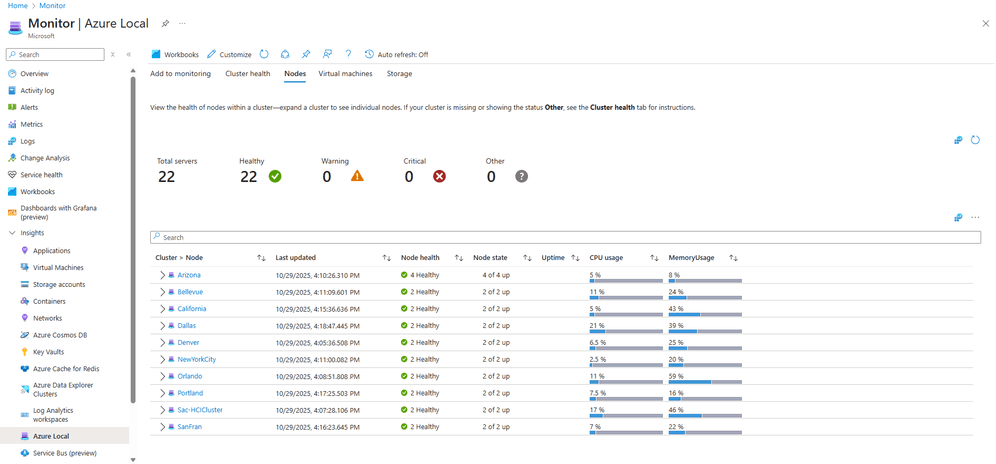
Azure Local supports a dedicated disconnected operations model that can deploy and manage infrastructure without a connection to the Azure public cloud. A local control plane provides Azure-style management for virtual machines and selected containerized services inside the environment.
Microsoft distinguishes this from ordinary connected Azure Local deployments. Connected operations can tolerate intermittent disconnections while workloads remain on-premises, while the disconnected operations model uses a local control plane specifically for environments where public cloud connectivity cannot be assumed.
AKS on Azure Local also has a disconnected operations capability, allowing Kubernetes clusters to be created and managed through the local control plane.
DDIL role: Local private cloud and application infrastructure
Local control plane: Yes
Useful capabilities: VM management, selected Azure Arc-enabled services, local Azure portal experience, local CLI and PowerShell management
Relevant scenario: Organizations that want Azure-consistent infrastructure while operating without the public Azure control plane
May not fit when: Hardware, capacity, or management overhead for the dedicated local control plane is unsuitable for the edge site
What to verify: Supported disconnected services, management-cluster sizing, licensing and registration workflow, update transfer process, identity design, and recovery procedures
2. Red Hat OpenShift
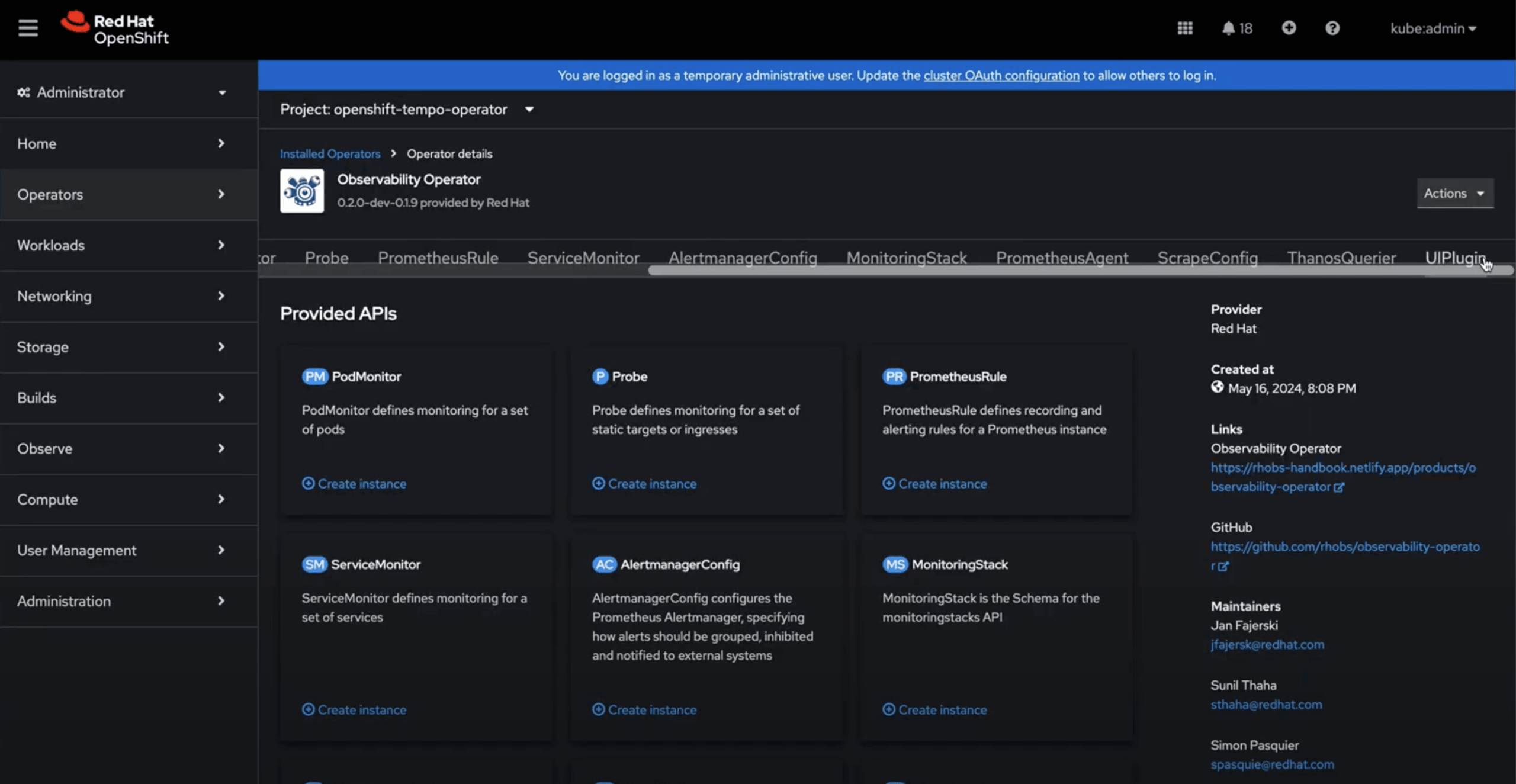
Red Hat documents dedicated installation and lifecycle procedures for OpenShift clusters in disconnected environments. OpenShift can be installed on on-premises infrastructure and operated using locally available installation content rather than public repositories.
Disconnected OpenShift architectures commonly rely on mirroring container images and release content into registries available inside the isolated environment.
This makes OpenShift relevant when a DDIL site needs a local application platform for containerized services rather than one purpose-built mission application.
DDIL role: Local container application platform
Local execution: Yes
Useful capabilities: Kubernetes-based workloads, local cluster operation, mirrored content, disconnected installation and updates
Relevant scenario: Organizations deploying several containerized applications to controlled or disconnected infrastructure
May not fit when: The requirement is only messaging, conferencing, or another single application and does not justify a full container platform
What to verify: Registry mirroring, operator dependencies, update workflow, identity dependencies, storage, node sizing, observability, and which application components still expect external services
3. Mattermost

Mattermost supports self-hosted operation in air-gapped environments. Its documentation describes staging software, container images, and other resources outside the isolated network, transferring them through an approved path, and configuring cloud-dependent capabilities for local operation.
Mattermost also provides Calls and operational collaboration capabilities. Its Calls Offloader documentation includes an air-gapped installation model in which required binaries and images are packaged on a connected machine and transferred into the isolated environment.
The platform is particularly relevant where DDIL communication is centered on persistent messaging and operational coordination.
DDIL role: Messaging, calls, and operational collaboration
Local communication: Yes
Air-gapped deployment: Supported
Useful capabilities: Channels, messaging, Calls, Playbooks, APIs, plugins, local administration
Relevant scenario: Technical, operational, incident-response, and mission teams requiring a self-hosted communication workspace
May not fit when: The organization wants a vendor-operated service and does not want responsibility for operating the local collaboration infrastructure
What to verify: Calls topology, identity source, push notification behavior, plugins, container images, external dependencies, file storage, backup, and upgrade transfer process
4. TrueConf Server

TrueConf Server is a self-hosted unified communications platform for messaging, video conferencing, calling, files, and enterprise communication.
The full version operates autonomously inside a corporate network and does not require an internet connection. Chats, files, conference recordings, video conferencing, and related services can remain under organization control.
Current TrueConf Server documentation supports conferences with up to 2,000 participants, along with SIP and H.323 interoperability for existing video systems.
TrueConf also supports offline server registration for eligible licenses. Internet access can be completely disabled when the server is used only within the corporate network.
For organizations operating several independently managed networks, TrueConf can also use server federation to connect communication environments when connectivity between them is available.
DDIL role: Local messaging, calls, and video communication
Local communication without internet: Yes
Useful capabilities: Messaging, channels, files, video meetings, conferencing, SIP, H.323, LDAP/LDAPS, federation, offline operation
Relevant scenario: Sites that need internal communication to remain functional when internet or upstream cloud connectivity is unavailable
May not fit when: The primary requirement is a general-purpose edge compute platform for arbitrary containerized mission applications
What to verify: Local network topology, media bandwidth, directory availability, federation behavior, external connectivity rules, recording storage, server sizing, offline licensing procedure, and behavior over constrained WAN links
Boost your team’s productivity with TrueConf Server Free!
5. SUSE Rancher Prime RKE2
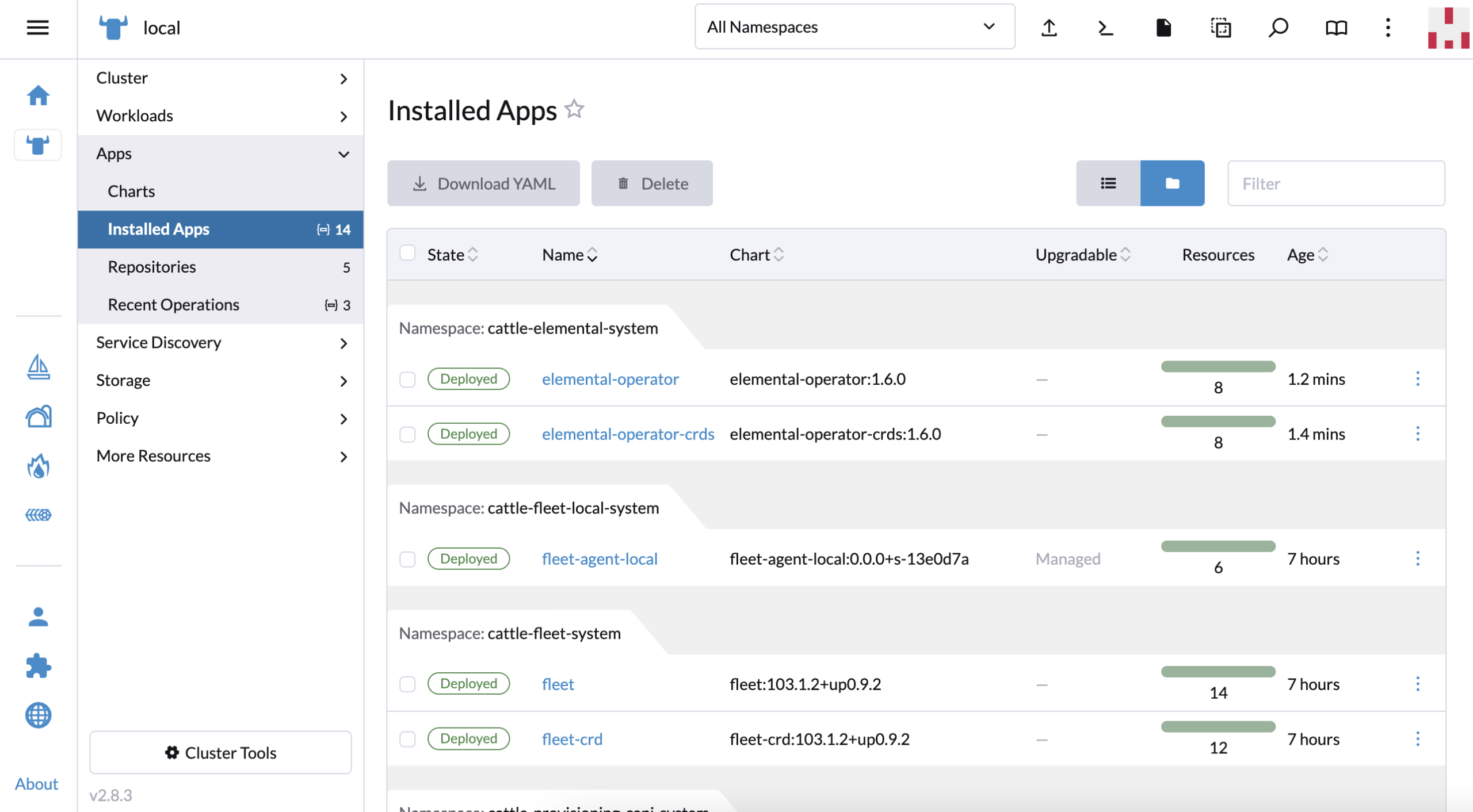
RKE2 supports installation in air-gapped environments using several content delivery models.
SUSE documents tarball-based installation, private registries, and Hauler for transporting RKE2 artifacts into disconnected infrastructure. Required container images and binaries can be staged externally and copied into the isolated environment before installation.
RKE2 also supports Windows worker nodes in air-gapped environments when the required images and configuration are staged appropriately.
DDIL role: Lightweight local Kubernetes infrastructure
Air-gapped deployment: Supported
Useful capabilities: Kubernetes workloads, private registry operation, offline artifact installation, Linux and supported Windows worker scenarios
Relevant scenario: Edge sites that need a Kubernetes platform with explicit disconnected installation procedures
May not fit when: Local teams lack the operational capability to maintain Kubernetes and application dependencies
What to verify: Image staging, private registry availability, CNI configuration, OS packages, SELinux dependencies, default routing, storage, update logistics, and application-specific cloud dependencies
6. Element Server Suite Pro

Element Server Suite Pro supports deployment in fully air-gapped environments.
Element documents an architecture for isolated networks, including single-instance deployments, multi-site air-gapped environments, tactical and remote operations, and cross-domain connectivity. It also provides release bundles containing resources that would normally be downloaded from the internet.
Element positions the platform for messaging, calling, federation, and high-assurance collaboration using Matrix.
Its air-gapped architecture is especially relevant where independent sites need local operation but may later communicate through controlled connectivity.
DDIL role: Secure messaging and collaboration
Air-gapped operation: Supported
Useful capabilities: Matrix messaging, federation, Element Call, multi-site deployment, private registries, controlled cross-domain architectures
Relevant scenario: Organizations that want open-protocol communication across sovereign or disconnected sites
May not fit when: A simpler same-product local communication architecture is preferred over operating a Matrix ecosystem
What to verify: Federation scope, MatrixRTC networking, STUN/SFU design, synchronization behavior over high-latency links, local identity, encryption, storage, and air-gapped upgrade process
7. Rocket.Chat

Rocket.Chat supports cloud-hosted, self-managed, and air-gapped deployment models.
Its current documentation describes air-gapped operation as a fully isolated deployment in which administrators control the infrastructure and data. Rocket.Chat specifically positions this model for defense, intelligence, and other highly restricted environments.
Air-gapped installation can use transferred Docker images or a private registry. Cloud-dependent services require alternative configuration when no outbound connectivity exists.
DDIL role: Messaging and team collaboration
Air-gapped operation: Supported
Useful capabilities: Channels, messaging, APIs, applications, federation options, self-management, local deployment
Relevant scenario: Organizations that want a self-managed messenger for isolated or controlled environments
May not fit when: The deployment cannot accommodate paid air-gapped licensing or the operational work required to replace cloud-dependent functions
What to verify: Push notifications, Marketplace application installation, license behavior, federation, identity, mobile clients, private registry, video or calling dependencies, and upgrade workflow
8. AWS Snowball Edge
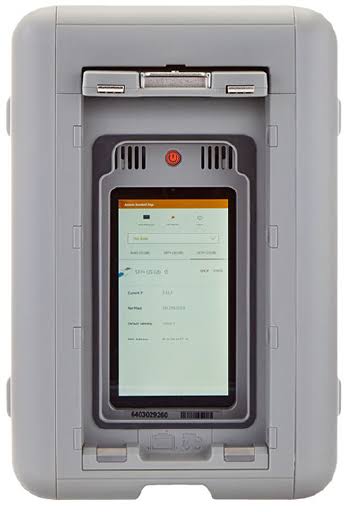
AWS Snowball Edge has been designed for local compute and storage in rugged, disconnected, and austere environments.
Snowball Edge devices can run EC2-compatible compute, local S3-compatible storage, and selected edge workloads with little or no connectivity. AWS documentation also describes running EKS Anywhere on Snowball Edge and preparing it for disconnected operation using a local private registry.
A major current limitation matters in 2026. AWS states that support for Snowball devices in commercial AWS Regions will end on December 31, 2026. This lifecycle condition should be reviewed before using Snowball Edge as the basis for a new long-term deployment.
DDIL role: Rugged edge compute and local storage
Disconnected compute: Yes
Useful capabilities: EC2-compatible instances, S3-compatible local storage, local processing, EKS Anywhere support, rugged hardware
Relevant scenario: Existing government or specialized deployments that already use Snowball Edge for disconnected compute
May not fit when: A new commercial deployment requires a long future lifecycle beyond the announced 2026 commercial support end date
What to verify: Region eligibility, existing job status, support lifecycle, hardware availability, migration path, local storage requirements, application packaging, and alternatives for new deployments
DDIL Platforms Compared by Primary Role
|
Platform |
Primary DDIL role |
Fully local operation |
Air-gapped support |
Main distinction |
|---|---|---|---|---|
|
Azure Local |
Private cloud infrastructure |
Yes |
Disconnected mode |
Local Azure-style control plane |
|
Red Hat OpenShift |
Container platform |
Yes |
Yes |
Disconnected enterprise Kubernetes |
|
Mattermost |
Team communication |
Yes |
Yes |
Messaging plus operational collaboration |
|
TrueConf Server |
Unified communications |
Yes |
Yes |
Local messaging, video, SIP and H.323 |
|
SUSE RKE2 |
Kubernetes infrastructure |
Yes |
Yes |
Compact air-gapped Kubernetes deployment |
|
Element Server Suite Pro |
Secure collaboration |
Yes |
Yes |
Matrix-based sovereign communication |
|
Rocket.Chat |
Yes |
Yes |
Flexible self-managed messaging |
|
|
AWS Snowball Edge |
Rugged compute and storage |
Yes |
Yes |
Portable edge hardware and local AWS-compatible services |
A DDIL architecture may use a local infrastructure platform such as OpenShift, Azure Local, or RKE2 underneath communication and mission applications such as Mattermost, TrueConf, Element, or Rocket.Chat.
Insight 4: DDIL should be evaluated as a stack, not as a product feature. Compute, identity, storage, communication, and synchronization can fail independently.
How to Choose Technology for a DDIL Environment?

This section answers a different question from the six-layer model above: what sequence should an organization follow when selecting and validating DDIL technology?
Define the minimum local mission
Identify the functions that must still work after the external connection disappears.
For a collaboration system, that may be local messaging and voice. For an analytics platform, it may be sensor ingestion and local inference. For a command environment, it may include identity, maps, messaging, operational data, and local application hosting.
Classify dependencies
Every required function should be mapped to local, remote, or optional.
A supposedly local application can still fail because DNS, authentication, licensing, storage, or certificate validation is remote.
Define acceptable degradation
Not every capability must remain at full quality.
A DDIL video platform might move from high-definition video to lower resolution, then voice, then text. A data platform may stop transferring raw sensor data while continuing to transmit alerts and summaries.
Design reconnection before deployment
The system should define how queued information returns to the wider network.
Waiting until the first real disconnection to define conflict resolution is too late.
Test the disconnected environment
A meaningful validation should cover sign-in, application startup, local communication, access to required data, creation of new information, link loss during active work, reconnection, synchronization, conflicting changes, application restart, and local administration.
What a DDIL Evaluation Should Produce?
The previous section defines the selection process. This table defines the concrete outputs that should exist when that process is complete.
|
Evaluation area |
Required output |
|---|---|
|
Mission continuity |
List of capabilities that must work offline |
|
Dependency map |
Every local and external service required |
|
Data model |
Local working set and synchronization rules |
|
Identity |
Offline authentication and authorization model |
|
Traffic policy |
Priority classes for constrained links |
|
Degradation |
Defined fallbacks for each application |
|
Reconnection |
Queue, retry, reconciliation, and conflict rules |
|
Updates |
Approved method for software and container transfer |
|
Security |
Local logging, credential, certificate, and key management |
|
Testing |
Repeatable disconnect and recovery test plan |
A product should not be approved for DDIL use only because it has an “offline” or “air-gapped” deployment option.
The complete operating model needs to be tested.
Common DDIL Architecture Mistakes
Treating DDIL as only a networking problem
Adding another radio or satellite connection can improve availability, but it does not remove application dependencies on remote identity, cloud storage, or central APIs.
Assuming air-gapped means DDIL-ready
Air-gapped installation proves that software can exist without internet access.
It does not prove that it can synchronize efficiently over a weak link, tolerate repeated reconnects, prioritize traffic, or reconcile conflicting data.
Caching data without planning updates
A local cache helps only if the data needed during isolation is already present and operators know how stale it can become.
Ignoring identity expiration
Certificates, tokens, credentials, and cached authorization can expire during extended disconnection.
Sending everything after reconnection
Bulk synchronization can consume the newly restored link and prevent live operational traffic from working.
Designing for bandwidth but not latency
A link may have usable throughput but still be unsuitable for interactive cloud authentication or remote database calls because round-trip latency is too high.
Security in DDIL Environments
DDIL changes security assumptions.
A centralized Zero Trust model can rely heavily on continuous policy queries, telemetry, and identity infrastructure. At the edge, some decisions may need to be made locally.
That does not mean weakening access control. It means moving enough policy, identity, audit, and cryptographic capability to the local environment to continue enforcing security when disconnected.
|
Security area |
DDIL requirement |
|---|---|
|
Identity |
Offline credential and authorization validation |
|
Keys and certificates |
Local lifecycle rules that survive isolation |
|
Audit |
Local logging with later synchronization |
|
Data |
|
|
Updates |
Verified software and package provenance |
|
Administration |
Local recovery and incident-response procedures |
|
Reconnection |
Integrity checks before synchronized data is trusted |
Systems should also define how locally collected security events are transferred to enterprise monitoring after the connection returns.
Bandwidth Prioritization in DDIL Networks

Limited bandwidth requires an explicit traffic policy.
Not all bytes have equal operational value. Alerts, authentication, command messages, operational chat, status data, voice, video, telemetry, recordings, backups, and software packages should not necessarily compete for capacity under the same policy.
A practical design assigns traffic classes according to mission importance and defines whether low-priority transfers pause when live operational traffic appears.
This matters especially after reconnection. A site can have a large backlog of queued data at exactly the moment users also need the restored link for current voice, messaging, command traffic, or video.
Applications that cannot expose or control their traffic behavior may be difficult to operate over highly constrained links.
DDIL and Video Conferencing

Video deserves separate attention because it can rapidly consume constrained network capacity.
A DDIL-capable video architecture benefits from local media processing, efficient codecs, adaptive bitrate, configurable resolution, participant layout control, audio fallback, local recording, local signaling, and selective external connectivity.
When users at the same site communicate, routing their media through a distant cloud unnecessarily consumes scarce backhaul.
Local conferencing infrastructure can keep local traffic local and use WAN capacity only for participants or services outside the site.
DDIL and Federation
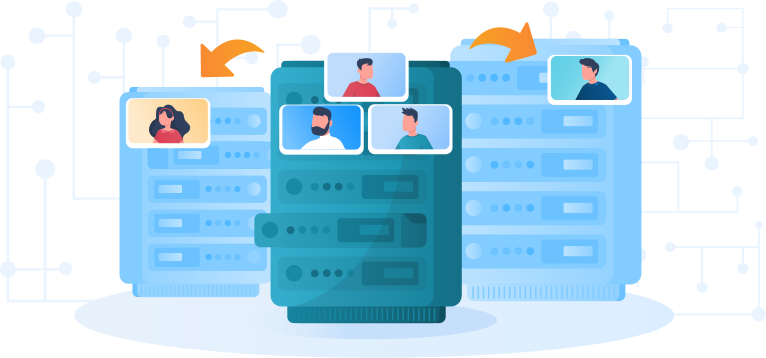
Federation can connect independently operated communication sites without forcing them into one centralized tenant.
This model becomes useful when multiple DDIL sites operate independently during disconnection but communicate when a link becomes available.
However, federation does not automatically provide store-and-forward synchronization. Organizations must verify whether local conversations continue, whether remote messages or files are queued, whether state is synchronized after reconnection, and how conflicting membership or configuration changes are handled.
Federation and DDIL are therefore complementary concepts, not equivalent capabilities.
When DDIL Architecture Is Not Necessary?
Not every branch office or unreliable Wi-Fi network needs a full DDIL architecture.
If the business can tolerate application downtime and connectivity is normally restored quickly, ordinary cloud services with local caching may be sufficient.
A full DDIL design becomes more justified when mission continuity cannot wait for WAN recovery, users operate beyond reliable terrestrial networks, connectivity can be deliberately denied, local security boundaries must remain independent, large data volumes cannot practically traverse the available links, or cloud dependency creates unacceptable operational risk.
Insight 5: The value of DDIL architecture comes from the cost of losing connectivity. The more expensive the interruption, the more local capability the system needs.
DDIL Architecture Checklist
Before deployment, administrators should be able to answer four groups of questions.
Local mission: Which functions, identities, and data must remain available with zero connectivity?
Degradation: Which services can reduce quality, become stale, or wait when bandwidth and latency worsen?
Recovery: Which data synchronizes first, how are conflicts resolved, and how is capacity protected for live operations after reconnection?
Operations: Can the site be authenticated, administered, updated, monitored, and recovered without relying on the enterprise cloud?
If these answers are unclear, the DDIL operating model is not yet fully defined.
Conclusion
DDIL environments are operational environments where connectivity can be denied, disrupted, intermittent, slow, or unavailable. Designing for DDIL means moving enough compute, data, identity, communication, security, and management capability to the local environment that essential work can continue without constant access to enterprise or public cloud infrastructure. The architecture also needs deliberate bandwidth prioritization, graceful degradation, durable queues, and synchronization procedures for the moment connectivity returns.
The right technology depends on which layer must remain operational. Azure Local, OpenShift, RKE2, and Snowball Edge address local compute and application infrastructure, while Mattermost, TrueConf Server, Element, and Rocket.Chat address communication and collaboration. The most important test is not whether a vendor uses the terms offline, edge, or air-gapped. It is whether the complete system continues performing its required mission when dependencies disappear and returns to a consistent state when connectivity is restored.
Empower your video conferencing experience with TrueConf!
FAQ
What does DDIL stand for?
DDIL commonly means denied, disrupted or degraded, intermittent, and limited-bandwidth connectivity. Some organizations use disconnected instead of denied or use limited connectivity instead of limited bandwidth. The terminology varies, but all versions describe environments where reliable network access cannot be assumed.
Is DDIL the same as an air-gapped environment?
No. An air-gapped environment is intentionally isolated from external networks, while a DDIL environment may move between connected, degraded, intermittent, and disconnected states. Air-gapped operation is therefore one relevant capability, but it does not cover the full DDIL problem.
What makes an application unsuitable for DDIL environments?
An application is poorly suited to DDIL environments when critical functions require continuous access to cloud identity, remote databases, SaaS APIs, public repositories, external storage, or remote license services. The key test is whether the required local mission continues when every external dependency becomes unavailable.
Can cloud applications work in DDIL environments?
Yes, if enough application capability is moved to a local or edge environment. A hybrid model can run workloads and maintain data locally, then synchronize with central cloud services when connectivity becomes available.
How should video conferencing work in a DDIL network?
Video conferencing should keep local signaling and media processing as close to users as possible, adapt quality to available bandwidth, and provide audio or messaging fallback when video becomes impractical. Organizations should test the system under packet loss, high latency, low bandwidth, and complete WAN loss rather than only testing normal broadband connectivity.
How is data synchronized after a DDIL site reconnects?
Applications typically use durable queues, version tracking, resumable transfers, and conflict-resolution rules. Synchronization should be prioritized so critical operational data moves before large archives, telemetry, backups, or other low-priority content.
What should organizations test before approving software for DDIL use?
Test zero-connectivity operation, intermittent links, low bandwidth, high latency, local authentication, local data access, application restart, failed dependencies, queued transactions, reconnection, conflict resolution, updates, and local administration. A successful installation in an isolated network alone does not prove that the application is DDIL-ready.
About the Author
Diana Shtapova is a product specialist and technology writer with three years of experience in the unified communications industry. At TrueConf, she leverages her deep product expertise to create clear and practical content on video conferencing platforms, collaboration tools, and enterprise communication solutions. With a strong background in product research and user-focused content development, Diana helps professionals and businesses understand core product features, adopt new technologies, and unlock the full potential of modern collaboration software.


Follow us on social networks