
Alternative to Slack: 13 Options for Business
Slack remains a popular team chat tool, but for enterprises with strict security requirements, on-premise deployment needs, data-residency constraints, or compliance obligations, it is not always the right fit. Per-user pricing, limited infrastructure control, and a cloud-only architecture push many IT leaders and CISOs to evaluate alternatives that combine messaging, video conferencing, file sharing, identity integration, and stronger control over how communications are deployed. If you need an alternative to Slack, the first decision is whether you need another cloud collaboration service or a platform with customer-controlled deployment.
This guide compares thirteen alternatives to Slack: TrueConf, Microsoft Teams, Mattermost, Rocket.Chat, Element, Zoho Cliq, Google Chat, Chanty, Zulip, Pumble, Twist, Flock, and Discord. Each platform is evaluated on deployment options, security architecture, integration depth, communication scope, administration, migration complexity, and total cost of ownership.
If your organization needs a customer-controlled deployment with integrated messaging, enterprise video conferencing, and direct control over communication infrastructure, TrueConf is one of the strongest fits in this comparison. If you are already standardized on Microsoft 365, Microsoft Teams is the more practical choice. If your priority is an open-source, self-hosted platform with strong technical extensibility, Mattermost or Rocket.Chat are better suited. If federated encrypted communication is the main requirement, Element deserves separate consideration.
Executive Summary: Best Slack Alternatives at a Glance
|
Platform |
Deployment |
Best for |
Main reason to choose it instead of Slack |
Main tradeoff |
Our rating |
|---|---|---|---|---|---|
|
TrueConf |
Customer-controlled deployment |
Regulated enterprises, government, private networks |
Messaging and enterprise video under customer infrastructure control |
Customer assumes more infrastructure responsibility |
4.7/5 |
|
Mattermost |
Self-hosted or cloud |
DevOps and mission-critical workflows |
Open architecture and engineering-oriented workflows |
Less focused on full-scale enterprise video |
4.5/5 |
|
Microsoft Teams |
Cloud |
Microsoft 365 organizations |
Native Microsoft ecosystem integration |
No conventional self-hosted Teams deployment |
4.4/5 |
|
Rocket.Chat |
Self-hosted or cloud |
Data sovereignty and extensible messaging |
Open-source messaging and deployment control |
Video is not its primary focus |
4.4/5 |
|
Element |
Self-hosted or cloud |
Federated and security-focused communication |
Matrix federation and E2EE-oriented architecture |
More complex operating model than conventional SaaS chat |
4.3/5 |
|
Zulip |
Self-hosted or cloud |
Asynchronous, topic-based discussion |
Structured conversations across time zones |
Different workflow from Slack-style chat |
4.2/5 |
|
Google Chat |
Cloud |
Google Workspace organizations |
Native Workspace integration |
Limited infrastructure control |
4.1/5 |
|
Zoho Cliq |
Cloud |
Zoho-centric SMBs |
Zoho ecosystem integration |
Not designed around private infrastructure |
4.0/5 |
|
Pumble |
Cloud |
Budget-conscious internal messaging |
Simple Slack-like collaboration model |
Limited enterprise architecture depth |
4.0/5 |
|
Chanty |
Cloud |
Task-focused smaller teams |
Chat plus lightweight task management |
Limited enterprise deployment options |
3.9/5 |
|
Twist |
Cloud |
Async-first distributed teams |
Lower real-time notification pressure |
Not designed for rich synchronous communication |
3.9/5 |
|
Flock |
Cloud |
Teams seeking a familiar Slack-like experience |
Low-friction team chat migration |
Limited infrastructure differentiation |
3.8/5 |
|
Discord |
Cloud |
Communities and informal communication |
Voice-centric community communication |
Not designed for regulated enterprise use |
3.2/5 |
How We Evaluated These Slack Alternatives?
This comparison is built around the criteria enterprise IT and security teams actually use during procurement, not marketing feature lists. Each platform is evaluated against deployment flexibility, security and governance, enterprise administration, integration depth, messaging and collaboration, video and calling, and cost model.
|
Evaluation category |
Weight |
What we evaluate |
|---|---|---|
|
Deployment control |
25% |
Cloud, self-hosted, private-network and customer-controlled deployment options |
|
Security and governance |
20% |
Encryption model, identity, auditability, retention, access controls and administrative boundaries |
|
Enterprise administration |
15% |
Provisioning, roles, directory integration, policy management and operational control |
|
Integrations and workflows |
15% |
APIs, bots, automation, calendars, technical workflows and ecosystem integration |
|
Messaging and collaboration |
10% |
Channels, group communication, direct messages, files and search |
|
Video and calling |
10% |
Native synchronous communication and enterprise conferencing depth |
|
Cost model |
5% |
Licensing structure, infrastructure costs and likely communication-stack TCO |
The rating reflects fit for the enterprise buyer profile used in this article rather than universal product quality. A platform can be excellent for a small team’s day-to-day chat and still score lower here if it lacks deployment control, enterprise identity integration, auditability, or administration required in larger environments.
Key Takeaways: Choosing the Right Slack Alternative

- Organizations that require customer-controlled deployment should shortlist TrueConf, Mattermost, Rocket.Chat, Element, or Zulip before comparing smaller interface details.
- Organizations already standardized on Microsoft 365 or Google Workspace usually get the lowest migration friction from Microsoft Teams or Google Chat.
- Security-focused organizations that specifically need federated end-to-end encrypted messaging should evaluate Element separately from conventional centralized chat platforms.
- Engineering teams should compare Mattermost and Zulip based on workflow structure and automation rather than only Slack-like interface similarity.
- Small teams without infrastructure or compliance requirements can reasonably prioritize cost and usability through Chanty, Zoho Cliq, Pumble, Twist, or Flock.
Insight 1. Deployment model should be selected before the feature comparison begins.
If an organization requires communications to remain inside its own infrastructure or a private network, a cloud-only platform may already be disqualified regardless of how many Slack-like features it provides. Treating deployment as an architectural filter prevents procurement teams from comparing products that cannot meet a fundamental requirement.
What Counts as a Slack Alternative in the Enterprise Context?
A genuine Slack alternative for enterprise use is not just a chat app with channels and direct messages. Buyers evaluating this category typically look for a combination of team messaging, voice and video calling, file sharing, administrative controls, identity integration, search, retention, and a deployment model that fits corporate policy.
For regulated industries, architecture and governance can matter as much as the chat interface itself. A product that reproduces Slack’s channels but cannot satisfy the organization’s data-location, identity, audit, or continuity requirements is not a practical replacement.
Three buyer profiles drive many searches for “alternative to Slack”:
- IT leaders who need customer-controlled or private-network deployment because policy or regulation restricts where corporate communications can be stored or processed.
- Security and compliance teams that need defined encryption, audit, identity, retention, and administrative controls.
- Procurement teams comparing total cost of ownership across recurring cloud subscriptions and customer-operated communication platforms.
Insight 2. A Slack replacement often represents an architecture decision, not a chat-interface decision.
Slack, Teams, TrueConf, Mattermost, Element, and Zulip can all support team communication, but they distribute responsibility differently between vendor and customer. The important distinction is who operates the service, controls identity and data location, manages upgrades, produces audit evidence, and restores communications after a failure.
Why Organizations Look for an Alternative to Slack?

Limited On-Premise and Data Residency Control
Slack runs as a vendor-operated cloud service, so organizations that must keep message and call data inside their own network or data center need a different deployment model. This is a common reason government, defense, financial-services, industrial, and other infrastructure-sensitive buyers evaluate TrueConf, Mattermost, Rocket.Chat, Element, or Zulip.
Different Encryption Requirements
Slack encrypts data in transit and at rest, but some organizations need a different trust model: customer-operated infrastructure, application-level end-to-end encryption, federated encrypted messaging, private-network operation, or a combination of several controls.
Element addresses this through Matrix and encrypted federated messaging. TrueConf approaches the problem through customer-controlled enterprise communications infrastructure. Mattermost and Rocket.Chat allow organizations to control the hosting environment and apply their own network and storage policies.
Per-User Pricing at Scale
Slack’s per-user subscription model can become a significant recurring expense across large or fast-growing organizations, particularly when advanced administration, retention, security, or compliance functionality requires higher tiers.
Self-hosted alternatives use different commercial models, but they are not automatically cheaper. Infrastructure, storage, administration, monitoring, support, backups, upgrades, and resilience must be included when comparing total cost of ownership.
Restricted Customization and Self-Hosting
Slack’s proprietary cloud architecture means organizations cannot operate the underlying service themselves. Open-source alternatives such as Mattermost, Rocket.Chat, Zulip, and Element give engineering teams more control over deployment, integrations, and the surrounding infrastructure.
TrueConf follows a different product philosophy: it is not primarily an open-source chat framework, but a packaged enterprise communication environment combining messaging, video conferencing, administration, and standards-based interoperability.
Where Slack Alternatives Become an Infrastructure Requirement?

Certain industries have stronger reasons to treat collaboration software as an infrastructure decision rather than a productivity preference.
Government and defense agencies may need isolated networks, sovereign deployment, internally controlled identity, or communication services that can operate under restricted connectivity. Healthcare organizations face different requirements around access control, auditability, retention, patient or clinical data, and contractual responsibility.
Financial-services firms may place greater emphasis on message retention, administrative control, data location, and audit evidence. Engineering-heavy organizations often evaluate Mattermost or Zulip for workflow automation and structured technical discussion even when compliance is not the main driver.
Manufacturing, energy, and industrial organizations with segmented facility networks can also require communication systems that remain useful when public internet access is unavailable or intentionally restricted.
Slack Alternatives: Vendor Analysis
The main alternatives to Slack include TrueConf, Microsoft Teams, Mattermost, Rocket.Chat, Element, Google Chat, Zulip, Zoho Cliq, Chanty, Pumble, Twist, Flock, and Discord. The right choice depends primarily on deployment model, ecosystem integration, security and governance requirements, video capabilities, and migration complexity.
1. TrueConf: Best for Customer-Controlled Enterprise Communication

TrueConf is a video conferencing and unified communications platform built around customer-controlled deployment, which makes it a direct alternative to Slack for organizations that cannot rely solely on public cloud infrastructure. Unlike Slack, TrueConf lets IT teams run messaging, video meetings, directory integration, and the core communication service inside their own infrastructure.
Key capabilities include multiparty video conferencing, screen sharing, group and private chat, channels, file exchange, user presence, integration with enterprise directories, and mobile and desktop clients for cross-device access. TrueConf can also support private-network and remote-access scenarios without turning the corporate communication core into a vendor-operated SaaS service.
For security and governance teams, the main difference is infrastructure ownership. Customer-controlled deployment allows the organization to decide where communication data is stored, which networks can reach the service, how access is integrated with internal identity infrastructure, and how monitoring, backup, and recovery are implemented.
TrueConf also supports SIP and H.323 interoperability, which matters for organizations with existing meeting-room systems, PBX infrastructure, or other standards-based video equipment. This makes it broader than a conventional Slack-style chat replacement when messaging and enterprise video need to be managed together.
Best for: organizations requiring customer-controlled deployment, private-network communication, integrated messaging and video, directory integration, and SIP/H.323 interoperability.
Strengths: messaging and enterprise video in one environment, customer-controlled infrastructure, enterprise administration, directory integration, and standards-based video interoperability.
Limitations: customer-controlled deployment requires infrastructure sizing, monitoring, backups, patching, network planning, resilience, and operational expertise.
Our rating: 4.7 out of 5.
TrueConf is one of the strongest recommendations in this comparison when customer-controlled infrastructure and integrated enterprise video are mandatory requirements.
Boost your team’s productivity with TrueConf Server Free!
2. Microsoft Teams: Best for Microsoft 365 Integration

Microsoft Teams is a cloud-based collaboration suite integrated with Microsoft 365, combining chat, meetings, calling, file collaboration through SharePoint and OneDrive, and close integration with Microsoft productivity applications.
For organizations already using Microsoft 365, Teams can reduce the need to operate Slack as a separate collaboration platform. Identity, files, meetings, calendars, and policies can remain inside the same Microsoft environment, reducing duplicate administration.
Teams also benefits from Microsoft’s broader security, eDiscovery, retention, data-loss prevention, and governance capabilities. Its strongest value is ecosystem integration rather than direct control over communication infrastructure.
The tradeoff is that Teams is cloud-centered. Organizations whose main reason for replacing Slack is a requirement to operate the communication server inside their own infrastructure need a different product model.
Best for: organizations already standardized on Microsoft 365.
Strengths: Microsoft 365 integration, centralized identity, meetings, files, calling, and enterprise administration.
Limitations: cloud-centered operating model and potentially complex licensing across collaboration, telephony, security, and compliance features.
Our rating: 4.4 out of 5.
Choose Teams if your organization is already committed to the Microsoft ecosystem and customer-hosted communications are not a requirement.
3. Mattermost: Best for DevOps and Mission-Critical Workflows

Mattermost is an open-source messaging platform designed for technical teams, offering self-hosted and cloud deployment, integration with DevOps tools, and a plugin architecture that lets engineering teams extend the platform around operational workflows.
Mattermost supports workflow automation through playbooks, incident-response channels, slash commands, integrations, and technical tooling. This positions it closer to an operational workspace for engineering and IT teams than a generic company chat application.
Mattermost and TrueConf overlap in customer-controlled deployment, but their product philosophies differ: Mattermost is messaging and workflow centric, while TrueConf places more emphasis on integrated enterprise video communication.
Best for: DevOps teams, technical operations, incident response, and engineering organizations.
Strengths: self-hosting, extensibility, technical integrations, workflow automation, and operational playbooks.
Limitations: organizations expecting the Slack replacement to also become a full enterprise video platform may need additional components.
Our rating: 4.5 out of 5.
Mattermost is a strong choice for engineering organizations that want a self-hostable Slack alternative with deep technical workflow integration.
4. Rocket.Chat: Best for Data Sovereignty and Extensible Messaging

Rocket.Chat is an open-source communication platform offering self-hosted and cloud deployment, omnichannel support, and configurable security features for organizations that want more control over their messaging environment.
Its self-hosted model gives administrators direct control over where corporate communication data is stored. Rocket.Chat can also combine internal chat with customer-facing communication channels, which differentiates it from products focused only on employee messaging.
Administrators can configure roles, permissions, audit-related controls, integrations, and federation options. Like TrueConf, Rocket.Chat can reduce dependence on vendor-operated chat infrastructure, though Rocket.Chat remains more messaging centric while TrueConf places greater emphasis on enterprise video.
Best for: organizations prioritizing self-hosted messaging, extensibility, data-location control, and omnichannel workflows.
Strengths: open-source foundation, deployment control, configurable administration, APIs, and customer communication integrations.
Limitations: enterprise video conferencing is not the product’s primary architectural focus.
Our rating: 4.4 out of 5.
Rocket.Chat suits organizations that prioritize open technologies and a configurable messaging environment.
5. Element: Best for Federated and Encrypted Communication

Element is built on Matrix, an open decentralized communication protocol. Organizations can operate their own Matrix infrastructure while still communicating across federated environments.
Element is especially relevant when the requirement is not simply self-hosting but communication between independently controlled domains. This model can suit government bodies, partner networks, communities, and other environments where one central SaaS tenant is undesirable.
Its federation model and E2EE-oriented architecture are the main reasons to shortlist it. Organizations should also account for the operational complexity of Matrix infrastructure, identity, federation policies, bridges, and user administration.
Best for: federated communication, public-sector environments, and security-sensitive messaging.
Strengths: Matrix federation, self-hosting, open protocol, and E2EE-oriented messaging architecture.
Limitations: federation and decentralized operation can introduce more administrative complexity than conventional centralized SaaS chat.
Our rating: 4.3 out of 5.
Element is best suited to organizations that specifically need federated and security-focused communication.
6. Zoho Cliq: Best for Small and Mid-Sized Businesses

Zoho Cliq is a cloud-based team chat tool that integrates with the broader Zoho suite, including CRM, Projects, Desk, and other business applications.
Cliq includes threaded conversations, voice and video calling, searchable communication, and workflow integration without requiring the infrastructure work of a self-hosted platform.
It is not designed for organizations with strict private-infrastructure requirements, so enterprises with those needs should evaluate TrueConf, Mattermost, Rocket.Chat, Element, or Zulip instead.
Best for: SMBs already using Zoho applications.
Strengths: Zoho integration, straightforward cloud operation, and broad team communication functionality.
Limitations: limited fit for organizations requiring customer-hosted communication infrastructure.
Our rating: 4.0 out of 5.
A practical choice for smaller businesses already operating inside the Zoho ecosystem.
7. Google Chat: Best for Google Workspace Integration
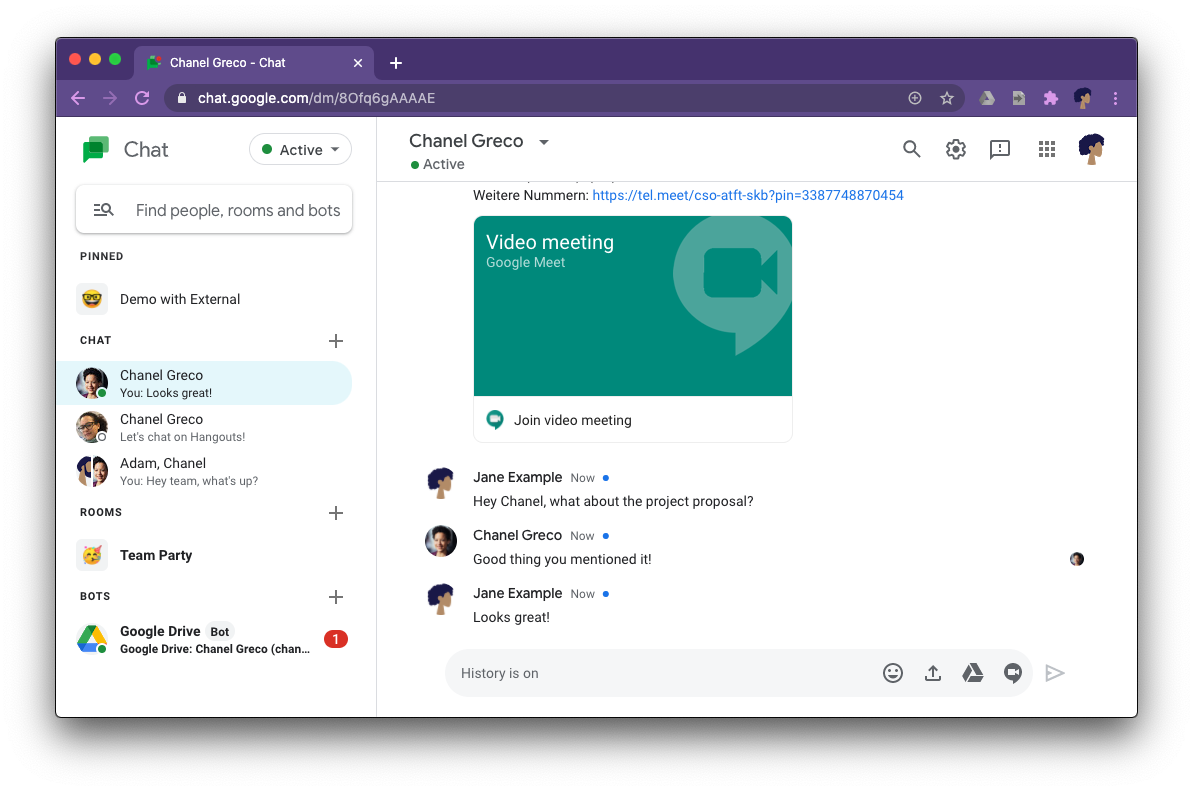
Google Chat is integrated with Google Workspace and connects directly with Gmail, Google Meet, Drive, Calendar, and the wider Google productivity environment.
For organizations already standardized on Workspace, its advantage is consolidation. Employees can communicate inside the same account and productivity ecosystem rather than adding Slack as another vendor.
Like Microsoft Teams, Google Chat does not address organizations seeking a conventional self-hosted corporate messaging environment. Its strongest use case is ecosystem fit rather than infrastructure ownership.
Best for: organizations centered on Google Workspace.
Strengths: Workspace integration, browser-oriented collaboration, and low deployment friction for existing Google customers.
Limitations: cloud-only service model and limited customer control over core communication infrastructure.
Our rating: 4.1 out of 5.
Recommended primarily for organizations already committed to Google Workspace.
8. Chanty: Best for Task-Focused Small Teams
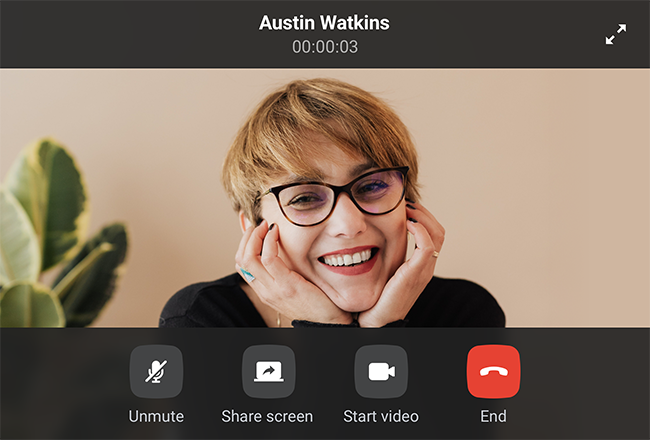
Chanty combines team chat with built-in task management, positioning itself as a lightweight alternative to running Slack alongside a separate task-management tool.
The platform is cloud-hosted and designed for smaller teams that prioritize simplicity over infrastructure control. It combines chat, calling, and lightweight Kanban-style task organization.
Chanty does not target self-hosted or compliance-sensitive enterprise deployments, which makes it a different category of Slack replacement from TrueConf, Mattermost, Rocket.Chat, or Element.
Best for: smaller teams combining messaging with lightweight task management.
Strengths: simple interface, task management, and low operating complexity.
Limitations: limited enterprise infrastructure and governance depth.
Our rating: 3.9 out of 5.
A good fit for small businesses that want chat and task tracking in a single lightweight tool.
9. Zulip: Best for Asynchronous, Topic-Based Communication
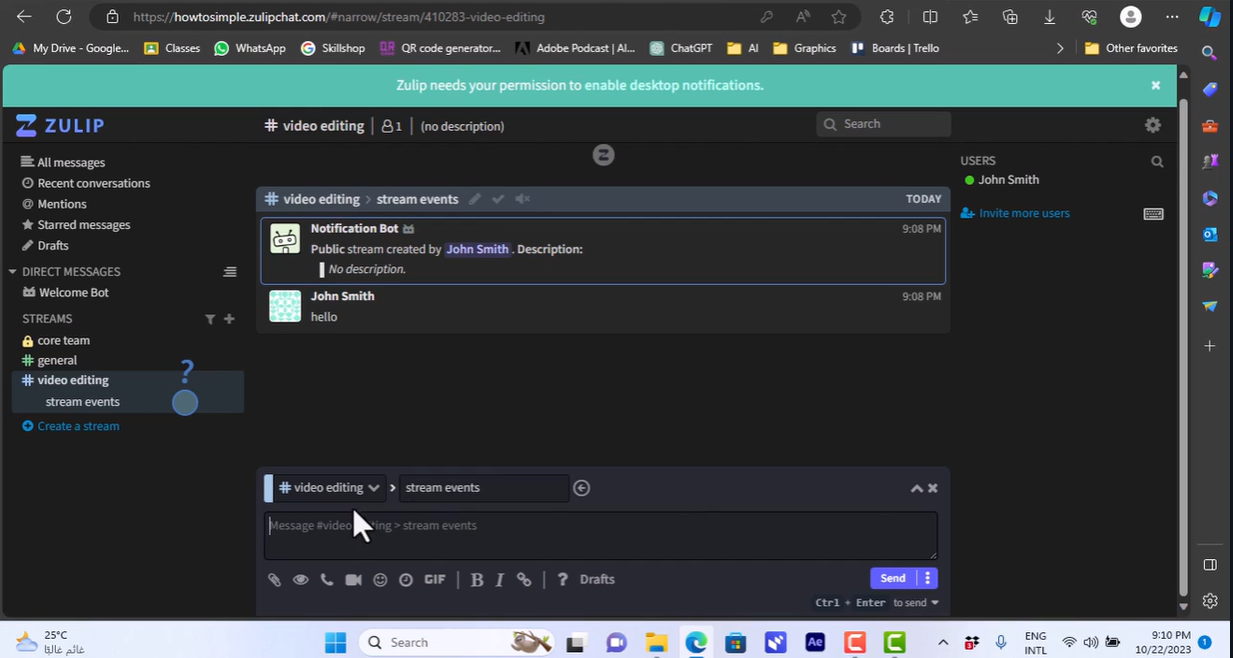
Zulip organizes conversations by topic within streams, creating a more structured discussion history than a conventional fast-moving channel feed.
This structure is particularly useful for distributed teams working across time zones because separate conversations remain easier to follow even when replies arrive hours or days apart.
Zulip offers both self-hosted and cloud deployment, giving IT teams infrastructure options that many smaller Slack-like products do not provide.
Best for: distributed engineering teams and async-first collaboration.
Strengths: topic-based conversation structure, self-hosting, and support for asynchronous work.
Limitations: users accustomed to conventional Slack-style channels may need to adapt to a different communication model.
Our rating: 4.2 out of 5.
Best suited to distributed technical teams that rely heavily on asynchronous, topic-based discussion.
Other Notable Slack Alternatives Worth Considering
10. Pumble: Best for Budget-Conscious Internal Communication
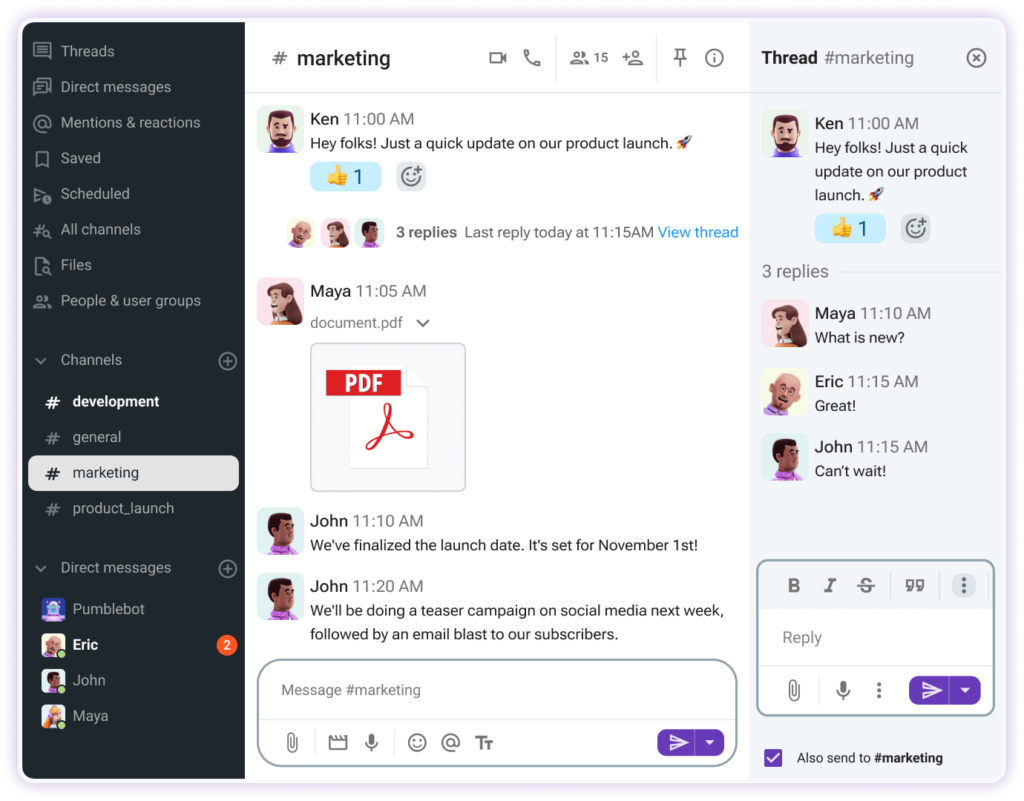
Pumble is a cloud-based team communication platform built around channels, direct messages, threads, and calling.
It covers the core requirements of internal communication without the deployment complexity of a self-hosted platform, making it a reasonable option for organizations that have not identified a specific private-infrastructure requirement.
Best for: internal communication on a limited budget.
Strengths: straightforward team messaging and a low-friction operating model.
Limitations: does not address the private-infrastructure requirements that lead enterprises toward TrueConf, Mattermost, Rocket.Chat, Element, or Zulip.
Our rating: 4.0 out of 5.
11. Twist: Best for Reducing Real-Time Notification Overload
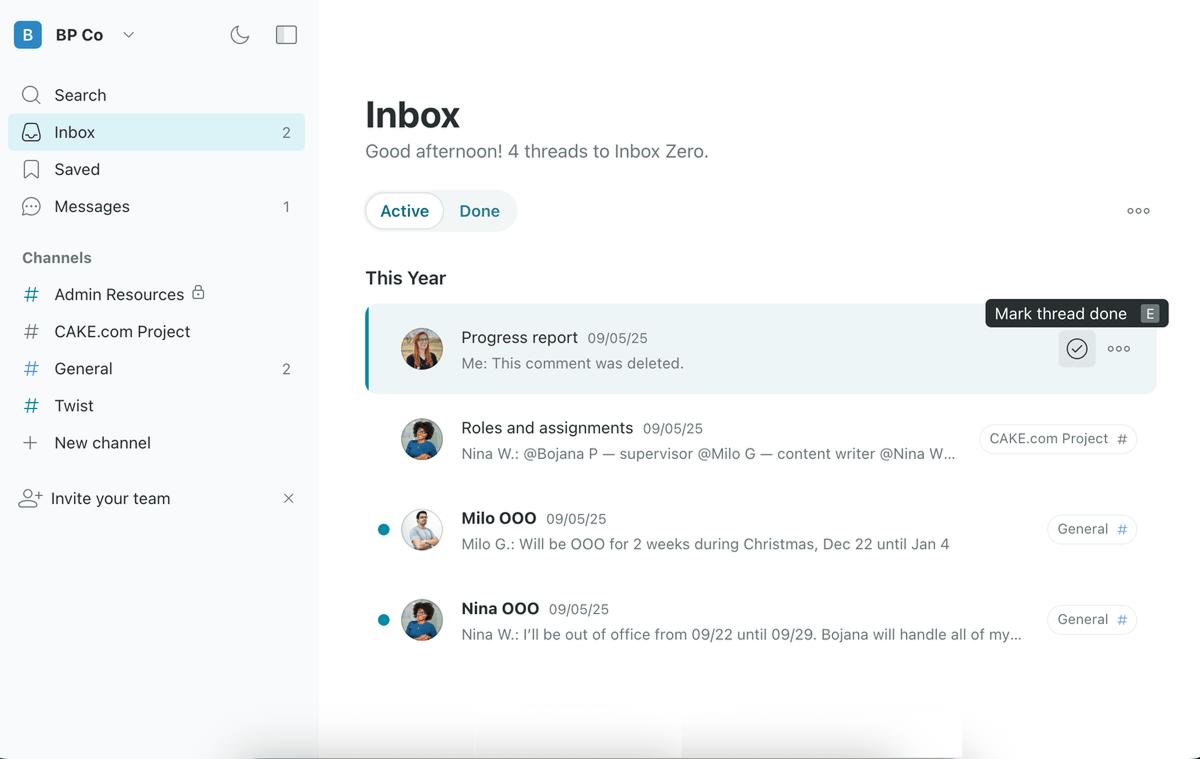
Twist is built specifically around asynchronous communication, organizing discussion into threads by topic instead of emphasizing a continuous real-time feed.
It intentionally reduces presence and immediacy signals to discourage the expectation of instant replies, which can suit distributed teams working across time zones.
Best for: async-first distributed teams.
Strengths: focused threaded communication and lower notification pressure.
Limitations: less suitable when synchronous enterprise video, telephony, or infrastructure control are core requirements.
Our rating: 3.9 out of 5.
12. Flock: Best for Teams Migrating Directly From Slack
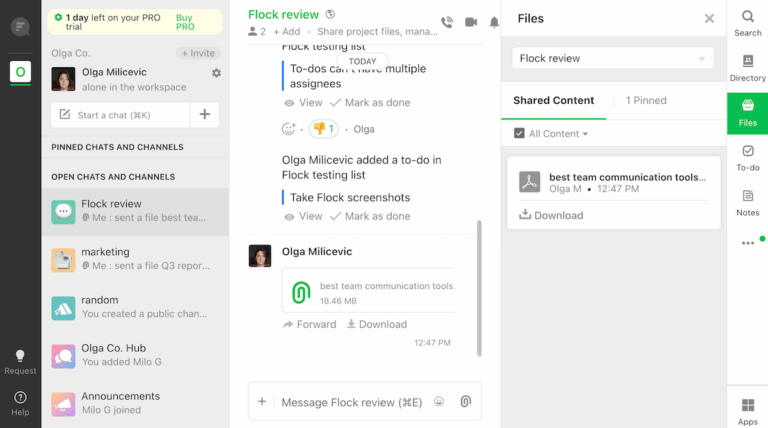
Flock is a cloud-based chat platform designed around a familiar team-collaboration model.
It combines messaging, polls, shared to-do lists, and calling features, targeting smaller teams that want an all-in-one cloud collaboration environment without a major architectural change.
Best for: teams seeking a familiar cloud-based Slack replacement.
Strengths: familiar collaboration model and relatively simple migration.
Limitations: limited differentiation for regulated or infrastructure-sensitive enterprises.
Our rating: 3.8 out of 5.
13. Discord: Best for Casual and Community-Style Communication
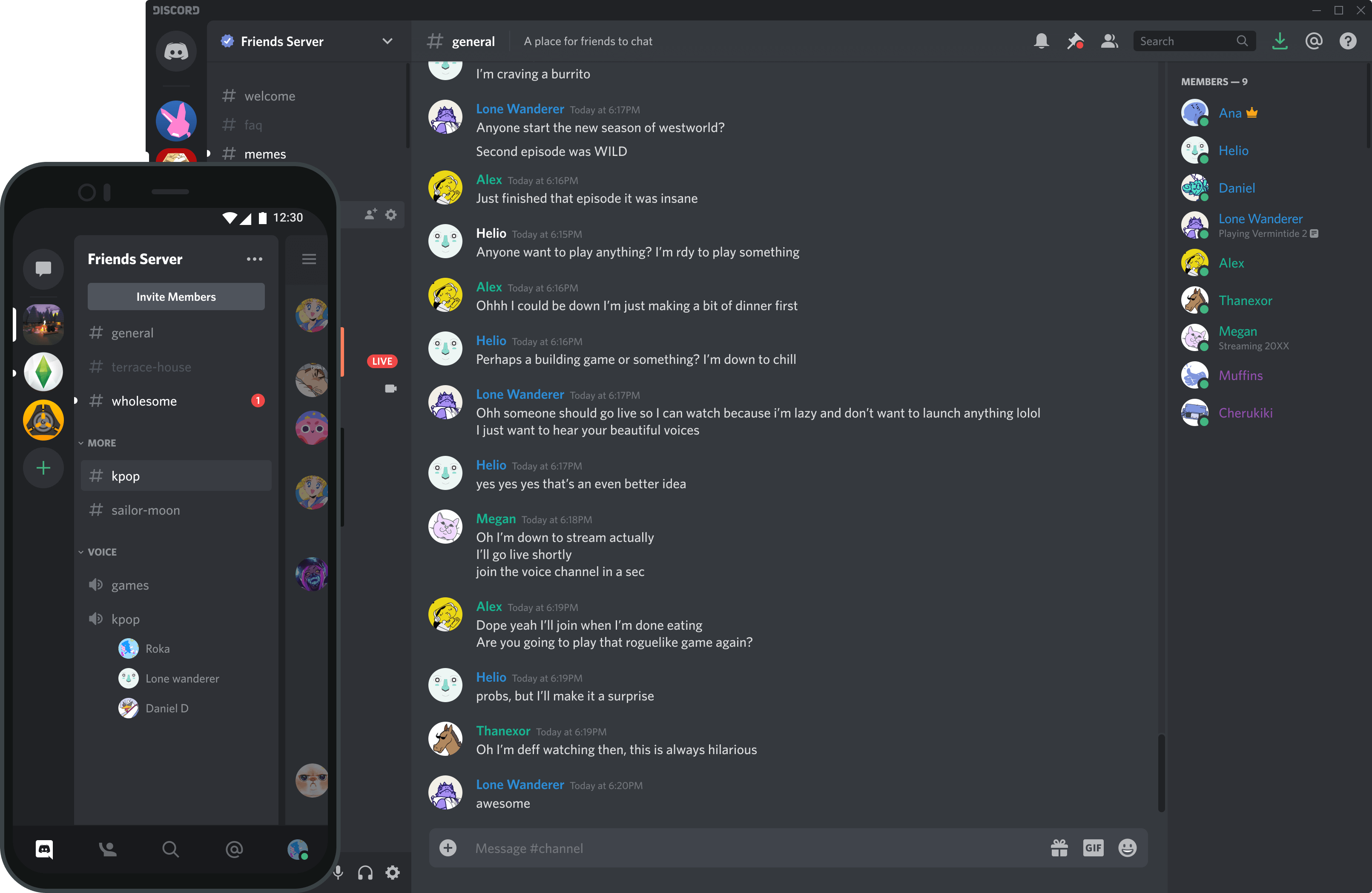
Discord originated as a gaming communication platform and is now also used by communities, open-source projects, and smaller informal teams.
Its communication model is built around servers, text channels, persistent voice rooms, and low-friction community interaction rather than formal enterprise workflow and governance.
Discord is included here for completeness, but organizations requiring formal identity governance, private deployment, audit workflows, data-residency controls, or enterprise administration should prioritize other platforms.
Best for: communities and informal small-team communication.
Strengths: voice communication, community features, and low adoption friction.
Limitations: not designed as a regulated enterprise Slack replacement.
Our rating: 3.2 out of 5.
Communication model: the best Slack alternative may deliberately behave less like Slack. Zulip and Twist are good examples: their value comes from changing how conversations are organized rather than reproducing Slack’s real-time channel model. Buyers should therefore decide whether they want a replacement interface or a different communication philosophy.
Slack Alternatives: Integration and Workflow Comparison
Feature and security comparisons do not capture everything that determines whether a platform fits an existing environment. Integration depth — especially identity, calendars, telephony, APIs, technical tooling, and workflow automation — often determines whether a migration from Slack succeeds or creates months of workaround requests.
|
Platform |
Enterprise identity |
Calendar / productivity integration |
SIP / H.323 relevance |
Technical workflow strength |
|---|---|---|---|---|
|
TrueConf |
Enterprise directory integration |
Calendar and API workflows |
Strong |
API-based integrations |
|
Microsoft Teams |
Microsoft Entra ecosystem |
Native Microsoft 365 integration |
Configuration-dependent |
Power Platform and Microsoft APIs |
|
Mattermost |
Enterprise SSO options |
Plugin-based |
Not a primary focus |
Strong DevOps and incident workflows |
|
Rocket.Chat |
Enterprise identity options |
App and integration based |
Limited |
APIs, apps, omnichannel workflows |
|
Element |
Deployment-dependent SSO |
Bridges and bots |
Not a primary focus |
Matrix federation and bridges |
|
Google Chat |
Google Workspace identity |
Native Workspace integration |
Not a primary focus |
Workspace APIs |
|
Zulip |
Enterprise authentication options |
Integration-dependent |
Not a primary focus |
Bots, APIs, technical-team integrations |
|
Smaller cloud tools |
Varies by plan |
Primarily third-party integrations |
Generally not a core capability |
Usually basic APIs or webhooks |
This is where TrueConf and Microsoft Teams separate from many smaller cloud chat tools. Both can connect communication to broader enterprise infrastructure, although they do so differently. TrueConf’s SIP and H.323 support is particularly relevant for organizations with existing room systems or standards-based conferencing equipment.
Insight 4. Integration debt can cost more than the messaging platform itself.
A Slack replacement may require rebuilding bots, incident alerts, calendar workflows, identity provisioning, CRM notifications, approval flows, and employee onboarding. The platform with the lowest subscription price can therefore become the more expensive migration if critical workflows have to be recreated manually.
What Slack Workloads Are Hardest to Replace?
Basic channels and direct messages are usually the easiest part of a Slack migration. The difficult workloads are the ones where Slack has become embedded in business processes, external collaboration, automation, or organizational memory.
|
Slack workload |
Migration difficulty |
Why it is difficult |
What to validate in the replacement |
|---|---|---|---|
|
Channels and DMs |
Low |
Most alternatives provide equivalent basic messaging structures |
Permissions, threads, search and channel ownership |
|
Historical search |
Medium |
Export, import and indexing models differ |
Searchability after migration, retention scope and file indexing |
|
Bots and custom apps |
High |
APIs, event models and authentication differ by platform |
API coverage, webhooks, bot permissions and authentication model |
|
Workflow Builder automations |
Medium–High |
Automations often need to be recreated rather than imported |
Approval flows, forms, triggers and integration alternatives |
|
External collaboration |
High |
Partner-access models and trust boundaries vary substantially |
Guest accounts, federation, cross-organization spaces and external identity |
|
Incident-response channels |
High |
Alerts, bots, runbooks and integrations are often tightly coupled |
Automation, audit trail, playbooks, alert delivery and escalation workflows |
|
Huddles and ad hoc calls |
Medium |
Voice and video architecture may differ from chat workflows |
One-click calling, mobile behavior, guest access and meeting scale |
This is why a product can look like a near-perfect Slack substitute in a feature matrix and still create a difficult migration. The switching cost usually appears in workflow reconstruction rather than basic messaging.
TrueConf vs. Slack: Feature-by-Feature Comparison
Since TrueConf is the main product evaluated in this guide, it is useful to compare it directly against Slack across the dimensions procurement and IT teams typically evaluate most closely.
|
Dimension |
TrueConf |
Slack |
|---|---|---|
|
Software type |
Enterprise communications platform combining messaging and video |
Cloud team messaging and collaboration platform |
|
Deployment |
Customer-controlled server deployment |
Vendor-operated cloud |
|
Video conferencing |
Core platform capability for multiparty meetings |
Huddles and integrated communication workflows |
|
Messaging |
Personal chats, group chats, channels, files |
Channels, DMs, threads, files |
|
Directory integration |
Enterprise directory integration |
Enterprise identity options depending on plan and configuration |
|
SIP/H.323 |
Native enterprise interoperability |
Not a core product function |
|
Infrastructure control |
Organization operates the communication environment |
Slack operates the service infrastructure |
|
Data-location model |
Defined by customer hosting environment |
Defined by Slack service architecture and available controls |
|
Operational responsibility |
Greater customer responsibility |
Greater provider responsibility for the core service |
The practical difference is architectural: Slack starts from vendor-operated cloud team messaging, while TrueConf starts from customer-controlled enterprise communications with video conferencing and messaging inside the same environment.
Organizations that primarily need SaaS messaging and a broad app ecosystem may reasonably prefer Slack. Organizations that need messaging and enterprise video inside customer-controlled infrastructure have a stronger reason to evaluate TrueConf.
Our Pick: TrueConf for Enterprises That Need Infrastructure Control

Among the platforms in this comparison, TrueConf is the strongest fit when customer-controlled deployment, enterprise video communication, messaging, directory integration, private-network operation, and standards-based interoperability are mandatory requirements.
Organizations without those requirements should still weigh the alternatives covered above: Microsoft Teams for Microsoft 365 environments, Mattermost or Rocket.Chat for technical and open-source-oriented workflows, Element for federated encrypted messaging, Zulip for structured asynchronous communication, and Chanty, Zoho Cliq, or Pumble for smaller teams that do not need private infrastructure.
Migrating From Slack: What IT Teams Should Plan For?
Choosing a platform is only the first decision. The migration itself determines whether the switch is disruptive or manageable, and many comparison guides understate this part of the project.
Message and file-history export is one of the first constraints to check because available history, export format, permissions, and destination-platform import capabilities determine how much context can realistically move to the new environment.
Identity and directory synchronization should be configured before rollout, not after. Manually creating accounts, groups, permissions, and access policies across hundreds or thousands of users creates unnecessary help-desk work and inconsistent access control.
A temporary parallel-run period can help teams move recurring workflows such as standups, incident channels, integrations, and guest collaboration without losing continuity. The purpose of this period should be to identify missing workflows, not to maintain two communication platforms indefinitely.
For organizations moving to customer-operated platforms such as TrueConf, Mattermost, Rocket.Chat, Element, or Zulip, infrastructure readiness needs earlier attention than in a cloud-to-cloud migration. Server sizing, DNS, certificates, network access, remote connectivity, monitoring, backup, resilience, and recovery should be validated before broad rollout.
Slack Migration Checklist
- Inventory Slack usage. Identify workspaces, channels, private groups, files, bots, integrations, workflows, guests, and identity dependencies.
- Classify historical data. Decide which messages and files must be retained, migrated, archived, or deleted.
- Configure identity first. Connect the new platform to the target directory, SSO, or provisioning environment before mass onboarding.
- Rebuild critical integrations. Move incident alerts, automation, calendars, CRM notifications, and approval workflows before cutover.
- Test representative teams. Include IT, security, operations, executives, remote workers, external collaborators, and heavy Slack users.
- Run both systems temporarily where required. Use the transition period to identify missing workflows rather than creating a permanent dual-platform state.
- Retire Slack dependencies. Disable unused apps, OAuth connections, bots, provisioning rules, and residual user access after migration.
|
Migration stage |
Main task |
Common overlooked risk |
|---|---|---|
|
Discovery |
Map channels, users, files, bots, integrations |
Critical workflows hidden inside custom Slack apps |
|
Data planning |
Define migration and retention scope |
Assuming every historical object can be imported identically |
|
Target configuration |
Identity, permissions, channels, policies |
Users arrive before governance is ready |
|
Pilot |
Test representative workflows |
Testing only basic chat instead of operational use cases |
|
Cutover |
Move teams and switch active workflows |
Parallel conversations fragment organizational knowledge |
|
Retirement |
Remove residual access and integrations |
Old bots, tokens, or external guests remain active |
Insight 5. A Slack migration is complete only when the workflows have moved, not when the users have moved.
Provisioning employees on a new platform is relatively easy. Replacing alerting, bots, approvals, retention processes, external collaboration, channel conventions, and operational habits built around Slack is the real migration project.
Cloud vs. Self-Hosted Slack Alternatives: Who Owns What?
The most important difference between cloud and self-hosted alternatives is not where the software icon appears. It is how operational responsibility is divided between the vendor and the customer.
|
Responsibility |
Vendor-operated SaaS |
Self-hosted alternative |
Buyer implication |
|---|---|---|---|
|
Core infrastructure |
Vendor operates the service |
Customer operates or commissions the environment |
Self-hosting increases infrastructure control but also operational responsibility |
|
Patching and upgrades |
Vendor controls core service updates |
Customer schedules and applies software and infrastructure updates |
Change management becomes part of internal operations |
|
Capacity planning |
Primarily vendor responsibility |
Customer sizes compute, storage and network resources |
Growth needs to be forecast rather than assumed |
|
Data location |
Defined by provider architecture and available options |
Defined by customer hosting architecture |
Useful where specific residency or network boundaries are mandatory |
|
Backup and disaster recovery |
Primarily handled within provider architecture |
Customer designs backup, redundancy and recovery |
RTO and RPO become explicit customer design decisions |
|
Internet dependency |
Public connectivity is generally required |
Can be reduced depending on deployment architecture |
Important for isolated, segmented or continuity-sensitive environments |
|
Operational evidence |
Buyer relies partly on vendor documentation, contracts and audits |
Customer must produce more evidence from its own environment |
Control increases, but so does audit responsibility |
Security responsibility: self-hosting does not remove security responsibility; it reallocates it. Running TrueConf, Mattermost, Rocket.Chat, Element, or Zulip on customer infrastructure can increase control over data and network boundaries, but the organization must then manage patching, backups, monitoring, privileged administration, resilience, and recovery. Deployment control and operational maturity need to be evaluated together.
Pricing Model Comparison
Exact prices and plan structures change, so the more durable comparison is the pricing model rather than a temporary list price.
|
Platform |
Typical pricing approach |
Free / entry option |
Main TCO consideration |
|---|---|---|---|
|
TrueConf |
Server-oriented licensing depending on deployment |
Free server edition for smaller deployments |
Infrastructure and administration must be included alongside licensing |
|
Microsoft Teams |
Per-user Microsoft licensing |
Depends on current Microsoft offering |
Can have low incremental cost when Microsoft 365 is already deployed |
|
Mattermost |
Commercial editions plus self-hosted options |
Open/self-managed options |
Operations and enterprise support affect TCO |
|
Rocket.Chat |
Cloud and commercial self-hosted plans |
Community/self-managed options |
Omnichannel and enterprise features can change cost |
|
Element |
Hosted or enterprise self-hosted arrangements |
Open Matrix ecosystem |
Federation and infrastructure operations add complexity |
|
Google Chat |
Included with Google Workspace plans |
Workspace-dependent |
Lowest friction when Google Workspace is already standard |
|
Zoho Cliq |
Per-user cloud pricing |
Entry options may be available |
Zoho bundle economics matter more than standalone price |
|
Chanty/Pumble/Twist/Flock |
Per-user cloud plans |
Varies by vendor |
Low infrastructure burden but recurring per-user cost |
|
Discord |
Core service with optional paid user features |
Yes |
Not designed around enterprise procurement or compliance |
The correct TCO model should include subscriptions or licenses, infrastructure, storage, backup, monitoring, support, migration, integrations, administrator time, user training, and any additional meeting or telephony platform that remains necessary after the switch.
Insight 7. A cheaper chat subscription can still produce a higher communication TCO.
If the selected Slack alternative still requires separate enterprise video, telephony, retention tooling, identity connectors, or migration middleware, the organization may end up managing more systems rather than fewer. Cost should be calculated at the communication-stack level rather than per chat seat.
Best Slack Alternatives by Requirement
|
Requirement |
Best options to evaluate |
Why |
|---|---|---|
|
Customer-controlled enterprise communications |
TrueConf, Mattermost, Rocket.Chat, Element, Zulip |
Customer-operated deployment options |
|
Messaging plus enterprise video |
TrueConf, Microsoft Teams |
Both combine persistent communication with substantial video capabilities |
|
Private-network communication |
TrueConf |
Designed for customer-controlled enterprise communications |
|
DevOps workflows |
Mattermost |
Technical workflow and incident-response focus |
|
Federated encrypted messaging |
Element |
Matrix federation and E2EE-oriented architecture |
|
Asynchronous structured discussion |
Zulip, Twist |
Conversation model designed around topics and delayed responses |
|
Microsoft 365 integration |
Microsoft Teams |
Native Microsoft ecosystem |
|
Google Workspace integration |
Google Chat |
Native Google ecosystem |
|
Zoho ecosystem |
Zoho Cliq |
Integration with Zoho business applications |
|
Budget-focused cloud chat |
Pumble, Chanty, Zoho Cliq |
Lower-complexity collaboration for smaller organizations |
|
Community communication |
Discord |
Voice channels and community-oriented interaction |
When Slack May Still Be the Right Choice?
Replacing Slack is not automatically an improvement.
If Slack already satisfies the organization’s security, integration, collaboration, administration, and cost requirements, moving to another platform can introduce unnecessary migration work and user disruption.
Buyer rule: if a replacement does not eliminate a measurable cost, risk, architectural dependency, governance problem, or workflow limitation, migration may not be justified.
Slack can remain a strong choice for cloud-first organizations that value its collaboration model and app ecosystem and do not require customer-operated communication infrastructure.
Conclusion: Match the Alternative to the Requirement
There is no single best alternative to Slack for every organization because the platforms in this category solve different problems.
TrueConf is one of the strongest choices when customer-controlled infrastructure, enterprise video communication, messaging, private-network operation, directory integration, and standards-based interoperability are central requirements.
Microsoft Teams is the more natural choice for Microsoft 365 organizations. Mattermost fits engineering and operational workflows. Rocket.Chat is relevant to self-hosted and extensible messaging. Element stands out for Matrix federation and encrypted messaging architecture. Zulip is particularly suitable for asynchronous, topic-based communication.
Google Chat and Zoho Cliq gain value from their surrounding productivity ecosystems, while Chanty, Pumble, Twist, and Flock serve smaller teams with narrower requirements. Discord remains better suited to communities and informal communication than regulated enterprise use.
The most useful procurement question is therefore not “Which tool is most similar to Slack?” but “Which communication architecture best matches our deployment, governance, identity, workflow, integration, video, security, and cost requirements?”
Empower your video conferencing experience with TrueConf!
FAQ
What is the best alternative to Slack for enterprise use?
The best alternative to Slack for enterprise use depends on the organization’s deployment, identity, integration, video, governance, and migration requirements. TrueConf is relevant when customer-controlled infrastructure and enterprise video are required, while Microsoft Teams, Mattermost, Rocket.Chat, Element, and Zulip address different enterprise scenarios.
What is the best self-hosted alternative to Slack?
TrueConf, Mattermost, Rocket.Chat, Element, and Zulip are all relevant self-hosted alternatives to Slack. TrueConf is particularly suitable when the same deployment must combine corporate messaging, enterprise video conferencing, directory integration, and SIP/H.323 interoperability.
Which Slack alternative is best for Microsoft 365 users?
Microsoft Teams is generally the most practical alternative for organizations already centered on Microsoft 365 because identity, files, calendars, and collaboration remain inside the same ecosystem. TrueConf becomes more relevant when the organization also needs a separate customer-controlled environment for messaging and enterprise video.
Can TrueConf work as both a Slack and video conferencing replacement?
Yes. TrueConf combines persistent chats, group communication, channels, files, voice communication, and enterprise video conferencing in one platform, so organizations can evaluate it as a replacement for both team chat and a separate video conferencing system.
Which Slack alternative is best for regulated or private networks?
TrueConf, Mattermost, Rocket.Chat, Element, and Zulip all deserve consideration when customer-controlled deployment matters. TrueConf is particularly relevant when regulated communication also requires enterprise video, directory integration, and interoperability with existing communication infrastructure.
What is the best Slack alternative for asynchronous teams?
Zulip and Twist are stronger choices when the goal is to reduce real-time chat pressure and organize discussion around topics. TrueConf is more appropriate when the organization needs synchronous messaging and enterprise video rather than an async-first communication model.
What should companies test before migrating from Slack?
Companies should test message and file migration, identity provisioning, channel structure, bots, integrations, guest access, mobile workflows, search, retention, and administration. If TrueConf is being evaluated, the pilot should also test the intended server architecture, private-network operation, enterprise video workflows, directory integration, backup, monitoring, and recovery.
About the Author
Diana Shtapova is a product specialist and technology writer with three years of experience in the unified communications industry. At TrueConf, she leverages her deep product expertise to create clear and practical content on video conferencing platforms, collaboration tools, and enterprise communication solutions. With a strong background in product research and user-focused content development, Diana helps professionals and businesses understand core product features, adopt new technologies, and unlock the full potential of modern collaboration software.


Follow us on social networks