
BlueJeans vs Zoom: Which Video Conferencing Platform Fits Your Needs?
The video conferencing landscape has transformed dramatically over the past few years. What was once a simple choice between a handful of platforms has evolved into a complex decision involving security, features, pricing, and user experience. Two names frequently come up in enterprise discussions: BlueJeans and Zoom. But which one actually delivers on its promises?
Let’s cut through the marketing speak and examine what these platforms offer in real-world scenarios.
Understanding BlueJeans: The Enterprise-First Approach
BlueJeans, now owned by Verizon, built its reputation on reliability and interoperability. The platform emerged with a clear mission: make video meetings work seamlessly across different systems and devices. If you’ve ever joined a meeting where half the participants struggled with compatibility issues, you’ll understand why this matters.
The platform particularly shines in environments where participants use varied hardware. Picture a global team where the London office relies on Cisco endpoints, the New York team uses Polycom systems, and remote workers join from laptops and mobile devices. BlueJeans handles this complexity without requiring IT departments to standardize everything.

One standout feature is Dolby Voice audio processing. During a recent product demo I observed, participants in a noisy coffee shop came through crystal clear while background chatter virtually disappeared. This isn’t just convenient; it’s essential when discussing sensitive business matters or technical details where every word counts.
BlueJeans also offers Smart Meetings, an AI-driven feature that automatically highlights action items and key moments. Imagine finishing a two-hour strategy session and having the platform already identify the five critical decisions made and who committed to what. That’s the kind of functionality that saves hours of note-taking and follow-up confusion.
Take your team communication to the next level with TrueConf!
A powerful self-hosted video conferencing solution for up to 1,000 users, available on desktop, mobile, and room systems.
Zoom: The Platform That Became a Verb
When a product becomes synonymous with its category, you know it’s done something right. “Let’s Zoom” entered everyday vocabulary faster than almost any tech term in recent memory. But popularity alone doesn’t tell the whole story.
Zoom’s strength lies in its simplicity. A first-time user can join a meeting by clicking a link, no account required, no complicated setup. This frictionless experience drove explosive growth, particularly when millions suddenly needed to work from home. The platform simply worked when organizations needed it most.

The feature set extends well beyond basic video calls. Breakout rooms allow meeting hosts to split large groups into smaller discussions, then bring everyone back together. This works brilliantly for training sessions, workshops, or brainstorming meetings. I’ve seen 50-person product launches smoothly transition into focused 5-person breakout sessions for department-specific discussions, then reconvene without technical hiccups.
Zoom’s virtual backgrounds and filters initially seemed like novelties. Yet they’ve become genuinely useful for maintaining professionalism from home offices, hiding cluttered backgrounds, or even making remote presentations more engaging. One marketing team I know uses branded virtual backgrounds during client calls, turning a basic feature into a branding opportunity.
The platform continues evolving rapidly. Zoom Whiteboard, Zoom Apps, and integration with thousands of third-party tools mean the ecosystem keeps expanding. Whether you need to collaborate on a design, run a poll, or connect your CRM, there’s likely an integration available.
Head-to-Head Comparison
When you strip away the marketing materials and focus on practical differences, several key distinctions emerge:
Video and Audio Quality
Both platforms support HD video, but they achieve it differently. BlueJeans emphasizes consistent quality through adaptive streaming that responds to network conditions. During one test on a fluctuating mobile connection, BlueJeans maintained steady audio while gracefully reducing video resolution. Zoom also handles variable networks well, though some users report more noticeable quality drops during bandwidth constraints.
Meeting Capacity and Limits
Zoom’s free tier allows 40-minute meetings with up to 100 participants. This works fine for quick team check-ins but becomes limiting for longer sessions. BlueJeans doesn’t offer a free tier, positioning itself squarely in the enterprise market where free plans aren’t really relevant anyway.
For paid plans, Zoom scales up to 1,000 participants in its highest tiers, with webinar capabilities reaching 10,000 or more. BlueJeans typically caps at 150-200 participants for standard meetings, though this covers most business needs. If you’re hosting massive virtual events, Zoom’s scalability gives it a clear advantage.
Security and Compliance
Both platforms have matured significantly in security after heightened scrutiny during the pandemic. Zoom faced early criticism over “Zoom-bombing” incidents and privacy concerns, which prompted rapid improvements. The platform now offers end-to-end encryption for paid accounts, waiting rooms, meeting passwords, and detailed security controls.
BlueJeans built its security model with enterprise requirements in mind from the start. The platform offers robust encryption, secure gateway architecture, and extensive audit logs. For organizations in healthcare, finance, or government sectors, these compliance features often tip the scales.
|
Feature |
BlueJeans |
Zoom |
|---|---|---|
|
Free Tier |
No |
Yes (40-min limit) |
|
Max Participants (standard) |
150-200 |
100-1,000 |
|
End-to-End Encryption |
Yes |
Yes (paid plans) |
|
Hardware Integration |
Excellent |
Good |
|
AI Features |
Smart Meetings, Dolby Voice |
Live transcription, Smart Gallery |
|
Mobile Experience |
Strong |
Excellent |
|
Third-Party Integrations |
Good |
Extensive |
User Experience and Interface
Zoom wins on simplicity. The interface feels intuitive even for non-technical users. Joining a meeting, sharing your screen, or accessing chat requires minimal clicks and zero confusion.
BlueJeans offers a more feature-rich interface that appeals to power users but can overwhelm newcomers. The trade-off is access to advanced controls without diving through multiple menus. Which approach works better depends entirely on your user base.
Integration and Ecosystem
Zoom has built an impressive ecosystem. The Zoom App Marketplace includes thousands of integrations covering productivity tools, CRMs, project management platforms, and specialized industry applications. Need to connect Zoom with Salesforce, Slack, or your custom internal tools? There’s likely a pre-built solution.
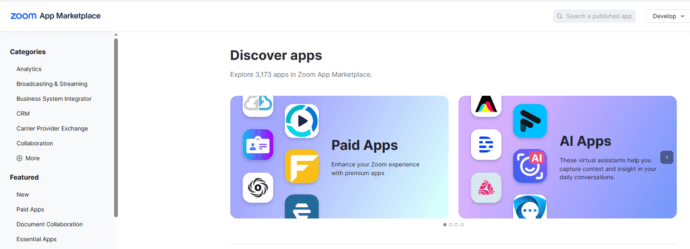
BlueJeans integrates well with major calendar systems, collaboration tools, and enterprise platforms like Microsoft Teams and Slack. The integration library isn’t as extensive as Zoom’s, but it covers essential business needs. For organizations already invested in specific tech stacks, compatibility often matters more than quantity of integrations.
Pricing Considerations
Neither platform fits the “cheap” category for serious business use, though their pricing strategies differ significantly.
Zoom offers graduated pricing that scales with features. The free tier serves individuals and very small teams. Paid plans start around $15 per month per license, with Enterprise plans requiring custom quotes. This tiered approach lets organizations start small and expand as needed.
BlueJeans positions itself as a premium enterprise solution without a free entry point. Pricing typically requires contacting sales for quotes, which reflects the platform’s focus on larger organizations with complex needs. The cost often includes more personalized support and implementation assistance.
When calculating total cost of ownership, consider not just license fees but implementation, training, and integration costs. A platform that seems cheaper upfront might require more IT resources to deploy and maintain.
Try TrueConf Server Free!
- 1,000 online users with the ability to chat and make one-on-one video calls.
- 10 PRO users with the ability to participate in group video conferences.
- One SIP/H.323/RTSP connection for interoperability with corporate PBX and SIP/H.323 endpoints.
- One guest connection to invite a non-authenticated user via link to your meetings.

The Limitations You Should Know About
BlueJeans Challenges
The lack of a free tier means you can’t try before buying without requesting a demo or trial. For smaller organizations or teams wanting to test the platform organically, this creates a barrier. The smaller integration ecosystem can also frustrate teams accustomed to connecting every tool in their workflow.
Some users find the interface less intuitive than Zoom’s streamlined approach. While power users appreciate the granular controls, they come with a steeper learning curve.
Zoom’s Weak Spots
Despite massive improvements, Zoom’s security history still concerns some security-conscious organizations. The 40-minute limit on free meetings interrupts longer discussions, forcing awkward restarts or paid upgrades.
The platform’s ubiquity creates its own problem: Zoom fatigue is real. After spending hours in back-to-back Zoom meetings, users report exhaustion that goes beyond normal meeting tiredness. Whether this stems from the platform itself or video conferencing in general remains debatable, but the association exists.
Making Your Decision
The right platform depends less on which is objectively “better” and more on your specific circumstances:
Choose BlueJeans if you:
- Need seamless integration with existing video conferencing hardware
- Operate in highly regulated industries with strict compliance requirements
- Prioritize audio quality and want Dolby Voice processing
- Prefer enterprise-grade support and implementation assistance
- Have diverse hardware across different office locations
Choose Zoom if you:
- Want quick deployment with minimal training requirements
- Need extensive third-party integrations with your existing tools
- Host large webinars or events with hundreds of participants
- Value a user-friendly interface above advanced features
- Want flexibility to start with a free tier and scale up
Looking Beyond the Big Two: Consider TrueConf
While BlueJeans and Zoom dominate enterprise discussions, they’re not your only options. TrueConf offers a compelling alternative worth exploring, particularly for organizations seeking more control over their video conferencing infrastructure.
Unlike cloud-only solutions, TrueConf provides both cloud and on-premises deployment options. This flexibility appeals to organizations with data sovereignty concerns, strict security requirements, or simply a preference for maintaining their own infrastructure. Imagine having the convenience of cloud video conferencing with the security of hosting everything on your own servers.
TrueConf supports up to 1,500 participants in a single conference and offers 4K video quality for crystal-clear communication. The platform includes features like built-in scheduling, recording, content sharing, and virtual backgrounds without requiring additional subscriptions or add-ons.
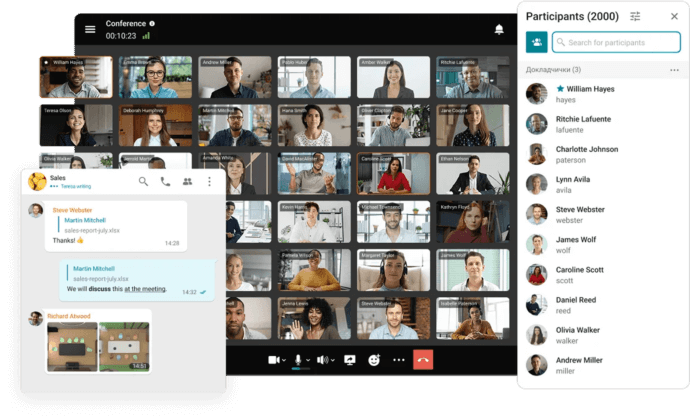
What sets TrueConf apart is its licensing model. Instead of per-user monthly fees that grow with your organization, you can purchase perpetual licenses with one-time payments. For growing companies, this predictable cost structure often proves more economical than subscription models that increase annually.
The platform also emphasizes interoperability, supporting connections with SIP/H.323 equipment and integration with popular collaboration tools. Whether you’re running a hybrid infrastructure or planning to expand internationally, TrueConf scales without forcing you into vendor lock-in.
Self-Hosted Team Messenger with Video Conferencing
A cutting-edge team collaboration server with personal and group chats, UltraHD video conferences, and advanced AI-powered features — free for up to 1,000 users!
Final Thoughts
The BlueJeans vs Zoom debate doesn’t have a universal winner. Both platforms excel in different scenarios, serving different organizational needs effectively. BlueJeans brings enterprise-grade interoperability and premium audio quality. Zoom delivers ease of use, extensive integrations, and rapid scalability.
Your decision should reflect your organization’s priorities: Do you value seamless hardware integration or user-friendly simplicity? Enterprise-focused support or extensive third-party apps? Audio quality or maximum participant capacity?
Take advantage of demos and trials. Involve actual users in testing, not just IT decision-makers. The platform that works beautifully in a controlled demo might frustrate daily users, while a less flashy option could prove more reliable in real-world conditions.
And remember that the video conferencing market continues evolving. Solutions like TrueConf demonstrate that innovation isn’t limited to the biggest names. Sometimes the best choice is the one that fits your specific requirements, not the one with the biggest marketing budget.
Whatever platform you choose, the goal remains the same: enabling clear communication, productive collaboration, and meaningful connections across distances. Choose the tool that helps your team achieve those outcomes most effectively.
All Zoom Alternatives: Detailed Comparison
If you are still comparing options, read the full overview of 10 platforms with pricing, security models, and deployment scenarios: Best Zoom Alternatives for Business: Top 10 Options. For a self-hosted alternative without public internet dependency, see TrueConf vs Zoom.
FAQ
Which video conferencing platform is best for organizations with strict data sovereignty requirements?
For organizations that cannot route sensitive data through public clouds, self-hosted solutions are the only viable option. TrueConf offers robust on-premise deployment, ensuring that all meeting traffic, recordings, and user data remain entirely within your private network perimeter. This makes it ideal for government, healthcare, and finance sectors with strict compliance mandates.
How do modern platforms handle integration with legacy conference room hardware like Cisco or Polycom?
While many cloud-native apps require expensive third-party gateways to connect with older hardware, enterprise-grade platforms prioritize native interoperability. TrueConf natively supports SIP, H.323, and RTSP protocols, allowing you to seamlessly integrate your existing room systems without replacing them. This preserves your previous AV investments while upgrading your software capabilities.
What is the most cost-effective licensing model for a rapidly growing enterprise?
Traditional cloud platforms charge per-user monthly fees, which can become prohibitively expensive as your headcount expands. In contrast, TrueConf utilizes a concurrent connection licensing model and offers perpetual licenses with one-time payments. This predictable cost structure prevents budget surprises and proves much more economical for large, growing organizations.
Can we host massive corporate town halls with over 1,000 participants without sacrificing video quality?
Yes, but you need a platform specifically engineered for high-capacity broadcasting rather than standard team meetings. TrueConf supports up to 1,500 simultaneous participants in a single conference while delivering UltraHD 4K video quality. This ensures that large-scale global events and all-hands meetings run smoothly with crystal-clear visuals.
How can we maintain secure internal communications if our external internet connection goes down?
Cloud-dependent platforms like Zoom or BlueJeans become completely inaccessible during internet outages, which can halt critical business operations. However, an on-premise solution like TrueConf operates entirely within your local corporate LAN or air-gapped network. This guarantees uninterrupted, highly secure communication for your internal teams regardless of external connectivity.
Do on-premise video conferencing platforms lack the advanced AI features found in cloud solutions?
Historically, self-hosted software lagged in AI capabilities, but modern platforms have bridged this gap by processing machine learning tasks locally. TrueConf includes advanced on-premise AI features like automated transcription, intelligent background replacement, and ambient noise elimination. This allows you to enjoy cutting-edge productivity tools without sending sensitive audio and video data to external servers.
About the Author
Olga Afonina is a technology writer and industry expert specializing in video conferencing solutions and collaboration software. At TrueConf, she focuses on exploring the latest trends in collaboration technologies and providing businesses with practical insights into effective workplace communication. Drawing on her background in content development and industry research, Olga writes articles and reviews that help readers better understand the benefits of enterprise-grade communication.


Follow us on social networks