
Law Enforcement Software: CAD, RMS & Secure Comms
Law enforcement software includes digital systems used by police departments, investigative agencies, and public safety organizations to manage incidents, maintain official records, preserve evidence, coordinate field personnel, and communicate internally. The main categories include computer-aided dispatch (CAD), records management systems (RMS), digital evidence management, case management, mobile reporting, personnel scheduling, and secure collaboration software.
The right solution depends on the agency’s operational requirements. Mark43 and Tyler Technologies provide dispatch software, Motorola Solutions offers records and case management, and Axon specializes in digital evidence. TrueConf Server addresses the communication layer through self-hosted video conferencing, corporate messaging, and collaboration within organization-controlled infrastructure.
For public safety IT teams, the most important purchasing considerations are workflow coverage, data governance, interoperability, deployment architecture, availability, and total cost of ownership.
Law Enforcement Software at a Glance
|
Software category |
Primary function |
Example solutions |
Best for |
|---|---|---|---|
|
Computer-aided dispatch (CAD) |
Incident intake, unit assignment, response coordination |
Mark43 CAD, Tyler Enterprise CAD |
Emergency communications centers |
|
Records management systems (RMS) |
Incident reports, arrest records, administrative reporting |
Motorola CommandCentral RMS, Mark43 RMS |
Police records divisions |
|
Digital evidence management |
Evidence preservation, access history, review and disclosure |
Axon Evidence |
Investigators and evidence technicians |
|
Investigative case management |
Case assignments, investigative tasks, documentation |
Motorola CommandCentral RMS |
Detective units and investigative teams |
|
Mobile reporting |
Field data capture, mobile records access, synchronization |
Mark43 OnScene, Motorola CommandCentral Responder |
Patrol officers |
|
Personnel scheduling |
Shift assignments, staffing, overtime and availability |
Dedicated scheduling and workforce management systems |
Patrol supervisors and administrative personnel |
|
Crime analysis |
Geographic patterns, incident trends and statistical reporting |
CentralSquare CrimeView Analytics |
Analysts and command staff |
|
Secure communications |
Private video meetings, internal messaging and file exchange |
TrueConf Server |
Distributed agencies and administrative teams |
A department may use several systems simultaneously. CAD coordinates incident response, RMS preserves official records, an evidence platform manages investigative media, and TrueConf supports authorized discussions between personnel.
The central purchasing principle: Choose each application according to the workflow it must perform and the information it must manage. A system that supports communication should not be expected to provide specialized dispatch or evidentiary functions.
What Is Law Enforcement Software?

Law enforcement software is a category of applications designed to support policing, public safety operations, investigations, administrative processes, and information exchange.
These applications serve three broad purposes:
- Response operations: Incident intake, dispatch, mobile reporting, personnel assignments and resource tracking.
- Information management: Records, case files, digital evidence, analysis and reporting.
- Communication: Internal conferencing, messaging, authorized consultations and collaboration.
Some vendors provide integrated platforms. Others specialize in a single operational responsibility.
For example, an RMS may include investigative case management functions, but a dedicated case management application may be needed for specialized investigations, complex task dependencies, or workflows extending across multiple organizations.
Similarly, personnel scheduling software addresses shift coverage and staffing requirements rather than incident dispatch. Although both applications work with personnel information, they answer different operational questions.
6 Law Enforcement Software Solutions Compared
The following products illustrate different functions within a law enforcement IT environment. They are not direct substitutes for one another.
1. TrueConf Server: Self-Hosted Video Conferencing and Messaging

Best for: Police departments, investigative agencies, and public safety organizations requiring internal communications hosted on their own infrastructure.
TrueConf Server is a self-hosted unified communications platform combining video meetings, corporate messaging, file sharing, and centralized administration.
Its distinguishing feature is the deployment model. The paid server edition can operate within a private network without a permanent internet connection.
This makes it relevant to organizations with restricted network environments or requirements to manage communication services independently of public conferencing providers.
Strengths
- On-premises deployment and private-network operation.
- Video conferencing for up to 2,000 participants, subject to paid licensing.
- Personal and group messaging with file sharing.
- Active Directory/LDAP integration and centralized administration.
- SIP/H.323 interoperability with compatible conferencing equipment.
- Free edition for up to 1,000 simultaneously connected users for messaging and one-to-one video calls.
Limitations
- Does not replace CAD, RMS, or dedicated evidence management.
- Requires server administration and infrastructure maintenance.
- The free edition depends on connectivity to TrueConf’s registration service.
- Advanced features and conference capacity depend on the license.
Key purchasing consideration: Determine whether the agency needs independent offline operation, how many employees will connect simultaneously, and what conferencing equipment must remain compatible.
2. Mark43: CAD, Records Management and Mobile Operations
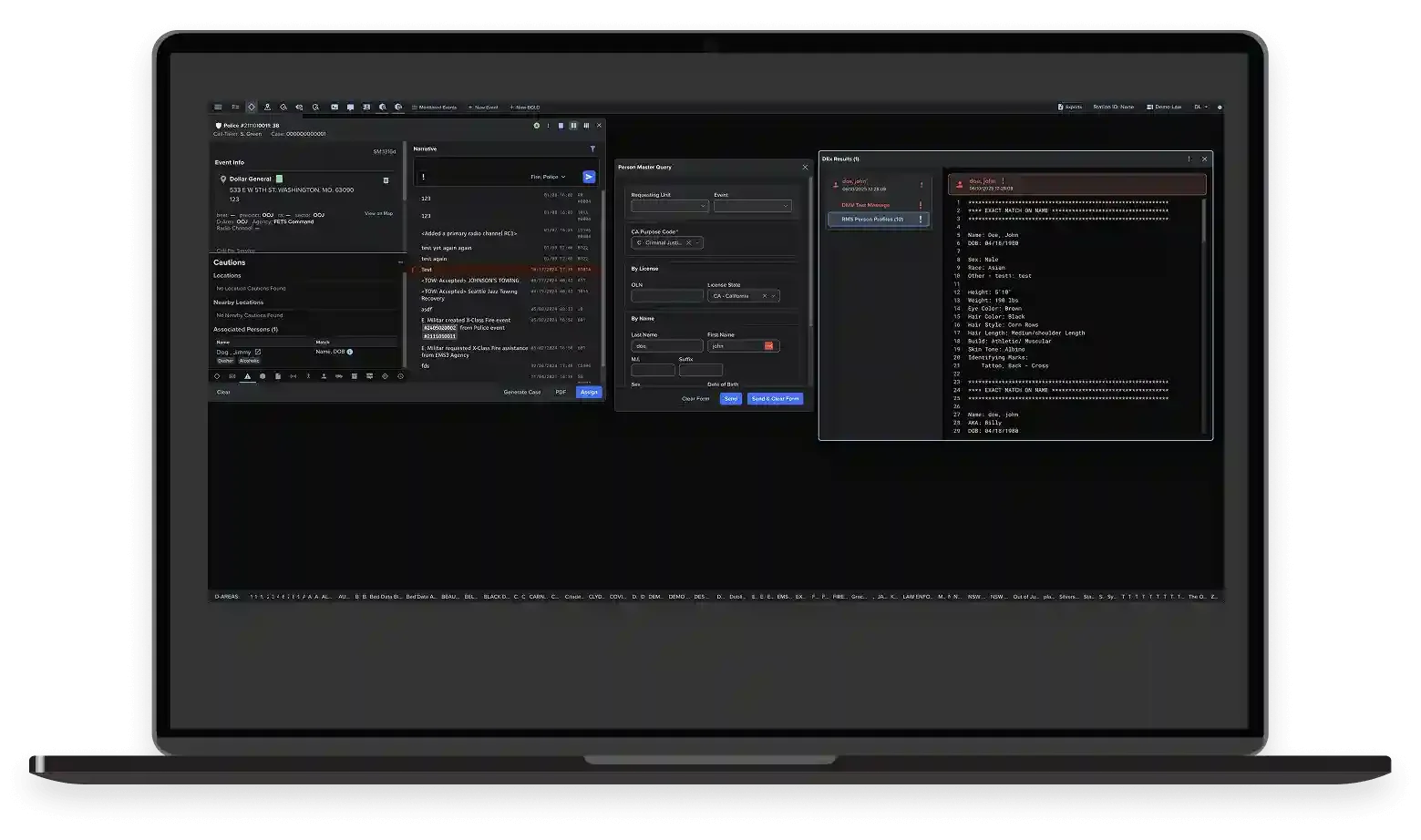
Best for: Police departments modernizing dispatch and records workflows through connected applications.
Mark43 provides cloud-native software including CAD, RMS, OnScene and Insights.
Mark43 CAD supports incident intake, dispatch coordination, responder information and operational awareness. Its RMS and mobile applications connect relevant incident information with reporting workflows.
The OnScene application extends selected functions to personnel working outside an office or patrol vehicle.
Strengths
- Integrated CAD and RMS capabilities.
- Connected mobile reporting workflows.
- Incident and responder information.
- Support for multiagency operations.
Limitations
- Cloud-native deployment requires assessment of connectivity and data governance.
- Legacy system migration may be complex.
- Enterprise video conferencing is a separate purchasing consideration.
Key purchasing consideration: Test the complete sequence from incident intake through field reporting and final records entry, including access permissions and error handling.
3. Motorola Solutions CommandCentral RMS: Records and Case Management
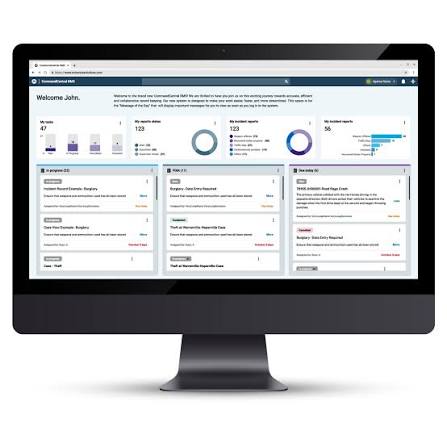
Best for: Police departments modernizing official records, investigative workflows and case documentation.
Motorola CommandCentral RMS is a cloud-native records and case management platform.
It supports configurable forms, investigative reporting, search, and records lifecycle processes. Integration with related Motorola Solutions applications can reduce duplicate entry and help connect records with dispatch and field activity.
CommandCentral Responder provides mobile capabilities, including offline synchronization for supported workflows.
Strengths
- Records and case management capabilities.
- Configurable reporting and approval processes.
- Integration with related Motorola applications.
- Field reporting options.
- Records retention and expungement functions.
Limitations
- Cloud infrastructure requires availability assessment.
- Historical records migration may involve substantial preparation.
- External integrations must be validated separately.
Key purchasing consideration: Verify data migration, retention rules, investigative permissions, and how report revisions are documented.
4. Axon Evidence: Digital Evidence Management
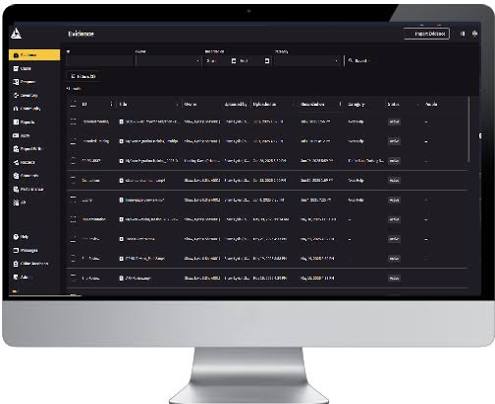
Best for: Agencies handling body-worn camera recordings, investigative video, audio, photographs and other electronic evidence.
Axon Evidence is a cloud-based digital evidence management platform designed for evidence organization, review, controlled sharing and auditability.
Its specialized workflows support evidence handling requirements that ordinary file storage or messaging systems do not address.
Available capabilities include evidence review, redaction, transcription and integration with related Axon products.
Strengths
- Dedicated evidence management.
- Access history and audit trails.
- Support for evidence review and disclosure.
- Integration with Axon’s recording and evidence ecosystem.
Limitations
- Cloud hosting requires security and retention assessment.
- Large media volumes create storage and processing requirements.
- Does not replace enterprise messaging or video conferencing.
Key purchasing consideration: Validate chain-of-custody reporting, integrity checks, evidence export procedures and retention controls.
5. Tyler Technologies Enterprise CAD: Emergency Dispatch
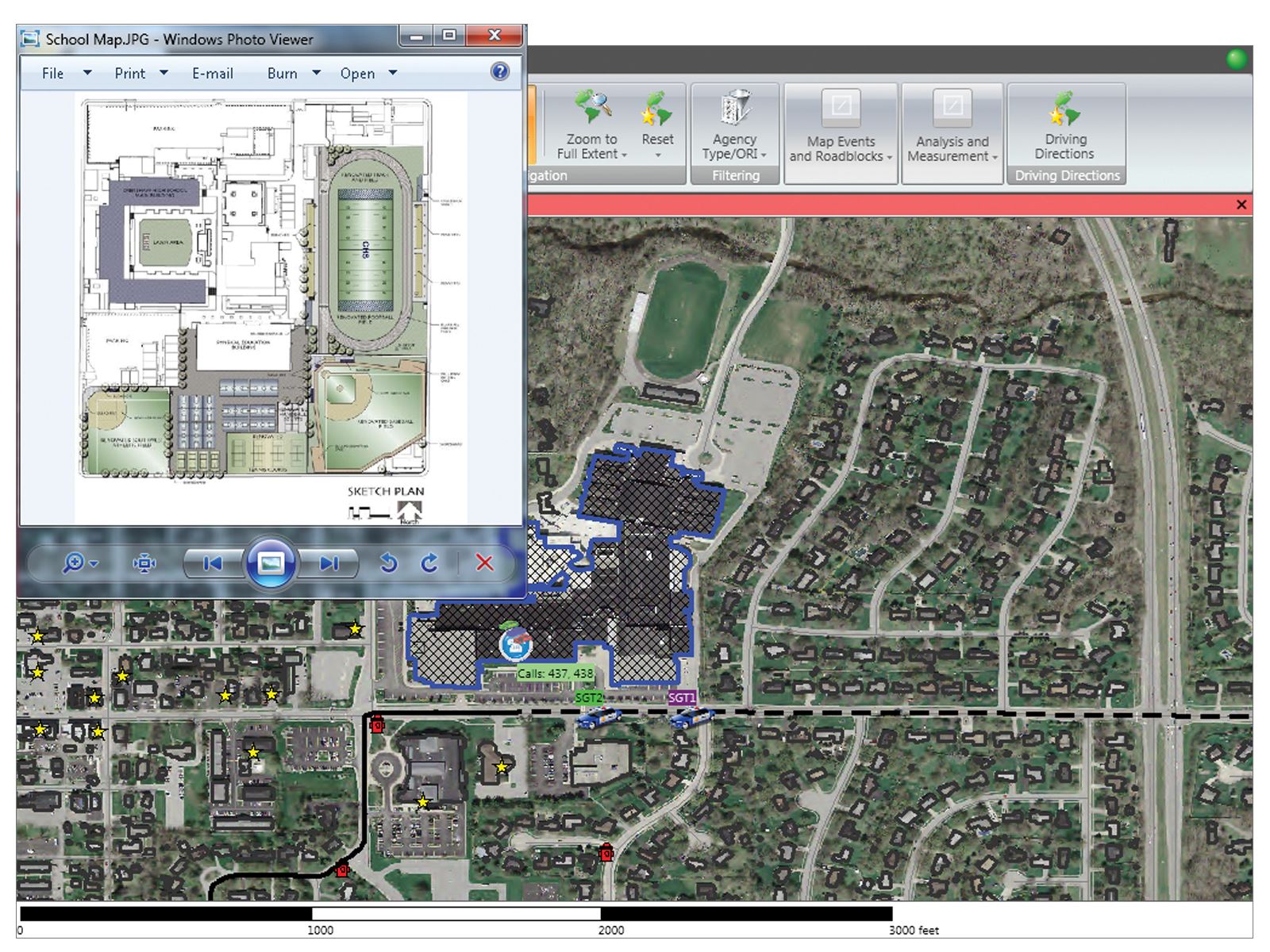
Best for: Emergency communications centers coordinating police, fire and emergency medical response.
Tyler Enterprise CAD is a cloud-hosted dispatch platform.
It supports incident processing, resource coordination, mapping, automatic vehicle location and proximity dispatching.
These capabilities help dispatch personnel manage incident information and maintain awareness of available response resources.
Strengths
- Specialized dispatch workflows.
- Esri ArcGIS mapping capabilities.
- Automatic vehicle location.
- Proximity dispatching.
- Multiagency response coordination.
Limitations
- Focuses on dispatch rather than general internal collaboration.
- Implementation requires assessment of emergency service integrations.
- Recovery procedures and connection dependencies need testing.
Key purchasing consideration: Evaluate dispatch continuity during outages, resource assignment speed, mapping reliability and integration with existing emergency communication infrastructure.
6. CentralSquare CrimeView Analytics: Public Safety Data Analysis
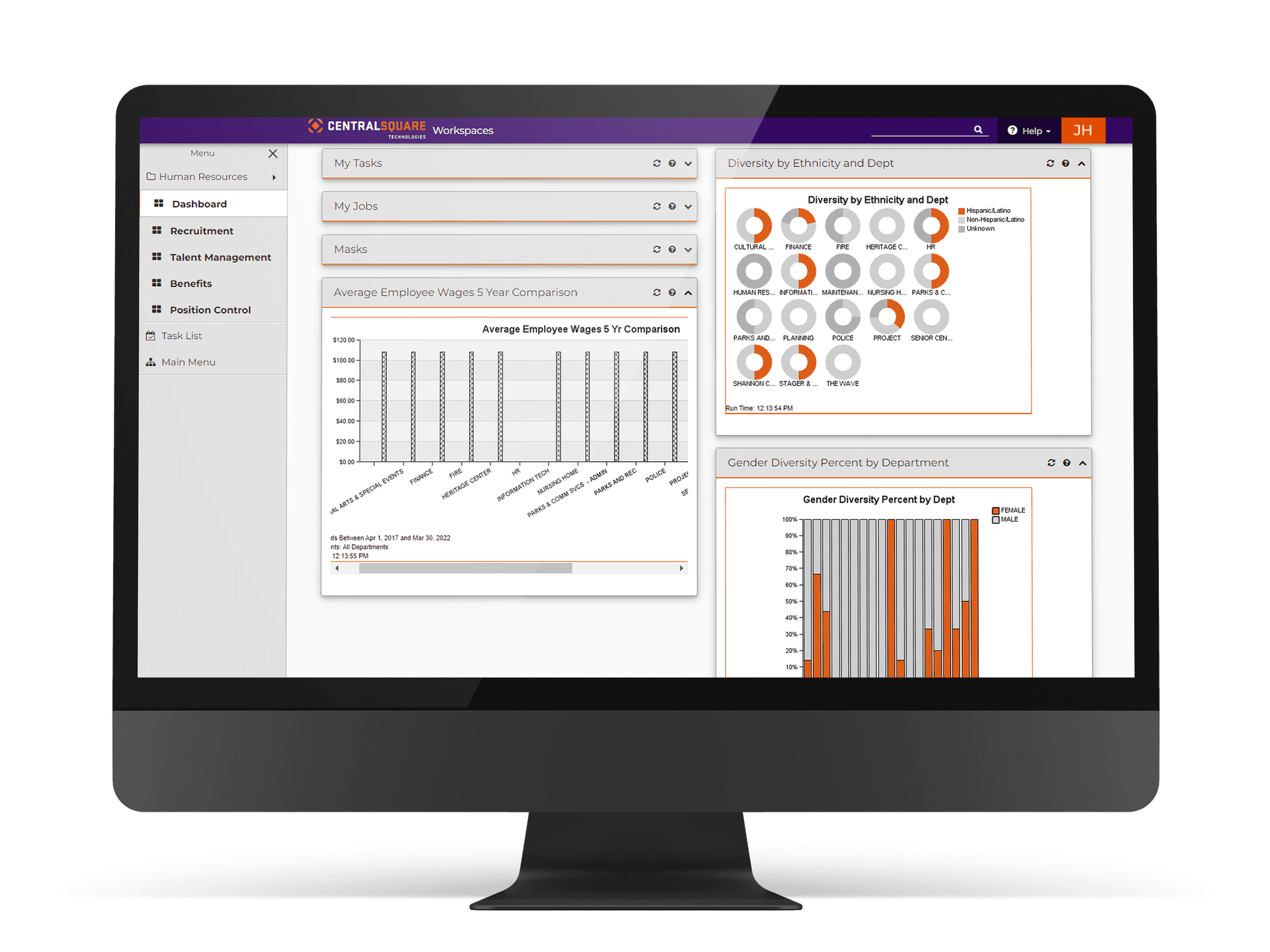
Best for: Crime analysts, police command staff, and public safety organizations requiring crime mapping, incident analysis, and reporting.
CentralSquare provides public safety software covering CAD, RMS, mobile operations and analytics.
CrimeView Analytics is the specialized analytical solution considered in this comparison. It is designed to help agencies identify geographic crime patterns, examine incident trends, and support operational planning.
CrimeView Analytics should be distinguished from CentralSquare’s wider product portfolio. CAD and RMS are separate operational product categories, while CrimeView focuses on analysis and reporting.
Strengths
- Crime analysis and reporting capabilities.
- Geographic and operational data visualization.
- Identification of incident patterns and trends.
- Use of recorded crime information to support planning.
Limitations
- Does not replace CAD, RMS, or evidence management systems.
- Analytical quality depends on source data completeness and accuracy.
- Integration with existing data sources requires compatibility assessment.
Key purchasing consideration: Verify supported data sources, update frequency, reporting transparency and the ability to reproduce analytical results.
Law Enforcement Software Comparison
|
Solution |
Main specialization |
Deployment |
Most important evaluation criterion |
|---|---|---|---|
|
TrueConf Server |
Video conferencing and messaging |
Self-hosted |
Offline operation, conferencing capacity and administration |
|
Mark43 |
CAD, RMS and mobile operations |
Cloud-native |
Dispatch-to-records workflows |
|
Motorola CommandCentral RMS |
Records and case management |
Cloud-native |
Records migration and investigative processes |
|
Axon Evidence |
Digital evidence management |
Cloud-based |
Evidence integrity and disclosure workflows |
|
Tyler Enterprise CAD |
Emergency dispatch |
Cloud-hosted |
Resource assignment and dispatch availability |
|
CentralSquare CrimeView Analytics |
Crime analysis and reporting |
Product-dependent |
Data quality, analytical transparency and integration |
The decisive question is whether the software performs the agency’s required operational function.
If a department needs emergency response coordination, a CAD platform is the relevant category. If it needs internal conferencing within a restricted network, the evaluation should focus on communication architecture rather than dispatch capabilities.
A system of record preserves authoritative information that an organization must maintain for operational, administrative or investigative purposes.
A communication platform enables personnel to discuss information and coordinate activities.
Consider an investigation involving several departments:
- CAD registers the incident.
- RMS stores the official report.
- Evidence management preserves associated digital files.
- TrueConf supports authorized consultations between investigators and supervisors.
- Required decisions and documentation are recorded in the appropriate official systems.
The distinction matters because a meeting recording does not automatically meet evidence integrity or chain-of-custody requirements.
Agencies should establish information ownership and permitted transfer workflows before connecting these applications.
Insight 1: A communication platform helps investigators coordinate, but CAD, RMS, and evidence management must remain the authoritative systems for incident records, case documentation, and evidentiary files. A meeting recording is not automatically evidence with a documented chain of custody.
Mobile Reporting and Field Operations
Mobile law enforcement software allows personnel to capture operational information outside an office.
Typical requirements include incident reporting, document access, photographs, location information and the ability to synchronize records with central systems.
Offline Reporting vs. Offline Communication
Offline reporting allows a user to capture information locally and synchronize it after network connectivity returns.
Offline communication allows users to exchange messages or participate in meetings over an available network without relying on the public internet.
These functions are different.
For example, Motorola CommandCentral Responder supports offline field reporting workflows. Paid TrueConf Server supports internal communications without a permanent internet connection, provided the required local network infrastructure is functioning.
An agency may need both capabilities, particularly when field personnel experience intermittent cellular coverage while administrative facilities use a controlled internal network.
Mobile Software Evaluation Checklist
- Can officers create reports without continuous connectivity?
- How are records synchronized after reconnection?
- What happens when two users modify related information?
- Can access be revoked for lost or unmanaged devices?
- How are photographs, attachments and location data protected?
- Does the mobile workflow preserve relevant audit information?
Mobile functionality should be tested under realistic field conditions rather than evaluated only through office-based demonstrations.
Cloud vs. On-Premises Law Enforcement Software
Deployment architecture influences system availability, infrastructure responsibilities, administrative control and long-term expenditure.
|
Factor |
Cloud-hosted software |
Self-hosted software |
|---|---|---|
|
Infrastructure management |
Primarily provider-managed |
Organization-managed |
|
Network dependency |
Depends on provider architecture |
May support private-network operation |
|
Data placement |
Defined through hosting arrangements |
Defined through deployment architecture |
|
Security maintenance |
Often provider-managed |
Requires local maintenance |
|
Depends on provider commitments |
Designed by the organization |
|
|
Capacity expansion |
Often subscription-based |
May require more licenses and infrastructure |
|
Cost structure |
Subscription and service fees |
Licensing, hardware, hosting and administration |
Neither model automatically guarantees security or compliance.
Self-hosting offers more direct control over infrastructure but creates responsibilities for updates, monitoring, backups, redundancy and recovery.
Data residency defines where information is stored or processed. Operational control determines who administers the service and which external dependencies remain.
A system may store information within an approved country while relying on external infrastructure for authentication, activation or management.
For agencies operating restricted networks, such dependencies may determine whether the software can be deployed.
Procurement teams should ask:
- Does the application require ongoing internet access?
- Which external services are necessary for activation or licensing?
- Who controls privileged administration?
- Where are backups and diagnostic records stored?
- Can the agency manage network access and recovery internally?
These questions are particularly relevant for communications infrastructure because hosting location alone does not establish service independence.
Insight 2: Data stored in an approved jurisdiction may still depend on external authentication, licensing, or administration. Agencies evaluating restricted-network deployments need to verify operational independence, not just the physical location of data.
TrueConf Server: Features, Deployment and Pricing

TrueConf Server combines communication functions in an organization-managed environment.
Its main capabilities include video conferencing, corporate messaging, file sharing, administrative controls, directory integration, and interoperability with compatible conference room systems.
Potential law enforcement use cases include internal command briefings, employee training, authorized consultations and meetings between geographically separated facilities.
Specific information-sharing and recording policies should be established before production use.
TrueConf Server Pricing
According to the official TrueConf Server pricing page, the platform offers the following editions:
|
Edition |
Published pricing |
Main capabilities |
Suitable use |
|---|---|---|---|
|
TrueConf Server Free |
Free, perpetual license with annual renewal |
Up to 1,000 simultaneously connected users for messaging and one-to-one video calls; unlimited registered accounts; 10 PRO users with group conferencing permissions; 1 SIP/H.323/RTSP connection; 1 guest connection |
Evaluation and connected-network use |
|
TrueConf Server |
From $10 per user per year |
Offline operation and conferencing for up to 2,000 participants, subject to licensing |
Production internal communications |
|
TrueConf Enterprise |
Custom quotation, perpetual license |
Multiserver architecture, redundancy, advanced administration and configurations up to 1 million users |
Large distributed organizations |
TrueConf Server Free
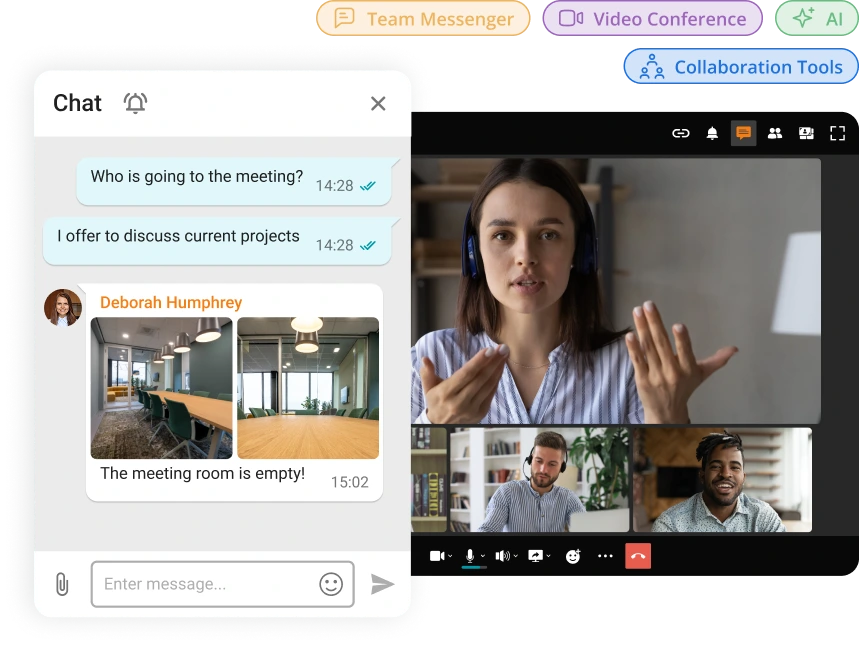
TrueConf Server Free supports up to 1,000 simultaneously connected users for messaging and one-to-one video calls. The number of registered accounts is unlimited.
The free edition includes 10 PRO users with group conferencing permissions, supporting group conferences of up to 10 participants.
PRO licensing determines which accounts can use group conferencing capabilities. It should not be confused with the broader limit of 1,000 simultaneously connected users.
The free edition also includes one SIP/H.323/RTSP connection and one guest connection.
The free license has no fixed expiration date but requires annual renewal.
Important limitation: Offline registration is unavailable in the free edition. TrueConf Server Free must maintain a connection to the registration service. According to the official documentation, if this connection is lost, the server is disconnected after 12 hours.
Therefore, the free edition is not appropriate for permanently isolated production environments requiring independent operation.
TrueConf Server
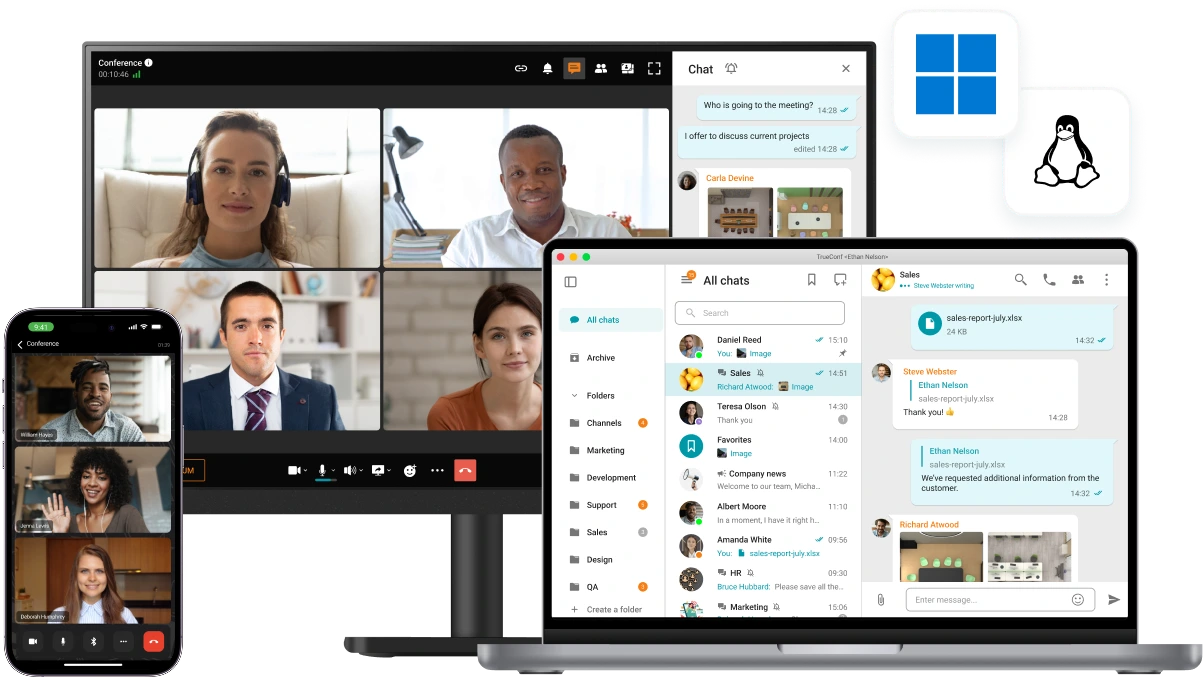
Paid TrueConf Server licensing begins at $10 per user per year.
The paid edition can operate without a permanent internet connection and supports larger conferences, subject to the purchased license.
Actual capacity depends on the configuration, including concurrent users, conferencing permissions, external guests and gateway connections.
TrueConf Enterprise
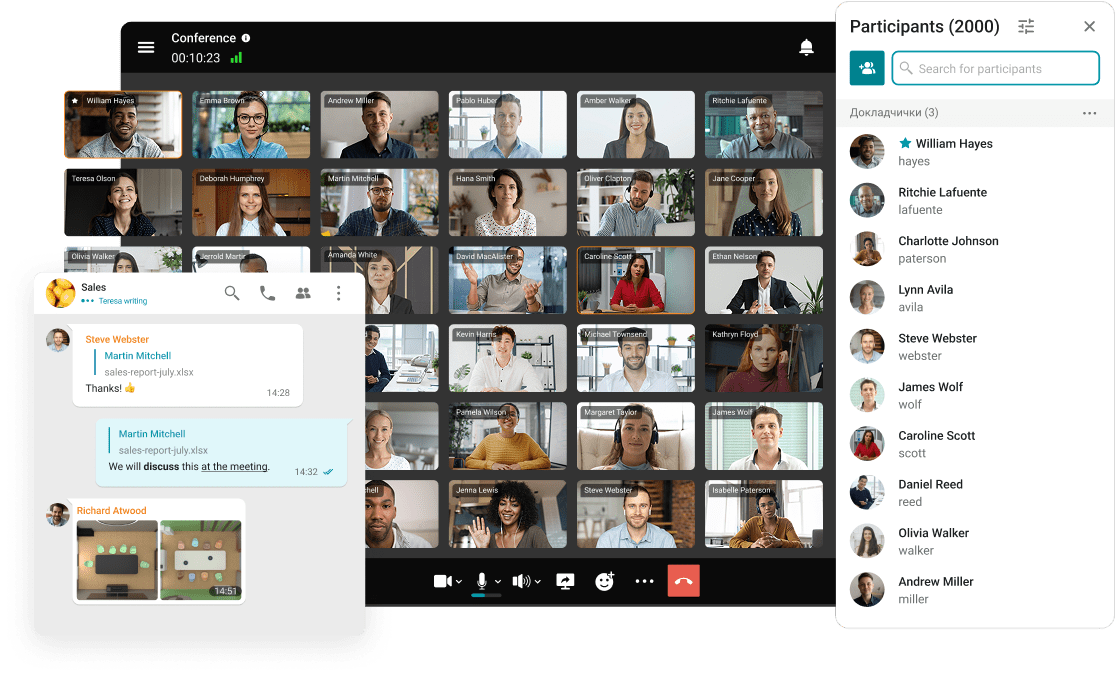
TrueConf Enterprise supports larger multiserver deployments with options for redundancy, load balancing and expanded administration.
The vendor describes configurations supporting up to one million users.
Enterprise capabilities include additional security and management options, but agencies should verify which features are included in the proposed configuration.
Communication licensing should reflect actual usage rather than total employee numbers alone.
An agency with 1,500 employees might expect 600 simultaneous connections and 80 concurrent conference participants.
These are different capacity requirements.
A procurement team should separately calculate:
- Registered accounts.
- Peak simultaneous connections.
- Group conferencing permissions.
- Concurrent conference participants.
- External guest connections.
- SIP/H.323 gateway connections.
- Future growth and redundancy needs.
For TrueConf, this distinction helps determine the appropriate license composition and prevents procurement based on an inaccurate capacity estimate.
Insight 3: An agency’s employee count does not determine the conferencing license by itself. Registered accounts, simultaneous connections, group-conference permissions, concurrent participants, guests, and gateway connections must be sized separately.
Boost your team’s productivity with TrueConf Server Free!
Security and CJIS Considerations

Law enforcement software may handle criminal justice information, personal records and operationally sensitive material.
Security requirements depend on jurisdiction, agency policy, information classification and the functions performed by the software.
In the United States, agencies handling Criminal Justice Information should assess applicable requirements under the FBI CJIS Security Policy, version 6.1, published June 25, 2026, together with relevant implementation schedules and agency-specific obligations.
Essential Evaluation Areas
- Identity and access: Authentication, role-based permissions, privileged accounts and multi-factor authentication where required.
- Encryption and network security: Supported encryption mechanisms, certificates, network segmentation and endpoint protection.
- Audit logging: Records of relevant access, authentication and administrative events.
- Information retention: Controls and procedures appropriate to messages, recordings, reports and evidence.
- Recovery: Backup procedures, restoration testing and service continuity.
- Vendor responsibilities: Support commitments, patch management and security incident procedures.
Self-hosting does not automatically establish CJIS compliance.
TrueConf provides directory integration and administration capabilities, with additional security-related functions available in enterprise configurations. The suitability of any deployment must be assessed against the agency’s actual security requirements.
Integrating Law Enforcement Applications
Police departments often operate CAD, RMS, evidence management, directories and communication platforms at the same time.
The objective of integration is not to transfer every record into every system. It is to make approved information available to authorized personnel without compromising records ownership and access controls.
|
System |
Main responsibility |
Integration requirement |
|---|---|---|
|
CAD |
Dispatch and incident data |
Authorized operational information exchange |
|
RMS |
Official reports and case records |
Data consistency and controlled access |
|
Evidence management |
Evidentiary files and audit history |
Approved evidence transfer and disclosure |
|
Identity directory |
Accounts and authentication |
Account synchronization and permission governance |
|
TrueConf Server |
Messaging and conferencing |
Identity integration and approved communication workflows |
An API provides a technical mechanism for exchanging information. It does not guarantee that an integration follows the agency’s access or records policies.
For example, transferring investigative documents from an RMS into a group chat could expose information to unauthorized personnel, even if the transfer works technically.
Agencies should define:
- Which system owns the original information?
- Which data elements may be transferred?
- How permissions are mapped?
- Whether transfers are logged?
- How failures are handled?
- Which retention rules apply?
TrueConf provides APIs and SDK-based development options, but compatibility with a particular CAD or RMS platform must be validated.
Insight 4: The existence of an API does not establish a safe integration. Before connecting CAD, RMS, evidence, or messaging platforms, agencies must define data ownership, authorized transfers, permissions, logging, and retention.
Illustrative Communication Software Budget
The following figures are hypothetical planning assumptions, not vendor prices or quotations.
|
Cost component |
Hypothetical amount |
|---|---|
|
Initial implementation |
$12,000 |
|
Infrastructure acquisition |
$8,000 |
|
Integration and training |
$5,000 |
|
Annual software licensing |
$6,000 |
|
Annual infrastructure maintenance |
$2,000 |
|
Annual administration and support |
$4,000 |
Initial costs total $25,000.
Annual recurring costs total $12,000.
Five-year TCO = $25,000 + (5 × $12,000) = $85,000
This estimate does not include every potential expense, such as major hardware replacement, unexpected migration work or additional compliance assessments.
The decision-relevant point is that a low license fee does not necessarily produce the lowest five-year operating cost. Buyers should compare equivalent service requirements, reliability expectations and support responsibilities.
Law Enforcement Software Selection Matrix
|
Agency requirement |
Suitable category or solution |
Primary validation |
|---|---|---|
|
Coordinate emergency response |
CAD |
Resource assignment, mapping, incident processing |
|
Maintain official police records |
RMS |
Data migration, reporting, retention |
|
Preserve digital evidence |
Evidence management |
Integrity, audit history, disclosure |
|
Manage investigations |
Case management |
Assignments, permissions, case workflows |
|
Capture information in the field |
Mobile reporting |
Offline capture, synchronization, device security |
|
Plan staffing and shifts |
Personnel scheduling |
Coverage, overtime rules, supervisor approvals |
|
Analyze incident trends |
Crime analytics |
Source quality and reporting transparency |
|
Host private internal communications |
TrueConf Server |
Deployment, identity management, capacity |
|
Operate communications without permanent internet |
Paid self-hosted platform |
Offline licensing and network independence |
How to Choose Law Enforcement Software?
- Define the workflow. Establish whether the agency needs dispatch, records, investigations, evidence, field reporting, scheduling, analytics or communication.
- Identify authoritative systems. Assign responsibility for original records and determine permitted information exchanges.
- Document security constraints. Specify applicable regulations, information classifications, network restrictions and access controls.
- Verify integrations. Test the actual workflow between required applications, not only individual APIs.
- Calculate TCO. Compare deployment and operating costs over an equivalent period.
- Run a controlled pilot. Use representative users, approved test data and realistic failure scenarios.
- Set acceptance criteria. Define measurable requirements for functionality, performance, security, recovery and support.
When Should an Agency Choose TrueConf?
TrueConf is relevant when the requirement is internal messaging, video meetings and collaboration hosted on agency-controlled infrastructure.
The paid edition deserves particular consideration when communications must operate within a private network without a permanent internet connection.
Agencies should assess licensing, identity integration, endpoint compatibility and infrastructure availability before deployment.
Conclusion
Law enforcement software covers multiple operational functions, including dispatch, records, investigations, evidence, field reporting, staffing, analytics and internal communication.
Mark43, Motorola CommandCentral RMS, Axon Evidence, Tyler Enterprise CAD and CentralSquare CrimeView Analytics address specialized public safety requirements.
TrueConf Server complements these systems with self-hosted conferencing, corporate messaging and centralized communication administration.
The strongest procurement approach is to select the right application for each workflow, verify how systems exchange information, and evaluate security and operating costs before deployment.
Empower your video conferencing experience with TrueConf!
FAQ
What software do law enforcement agencies use?
Law enforcement agencies commonly use CAD, RMS, evidence management, investigative case management, mobile reporting and analytics platforms. Personnel scheduling and secure communications are also relevant categories. TrueConf provides internal video conferencing and messaging alongside specialized police applications.
What is the best law enforcement software for police departments?
The best solution depends on the operational requirement. CAD supports dispatch, RMS manages official records, and evidence platforms preserve investigative material. TrueConf is relevant when a department needs internally hosted video meetings and corporate messaging.
Can law enforcement software work without internet access?
Some applications support offline field data capture, while others operate within private networks. Paid TrueConf Server supports communication without a permanent internet connection. TrueConf Server Free requires registration service connectivity and disconnects after 12 hours if that connection is lost.
Is TrueConf suitable for police and public safety organizations?
TrueConf can support authorized internal meetings, consultations, training and collaboration between facilities. Its self-hosted architecture is relevant when an organization needs control over communication infrastructure. It does not replace specialized dispatch, records or evidence management systems.
What security requirements should law enforcement software meet?
Requirements depend on applicable regulations, information classification and agency policies, including relevant CJIS requirements in the United States. Important controls include authentication, encryption, access management, audit logs, retention and recovery. TrueConf offers centralized administration and directory integration, but compliance must be evaluated for the specific deployment.
How much does law enforcement communication software cost?
Costs depend on licensing, hosting, integration, maintenance and support. TrueConf Server Free supports up to 1,000 simultaneously connected users for messaging and one-to-one calls, with 10 PRO users for group conferencing. Paid TrueConf Server pricing starts at $10 per user per year, and agencies should also estimate infrastructure and operating costs.
Can TrueConf integrate with police records and dispatch systems?
TrueConf provides APIs, SDK-based development options, Active Directory/LDAP integration and SIP/H.323 interoperability. These capabilities can support integration projects involving existing IT infrastructure. Compatibility with a specific CAD or RMS platform must be verified and may require custom development.
About the Author
Diana Shtapova is a product specialist and technology writer with three years of experience in the unified communications industry. At TrueConf, she leverages her deep product expertise to create clear and practical content on video conferencing platforms, collaboration tools, and enterprise communication solutions. With a strong background in product research and user-focused content development, Diana helps professionals and businesses understand core product features, adopt new technologies, and unlock the full potential of modern collaboration software.


Follow us on social networks