
Secure Communications for Defense: 10 Solutions
Secure communications for defense are technologies and security controls used to protect messages, voice calls, video conferences, files, and operational information exchanged between military organizations, government agencies, defense contractors, and authorized partners. They combine encryption, identity verification, controlled access, and resilient infrastructure to keep sensitive communication confidential and available.
Unlike ordinary workplace collaboration tools, defense communication systems may need to operate within restricted networks, function without public internet access, integrate with existing infrastructure, and satisfy specific information security requirements. Depending on the mission, organizations may choose encrypted messengers, privately hosted unified communications, professional video conferencing infrastructure, or specialized government communication services.
Among the available solutions are Element Server Suite, Wire, Threema OnPrem, Mattermost, Rocket.Chat, TrueConf Server, Pexip Infinity, Nextcloud Talk, BlackBerry SecuSUITE, and Jitsi Meet. The right choice depends on the information being exchanged, permitted deployment conditions, communication functions, and applicable security authorizations. No single platform is appropriate for every defense communication scenario.
Executive Summary: Secure Defense Communications at a Glance
|
Requirement |
Recommended approach |
Main benefit |
|---|---|---|
|
Confidential messaging |
End-to-end encrypted communication |
Protects supported message content |
|
Secure video meetings |
Private conferencing infrastructure |
Controlled meetings and briefings |
|
Operation without internet |
Self-hosted or air-gapped systems |
Reduced external dependencies |
|
Multi-agency collaboration |
Controlled federation and approved gateways |
Communication between independent organizations |
|
Identity assurance |
MFA, certificates, device verification |
Reduced unauthorized access |
|
Classified information |
Specifically authorized systems |
Compliance with applicable security requirements |
|
Incident coordination |
Operational messaging and workflows |
Structured response activities |
|
Legacy conferencing equipment |
SIP/H.323 interoperability |
Integration with existing endpoints |
|
Communication resilience |
Local services, redundancy, recovery |
Continued operation during disruptions |
|
Accountability |
Auditing, permissions, retention policies |
Organizational oversight |
An essential distinction exists between secure commercial communication software and systems explicitly authorized to process classified information. A platform’s use of AES-256, end-to-end encryption, or privately hosted infrastructure does not independently establish authorization for classified defense communication.
Which Secure Communication Approach Fits Your Organization?
|
Scenario |
Suitable approach |
What to verify? |
|---|---|---|
|
Sensitive but unclassified communication |
Enterprise messaging and conferencing |
Encryption, authentication, information handling |
|
Defense contractor collaboration |
Encrypted messaging with controlled guest access |
User identity, external permissions |
|
Restricted or disconnected facilities |
Self-hosted communication |
Offline dependencies, licensing, maintenance |
|
Secure mobile voice |
Specialized encrypted calling |
Device compatibility, security approvals |
|
Communication between agencies |
Federation or authorized interoperability |
Trust relationships, permitted data exchange |
|
Classified communication |
Specifically accredited systems |
Classification-specific authorization |
|
Professional video briefings |
Private video conferencing |
Endpoint security, recording, interoperability |
A defense contractor conducting unclassified engineering discussions may prioritize messaging, file exchange, and video meetings. A government facility operating an isolated network may instead require local infrastructure and independent authentication services. Systems handling classified information must meet the relevant authorization requirements before deployment.
What Are Secure Communications for Defense?

Secure defense communications include the technologies and procedures used to protect information against interception, unauthorized disclosure, manipulation, impersonation, and disruption. They support administrative work, logistics, technical coordination, training, emergency management, contractor collaboration, and other authorized organizational activities.
A typical environment combines several components, including messaging applications, voice services, video conferencing, identity management, file exchange, and supporting network infrastructure. Some organizations deploy an integrated communications platform, while others combine specialized applications to address different security and operational needs.
Types of Defense Communication Systems
|
Category |
Primary function |
Typical use |
|---|---|---|
|
Secure instant messaging |
Personal and group messages |
Internal teams and contractors |
|
Encrypted voice communication |
Confidential calls |
Government mobile communication |
|
Secure video conferencing |
Meetings and briefings |
Administrative and technical coordination |
|
Unified communications |
Messaging, calls, collaboration |
Enterprise communication environments |
|
Federated communication |
Collaboration across independent systems |
Interagency communication |
|
Isolated communication services |
Internal operation without public internet |
Restricted facilities |
|
Out-of-band communication |
Independent communication during incidents |
Continuity and crisis response |
These categories overlap, but their security properties are not necessarily interchangeable. A specialized encrypted voice platform may offer more relevant assurance for a particular mobile communication scenario than a general collaboration suite. Conversely, a unified communication system may be more practical for routine engineering meetings and administrative coordination.
Why Is Secure Communication Important for Defense Organizations?
Defense organizations exchange information that can have operational value even when it is not formally classified. Staff directories, procurement records, maintenance schedules, supplier relationships, technical documentation, and internal procedures may reveal information that should remain within authorized organizational boundaries.
Confidentiality is essential because unauthorized access can expose commercial, technical, and operational information. Encryption provides one layer of protection, but organizations must also manage identity, endpoint security, permissions, and storage.
Coordination matters because defense-related organizations frequently operate across multiple offices, facilities, laboratories, and contractor locations. Persistent messaging and video conferences allow authorized employees to communicate efficiently while preserving information about decisions and ongoing activities.
Infrastructure independence is important where external service availability cannot be assumed. Some organizations can use approved cloud services, while others require internally operated communication that remains available when public connectivity is interrupted.
Interoperability helps institutions retain compatible conferencing endpoints, telephone systems, and existing infrastructure. Controlled integration may reduce modernization costs, although it introduces additional security boundaries.
Accountability supports organizational governance through access policies, administrative records, and appropriate information retention.
Insight 1: Defense communication security depends on the complete information path, not simply the encryption used by an application.
A message protected by strong cryptography can still be exposed through a compromised device, excessive user permissions, insecure storage, or a malicious integration. Security must therefore address the complete communication environment, including identities, endpoints, servers, and information handling.
Defense Cybersecurity Statistics and Emerging Threats
Recent cybersecurity research highlights the security pressures affecting public institutions, critical infrastructure operators, and organizations supporting national security activities.
ENISA published its Threat Landscape 2026 on September 22, 2026. The report examined cybersecurity activity during 2025, including cybercrime, espionage, software vulnerabilities, and disruptions affecting essential services.
According to the report, 73% of targeted organizations in its analyzed dataset were considered essential or important entities under the NIS2 framework. Public administration represented 32% of cases, while more than 48,000 new CVE identifiers were assigned during 2025, approximately 22% more than in 2024.
|
Cybersecurity indicator |
Finding |
|---|---|
|
Targeted organizations classified as essential or important under NIS2 |
73% |
|
Incidents targeting public administration |
32% |
|
Incidents targeting transport |
8% |
|
Incidents targeting manufacturing |
7% |
|
Newly assigned CVE identifiers in 2025 |
More than 48,000 |
|
Increase in newly assigned vulnerabilities |
Approximately 22% |
These figures describe the wider European cybersecurity environment rather than military communication platforms specifically.
Cyberespionage and Trusted Communication
CERT-EU’s Threat Landscape Report 2025, published in April 2026, provides another perspective. The organization identified 174 distinct threat actors involved in malicious activity affecting European Union entities and their ecosystem during 2025, compared with 110 in 2024. Cyberespionage and prepositioning accounted for 38% of recorded activity.
CERT-EU also examined 178 cases of malicious activity affecting 90 partner organizations. Public administrations accounted for 60% of that partner-related activity.
These findings are especially relevant to communication with suppliers, contractors, and trusted external organizations. Attackers may compromise legitimate accounts, impersonate authorized participants, or exploit existing relationships without breaking the encryption used by a messaging platform.
The reports demonstrate why defense communication planning must address identity assurance, external access, software maintenance, and resilience alongside message confidentiality.
Core Requirements for Secure Defense Communications

Before comparing products, organizations should establish their security requirements and the conditions in which communication services will operate.
Encryption and Key Management
Communication platforms may use transport encryption, end-to-end encryption, and encryption at rest. Each protects a different part of the information lifecycle, so organizations should verify which mechanisms apply to messages, files, calls, conferences, and recordings.
Key management, recovery procedures, cryptographic validation, and the handling of decrypted information must also be considered.
Strong Authentication
Communication services should reliably identify authorized users and, where required, their devices. Relevant controls include multifactor authentication, certificate-based verification, single sign-on, corporate directory integration, and device management.
Administrators should also establish procedures for revoking access when personnel change responsibilities or external collaboration ends.
Deployment Flexibility
Organizations may need cloud, private cloud, on-premises, or isolated infrastructure. The chosen model should reflect permitted information flows, connectivity requirements, operational resources, and administrative responsibilities.
Interoperability
Secure communication may require integration with existing telephone systems, video conferencing endpoints, directories, and enterprise applications. SIP, H.323, WebRTC, APIs, and federation can provide these connections, but their security characteristics must be evaluated independently.
Availability and Governance
Resilience may require redundant infrastructure, local authentication, backup procedures, and tested recovery processes. Meanwhile, governance mechanisms such as permissions, logging, and retention policies should support organizational accountability without unnecessarily weakening communication confidentiality.
10 Secure Communication Platforms for Defense Organizations
The following solutions address different parts of the defense communication environment. They are compared by functionality and deployment characteristics, not ranked by military certification.
1. Element Server Suite

Element Server Suite is a secure communication platform based on the Matrix open communication standard. It combines encrypted messaging, collaboration, independent infrastructure management, and communication between separately administered environments.
Its architecture is particularly relevant to organizations seeking controlled federation and communication sovereignty.
Messaging and Matrix Federation
Element supports direct messages, group conversations, persistent rooms, file exchange, and compatible calling features. Matrix provides end-to-end encryption for supported communication and allows organizations to operate independent messaging servers.
Matrix federation enables separately managed servers to exchange permitted messages. For example, a government department and an authorized contractor can maintain separate communication infrastructure while establishing an explicitly approved communication relationship.
Secure Border Gateway
Element Server Suite Pro includes Secure Border Gateway, an application-level firewall designed for Matrix communication. It provides controls over requests between clients and servers and traffic exchanged between federated environments.
Administrators can restrict communication to approved server domains and apply policies based on request metadata. This provides more granular management than simply enabling or disabling federation.
Cross Domain Solutions
Element also provides Cross Domain Solutions intended to support controlled information exchange between different security domains. Such architectures may involve software, dedicated hardware, inspection mechanisms, and approved transfer policies.
Ordinary Matrix federation and cross-domain information exchange must not be treated as equivalent. Cross-domain deployments require assessment and authorization for the specific environment and information classification.
Administration and Deployment
Element Server Suite Pro includes enterprise administration, identity integration, access controls, and auditing options. Its professional infrastructure uses Kubernetes and Helm charts, supporting deployments in privately managed environments.
Custom notification gateways can reduce dependence on public push notification services. However, federation, identity services, infrastructure, and policy enforcement introduce operational complexity that requires experienced administration.
Best for: Defense organizations requiring encrypted messaging, communication sovereignty, and controlled collaboration across independent networks.
Strengths: Matrix interoperability, Secure Border Gateway, federation, end-to-end encryption capabilities, and cross-domain integration options.
Limitations: Advanced infrastructure requires technical expertise, while classified cross-domain use requires separate authorization.
2. Wire

Wire is an encrypted collaboration platform providing messaging, voice calls, video communication, and file exchange. Its architecture emphasizes confidential group communication and strong device identity verification.
Messaging Layer Security
Wire uses end-to-end encryption for supported messages, calls, and shared content. Its architecture incorporates Messaging Layer Security (MLS), a protocol designed for secure group communication and efficient cryptographic key management.
MLS uses cryptographic epochs to represent successive states of a communication group. As participants join or leave, encryption material can be updated to reflect the change. This is relevant to defense contractors whose authorized project teams change over time.
ID Shield
Wire’s ID Shield provides certificate-based verification of users and their devices through organizational identity infrastructure. Participants can identify verified contacts without relying solely on displayed usernames.
Administrators can revoke certificates associated with compromised or unauthorized devices. For example, a lost managed phone can have its verification credentials revoked while unaffected devices remain trusted.
ID Shield is available in supported Wire on-premises and private cloud deployments, but not in the public Wire cloud service.
Private Deployment and Federation
Wire offers enterprise private cloud and on-premises deployment options. It also supports federation between independently managed communication backends, allowing organizations to establish approved trust relationships without merging their infrastructure.
Federation provides administrative interoperability but does not independently authorize communication between classification domains.
Best for: Government agencies and defense contractors requiring encrypted messaging, private deployment, and device identity assurance.
Strengths: MLS, certificate-based verification, private federation, and encrypted group communication.
Limitations: Advanced identity and federation features depend on enterprise deployment and licensing.
3. Threema OnPrem

Threema OnPrem is a self-hosted secure messenger designed for organizations requiring confidential communication and independence from public messaging infrastructure.
It combines end-to-end encrypted messaging, administrative controls, and support for isolated networks.
Messaging and Cryptography
Threema OnPrem supports direct messages, group communication, file exchange, voice messages, and calling capabilities. Its privacy-oriented architecture emphasizes data minimization and independent communication identities.
Threema’s Ibex protocol provides Perfect Forward Secrecy for supported messaging when the Multi-Device Protocol is disabled. It uses ephemeral cryptographic keys to help protect past messages if a long-term private key is compromised later.
However, Threema’s published cryptographic documentation explains that its Multi-Device Protocol does not provide the same Perfect Forward Secrecy guarantees. Organizations should verify the exact client configuration before selecting a multidevice deployment.
Isolated Infrastructure
Threema OnPrem can operate on privately managed infrastructure, including air-gapped environments. Its communication service is separate from the public Threema network.
Users cannot directly communicate with accounts on public Threema or Threema Work through their OnPrem application. This separation reduces certain external dependencies but limits interoperability.
DualLock
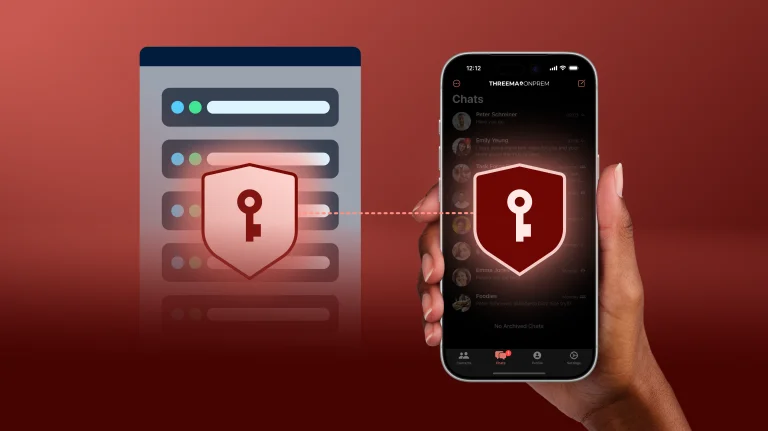
Threema OnPrem also provides DualLock, an additional mechanism for protecting locally stored application data. It requires a user-specific key obtained from the organization’s server before local contents can be unlocked.
Administrators can revoke access following device loss or employee departure. However, the mechanism introduces a server connectivity dependency when unlocking the application, which should be evaluated in disconnected environments.
Deployment Considerations
Threema’s product comparison recommends OnPrem deployments starting from 200 users, while its FAQ describes typical recommendations of 500 or more end-user licenses. These figures reflect deployment guidance rather than universal technical minimums.
The platform requires dedicated infrastructure and appropriate technical administration.
Best for: Restricted government facilities and organizations requiring encrypted messaging on isolated infrastructure.
Strengths: End-to-end encryption, Ibex, DualLock, privacy-focused identities, and independent hosting.
Limitations: Limited external interoperability, configuration-dependent forward secrecy, and infrastructure administration requirements.
4. Mattermost

Mattermost is a self-hosted collaboration platform focused on messaging, operational workflows, and structured technical coordination.
It is particularly relevant to defense IT departments, cybersecurity teams, and organizations managing complex operational processes.
Channels and Playbooks
Mattermost supports direct messages, group conversations, channels, file exchange, and searchable communication history. Teams can organize conversations around incidents, projects, infrastructure systems, or technical responsibilities.
Mattermost Playbooks introduces repeatable workflows with checklists, assigned responsibilities, status updates, and documented activities. This can help a security team coordinate incident investigations or recovery procedures.
Calls and Video Integration
Mattermost Calls supports audio communication and screen sharing. For advanced video conferencing, organizations can integrate specialized platforms.
Pexip documented its Mattermost integration in 2025, allowing users to initiate Pexip meetings from supported Mattermost channels. In November 2026, the companies announced an expanded strategic partnership focused on sovereign collaboration and privately hosted video for defense and security organizations.
The integration connects persistent operational messaging with live meetings while retaining specialized communication infrastructure.
Deployment and Automation
Mattermost supports self-managed deployments, including restricted networks. APIs, plugins, webhooks, and automation tools allow communication to be integrated with approved monitoring and operational systems.
Best for: Defense IT operations, cybersecurity coordination, and incident management.
Strengths: Playbooks, ChatOps, private deployment, structured workflows, and extensible integrations.
Limitations: Advanced video conferencing may require additional software and licensing.
5. Rocket.Chat

Rocket.Chat is a self-hosted enterprise messaging platform offering communication channels, integrations, and specialized deployment options for government and defense environments.
Enterprise Messaging
The platform supports direct messages, group conversations, channels, threads, file sharing, and searchable communication history. Organizations can use it to establish controlled collaboration spaces for departments, technical projects, or authorized partner teams.
Defense-Oriented Deployment
Rocket.Chat offers a specialized Defense plan with features advertised for isolated environments, including air-gapped deployment, security hardening, clearance-aware access controls, and native federation capabilities.
Its current defense offering also describes support for security-sensitive environments and specialized cryptographic configurations. These claims must be evaluated against the exact edition, deployment documentation, and applicable authorization rather than assumed to apply to every Rocket.Chat installation.
Federation and Automation
Rocket.Chat offers APIs and supported Matrix and XMPP federation capabilities. These can connect approved communication environments while maintaining separate administrative systems.
Bots, webhooks, and APIs can also connect channels with monitoring systems and operational tools. For example, an infrastructure monitoring application can send alerts into a designated technical channel.
Calling and Administration
Voice and video communication are available through supported features or add-ons, depending on the edition. Advanced auditing, retention, access policies, and other defense-oriented functions require the relevant commercial configuration.
Best for: Government and defense organizations requiring customizable messaging, technical integrations, and controlled infrastructure.
Strengths: Defense-focused deployment options, federation, APIs, automation, and enterprise administration.
Limitations: Specialized assurances and functions are edition and configuration dependent; some calling capabilities require add-ons.
6. TrueConf Server

TrueConf Server is an on-premises unified communications platform combining corporate messaging, video conferencing, and collaboration tools.
It can operate within privately managed LAN and VPN environments, making it relevant to defense contractors, government administration, and organizations requiring internally hosted communication.
Corporate Messenger
TrueConf Server supports personal and group chats, channels, file exchange, presence information, and corporate contact directories.
Messaging is integrated with voice and video features, allowing employees to initiate calls or conferences directly from their corporate communication environment.
Video Conferencing
The platform provides interactive conferences, role-based meetings, and video lectures. Depending on licensing and infrastructure, commercial deployments support conferences with up to 2,000 participants.
Users can share screens, present documents, and use supported recording and collaboration functionality. This may support administrative briefings, engineering meetings, training, and contractor coordination.
Private Deployment and Offline Operation
TrueConf Server can be deployed on an organization’s own infrastructure. Commercial installations with appropriate licensing can operate inside LAN or VPN environments without permanent internet connectivity.
Administrators control server placement, user access, and communication settings. This provides an alternative to external conferencing services for authorized internal workflows.
Boost your team’s productivity with TrueConf Server Free!
Encryption and Interoperability
TrueConf documents AES-256 encryption for native media communication and TLS 1.3 for supported signaling. Other mechanisms apply when clients connect through WebRTC, SIP, or H.323.
|
Connection type |
Security mechanisms |
|---|---|
|
Native TrueConf communication |
AES-256 media encryption, TLS 1.3 signaling |
|
WebRTC |
DTLS and SRTP |
|
SIP |
SRTP media and supported TLS signaling |
|
H.323 |
H.235 in supported secure configurations |
These mechanisms protect different connections and should not be interpreted as universal participant-to-participant end-to-end encryption.
The platform supports compatible SIP and H.323 professional conferencing equipment. For organizations with established meeting room infrastructure, this allows a privately deployed communication system to work with supported existing endpoints.
Administration and Applications
TrueConf supports Active Directory and LDAP integration, user permissions, APIs, and centralized administration.
Client applications are available for Windows, macOS, Linux, Android, and iOS. Supported browser participants can connect through WebRTC.
Free and Commercial Licensing
TrueConf Server Free includes up to 1,000 concurrently online users, 10 PRO users for group conferences, one SIP/H.323/RTSP connection, and one browser guest connection.
The free license has no fixed expiration date but requires annual renewal through the vendor’s website. Offline activation is available with the full commercial version rather than TrueConf Server Free.
Defense Contractor Scenario
A defense engineering company operates multiple offices connected by a private corporate network. Employees need messaging, technical video meetings, document exchange, and communication with existing conference room endpoints.
TrueConf Server can provide these capabilities within privately managed infrastructure, provided the organization verifies that the deployment and security configuration meet its applicable contractual and information-handling requirements.
Best for: Defense contractors, government administration, and organizations requiring private messaging and video conferencing.
Strengths: LAN operation, integrated messaging and meetings, native applications, and SIP/H.323 interoperability.
Limitations: Requires infrastructure management and suitable licensing; its security features do not independently establish approval for classified information.
7. Pexip Infinity

Pexip Infinity is a self-hosted video conferencing platform designed for enterprise meetings and interoperability between communication technologies.
Its architecture is relevant to government and defense organizations that maintain professional conferencing equipment and require controlled deployment.
Private Video Infrastructure
Pexip Infinity can run in data centers, private cloud environments, and distributed infrastructure. Administrators can allocate conferencing resources across locations to support geographically separated offices and facilities.
Standards-Based Interoperability
Pexip supports SIP, H.323, and WebRTC. These protocols allow compatible professional meeting room endpoints and browser-based participants to connect through supported conferencing environments.
Pexip’s administration documentation also allows individual protocols to be enabled or disabled. This is useful when organizations need to reduce unnecessary connectivity options.
Defense Deployment and Resilience
Pexip offers defense-oriented deployment options for self-hosted, private cloud, and isolated networks. Its platform can support environments with restricted connectivity, although actual meeting performance remains dependent on infrastructure and available bandwidth.
Its documented capabilities include distributed conferencing, administrative access controls, and integration with other communication applications.
Integration
Pexip provides APIs and supports integration with collaboration platforms such as Mattermost. This allows organizations to combine professional video infrastructure with persistent messaging and operational workflows.
Best for: Defense video conferencing and organizations requiring compatibility with professional conferencing equipment.
Strengths: Private deployment, distributed architecture, SIP/H.323 interoperability, and configurable protocol support.
Limitations: Focused primarily on video conferencing rather than enterprise messaging.
8. Nextcloud Talk
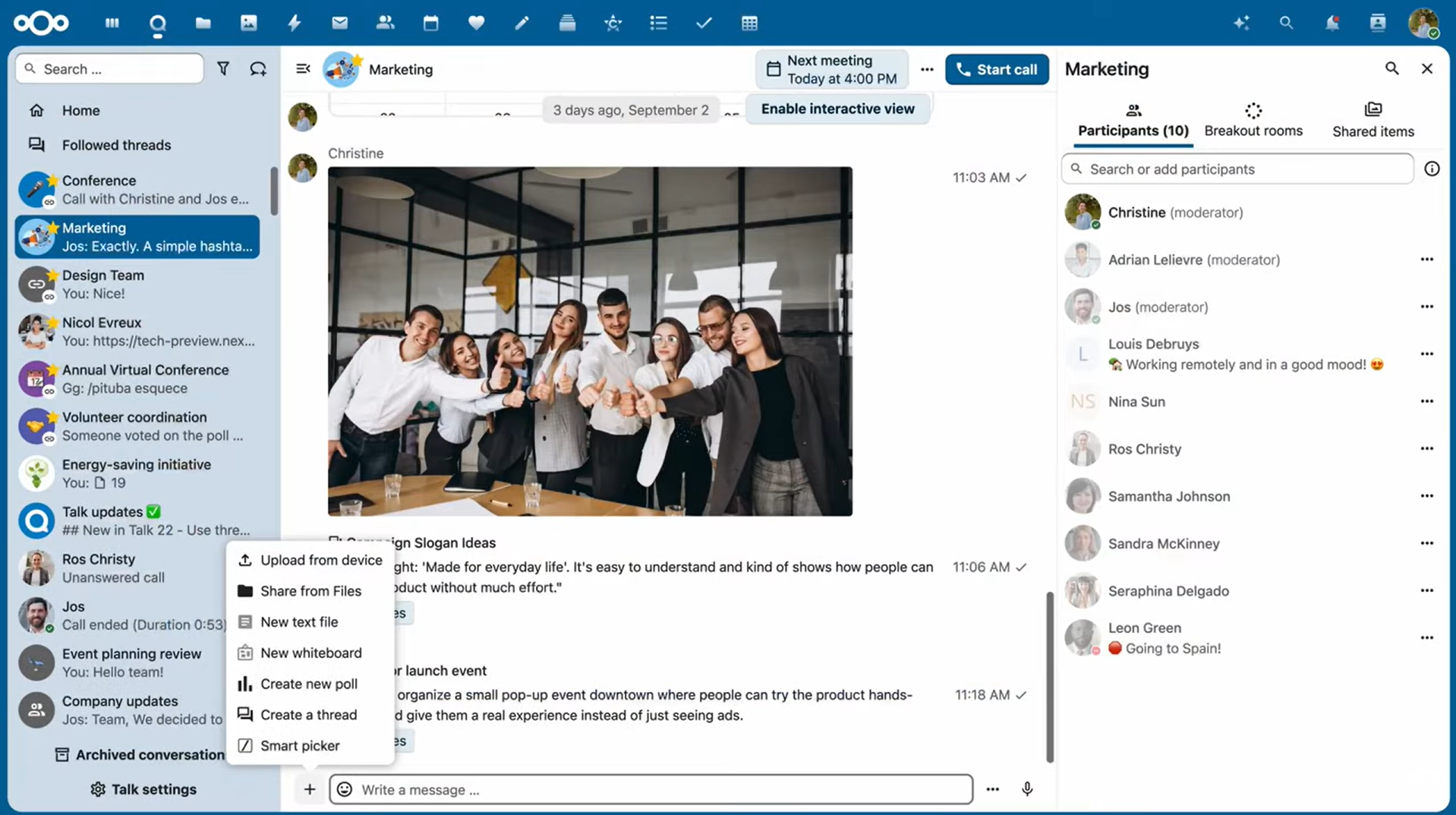
Nextcloud Talk is a self-hosted communication application integrated with the wider Nextcloud collaboration environment.
It combines messaging, voice and video meetings, screen sharing, and document collaboration.
Messaging and Files
Nextcloud Talk supports direct and group conversations, audio calls, video conferencing, and screen sharing.
Its integration with Nextcloud Files allows employees to exchange documents and discuss changes within the same collaboration environment.
High-Performance Backend
Larger conferencing installations can use the Nextcloud Talk High-Performance Backend, which provides signaling and media distribution services.
The architecture supports improved scalability for multiparty meetings, but infrastructure requirements depend on simultaneous participants, meeting sizes, and network conditions.
End-to-End Encrypted Calls
Nextcloud Talk supports end-to-end encrypted call media in compatible configurations.
Its documentation specifies that the call_end_to_end_encryption setting requires the High-Performance Backend and is disabled by default. Administrators must therefore configure the feature rather than assume it is enabled automatically.
Call encryption should also be evaluated separately from protection for persistent messages, shared files, and stored documents.
Private Collaboration
Nextcloud Talk operates on privately managed infrastructure and supports federation between compatible Nextcloud environments. External communication should be configured according to permitted information flows.
Best for: Organizations seeking privately hosted messaging, conferencing, and document collaboration.
Strengths: Open-source infrastructure, integrated files, configurable conferencing, and supported E2EE calls.
Limitations: Advanced conferencing and E2EE require additional infrastructure and appropriate configuration.
9. BlackBerry SecuSUITE
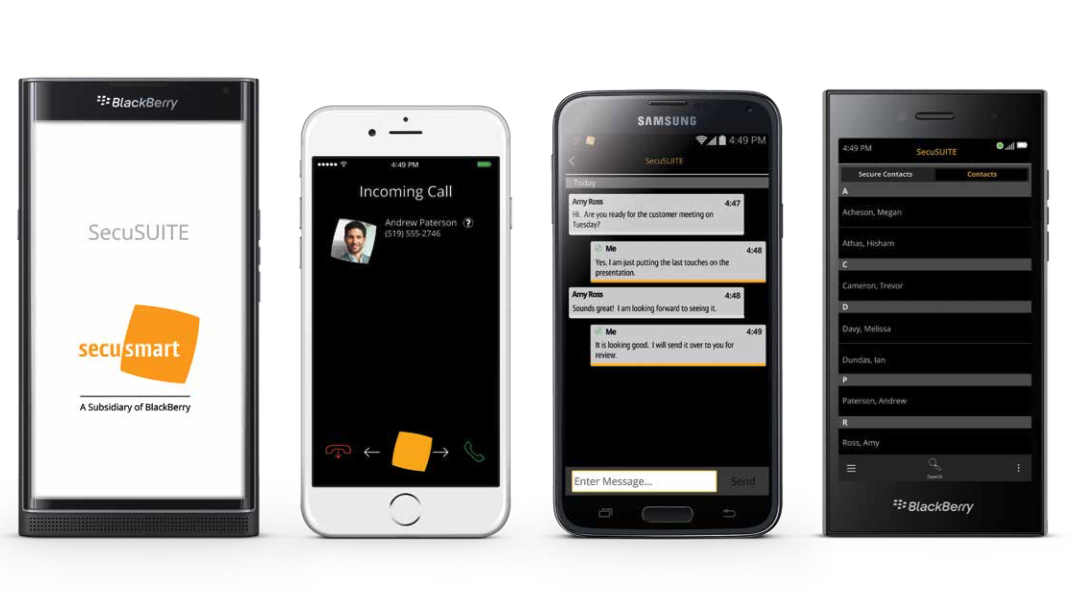
BlackBerry SecuSUITE is a specialized secure communication platform designed for government and defense organizations requiring high-assurance mobile voice and messaging.
Its distinguishing feature is its focus on secure communication functions with documented government-oriented evaluations and approvals.
Encrypted Voice and Messaging
SecuSUITE provides encrypted calling for supported managed mobile devices, together with messaging capabilities in applicable configurations.
The platform is relevant where authorized government personnel need confidential communication while operating outside conventional office environments.
Government Security Assurance
BlackBerry documents security evaluations and approvals associated with SecuSUITE, including Common Criteria and NIAP, NATO Restricted communication, and configurations associated with the NSA Commercial Solutions for Classified program.
These mechanisms serve different purposes.
|
Mechanism |
Purpose |
Important distinction |
|---|---|---|
|
Common Criteria and NIAP |
Evaluates defined security properties |
Applies to specified products and configurations |
|
NATO Restricted approval |
Covers designated communication functions |
Limited to the documented approval scope |
|
NSA CSfC |
Supports approved layered security architectures |
Requires applicable architecture and components |
|
National authority approval |
Authorizes defined national use cases |
Depends on jurisdiction and classification |
Common Criteria evaluates specified security functions, whereas NATO approval applies to particular information protection requirements. NSA CSfC provides a framework for building layered classified communication solutions using eligible commercial components.
A product used within such an architecture is not automatically authorized for every classified communication scenario.
Managed Devices
SecuSUITE can operate within government mobile management environments. Device provisioning, identity verification, cryptographic components, and administrative policies form part of the overall assurance model.
Best for: Government personnel requiring specialized high-assurance mobile voice communication.
Strengths: Encrypted mobile calling, government-oriented security assurance, and managed device integration.
Limitations: Narrower collaboration functionality than enterprise suites, with approval scope dependent on configuration.
10. Jitsi Meet
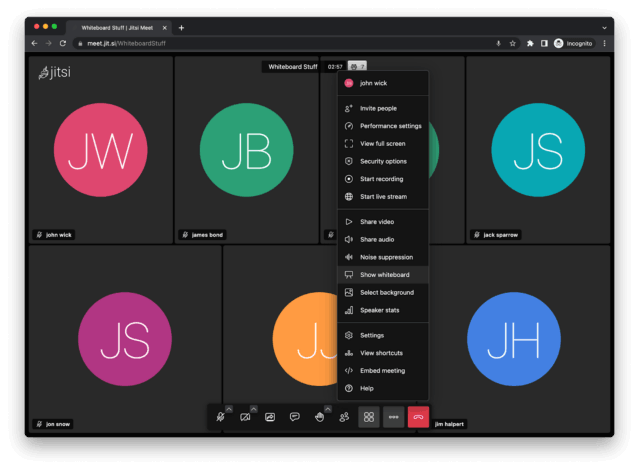
Jitsi Meet is an open-source video conferencing platform that organizations can deploy on privately managed infrastructure.
It provides browser-based audio and video meetings, screen sharing, and configurable participant access.
Self-Hosted Conferencing
Administrators can operate Jitsi Meet on their own servers and configure meeting access, authentication, and supporting services.
Its architecture uses Jitsi Videobridge to distribute media during multiparty conferences, while optional components can provide recording or telephony integration.
Encryption
Jitsi protects media connections using WebRTC security mechanisms, including DTLS-SRTP.
It also provides optional end-to-end encryption for supported audio, video, and screen sharing. This additional layer can prevent the video bridge from reading protected media payloads.
However, the E2EE feature does not cover chat, polls, and every other collaboration function. Supported browser or desktop clients are required, and organizations should verify compatibility before enabling the feature.
Customization
Jitsi provides APIs and integration capabilities for building customized conferencing applications. Organizations remain responsible for infrastructure security, updates, and meeting policies.
Best for: Organizations requiring customizable open-source conferencing on private infrastructure.
Strengths: Self-hosting, browser access, flexibility, and optional media E2EE.
Limitations: Requires technical administration; encryption coverage varies by feature.
Comparison of Secure Communication Solutions for Defense
|
Platform |
Primary function |
Self-hosted option |
Main distinction |
|---|---|---|---|
|
Element Server Suite |
Messaging and collaboration |
Yes |
Matrix federation and Secure Border Gateway |
|
Wire |
Encrypted messages and calls |
Enterprise option |
MLS and ID Shield |
|
Threema OnPrem |
Secure messaging |
Yes |
Isolated infrastructure, Ibex, DualLock |
|
Mattermost |
Operational messaging |
Yes |
Playbooks and ChatOps |
|
Rocket.Chat |
Enterprise messaging |
Yes |
Defense deployment options and federation |
|
TrueConf Server |
Messaging and conferencing |
Yes |
LAN operation and SIP/H.323 |
|
Pexip Infinity |
Professional video conferencing |
Yes |
Distributed video interoperability |
|
Nextcloud Talk |
Messaging, meetings, documents |
Yes |
Integrated file collaboration |
|
BlackBerry SecuSUITE |
Secure mobile voice |
Specialized configurations |
Government security assurance |
|
Jitsi Meet |
Video conferencing |
Yes |
Open-source conferencing and optional E2EE |
Which Platform Fits Each Defense Communication Requirement?
|
Requirement |
Platforms to evaluate |
Main advantage |
Potential limitation |
|---|---|---|---|
|
Encrypted enterprise messaging |
Wire, Threema OnPrem, Element |
Specialized encrypted communication |
Different identity and administration models |
|
Federated communication |
Element, Wire, Rocket.Chat |
Collaboration between independent systems |
Federation and trust management |
|
Operational coordination |
Mattermost, Rocket.Chat |
Structured workflows and automation |
Advanced conferencing may require integrations |
|
Private messaging and video |
TrueConf Server, Nextcloud Talk |
Integrated communication |
Infrastructure and configuration requirements |
|
Professional video interoperability |
Pexip Infinity, TrueConf Server |
SIP/H.323 support |
Gateway security and protocol compatibility |
|
High-assurance mobile voice |
BlackBerry SecuSUITE |
Government-oriented security assurance |
Specialized rather than broad collaboration |
|
Open-source conferencing |
Jitsi Meet |
Flexibility and customization |
Internal administration |
|
Chat with dedicated video |
Mattermost with Pexip |
Persistent messaging and professional meetings |
Integration and licensing complexity |
These recommendations identify functional suitability, not authorization for classified communication.
For encrypted messaging, Element emphasizes federation, Wire combines MLS with device verification, and Threema OnPrem focuses on an isolated messaging environment. Mattermost and Rocket.Chat are particularly relevant to operational coordination, while TrueConf Server and Pexip Infinity address different requirements for privately hosted conferencing.
The most suitable solution depends on whether the organization prioritizes confidential messages, structured workflows, existing conferencing equipment, or a combination of these capabilities.
Cloud vs. On-Premise vs. Air-Gapped Communication
Deployment architecture determines infrastructure responsibilities, connectivity dependencies, and maintenance requirements.
|
Factor |
Managed cloud |
On-premise |
Air-gapped |
|---|---|---|---|
|
Infrastructure control |
Primarily provider-managed |
Organization-managed |
Organization-managed |
|
Public internet dependency |
Usually required |
Can be reduced |
Designed for isolation |
|
Updates |
Provider-managed or shared |
Internal responsibility |
Controlled offline procedures |
|
Data location |
Provider and contract dependent |
Organization-selected |
Restricted infrastructure |
|
External collaboration |
Generally convenient |
Configuration dependent |
Requires approved mechanisms |
|
Operational complexity |
Often lower initially |
Moderate to high |
High |
|
Recovery planning |
Shared responsibilities |
Organization-managed |
Dedicated recovery procedures |
Managed cloud services can support authorized lower-sensitivity communication where external hosting is acceptable. On-premises platforms provide infrastructure control and integration flexibility, while air-gapped environments introduce deliberate network separation and additional operational responsibilities.
What Does DDIL Mean in Defense Communications?
DDIL means Denied, Degraded, Intermittent, and Limited connectivity. It describes network conditions where communication may be unavailable, unreliable, frequently interrupted, or constrained by bandwidth.
DDIL is not synonymous with air-gapped deployment. An air-gapped environment is intentionally isolated, whereas a DDIL environment may retain unreliable connectivity.
|
Condition |
Communication problem |
Capability to evaluate |
|---|---|---|
|
Denied |
Remote service unavailable |
Local operation and independent dependencies |
|
Degraded |
Reduced quality, increased latency |
Adaptive media and bandwidth management |
|
Intermittent |
Repeated disconnections |
Reconnection and synchronization |
|
Limited |
Restricted network capacity |
Low-bandwidth modes and prioritization |
For example, a privately hosted conferencing system may continue operating during an external internet outage but still experience poor video quality if links between facilities suffer packet loss.
Defense organizations should test communication platforms using representative network conditions rather than assume that self-hosting automatically provides resilience.
Insight 2: Network isolation changes the threat model but does not eliminate the need for security controls.
An isolated communication platform may be less exposed to direct internet-based threats, but endpoint protection, software updates, authentication, and recovery become more dependent on internal procedures.
Understanding Encryption in Defense Communications
Encryption terminology often describes different protection mechanisms rather than equivalent security guarantees.
|
Encryption model |
What it protects? |
Important limitation |
|---|---|---|
|
Transport encryption |
Data between connected systems |
Servers may access plaintext |
|
End-to-end encryption |
Supported content between endpoints |
May exclude metadata or certain features |
|
Encryption at rest |
Stored information |
Does not protect data during processing |
|
Server-mediated media encryption |
Connections through conferencing infrastructure |
Servers may decrypt media |
|
Validated cryptographic modules |
Specific cryptographic operations |
Does not validate the entire application |
Transport encryption protects data moving between systems, but a messaging or conferencing server may decrypt information as part of normal processing. End-to-end encryption aims to ensure that only authorized endpoints can decrypt the protected content.
Conference recording and interoperability can change these guarantees. Recording generally requires an authorized component to access meeting content, while protocol gateways may terminate and transform encrypted media.
Three Encryption Questions to Ask Before Procurement
Can the conferencing server decrypt live media? If so, its infrastructure and administrator access become part of the confidentiality model.
What happens when a meeting is recorded? Organizations should determine where content is decrypted, how recordings are protected, and who controls access.
Does a gateway change the encryption model? SIP/H.323 interoperability may introduce additional encryption termination points that must be evaluated.
These questions help convert security marketing claims into verifiable technical requirements.
How Defense Communication Architecture Works?
A secure communication environment includes several interdependent layers.
|
Layer |
Main components |
Responsibility |
|---|---|---|
|
Endpoints |
Computers, phones, conference room systems |
Device integrity |
|
Identity |
Directories, certificates, authentication |
User verification |
|
Applications |
Messaging, voice, conferencing |
Communication functions |
|
Cryptography |
Encryption, key management |
Information confidentiality |
|
Infrastructure |
Servers, storage, networks |
Service availability |
|
Governance |
Logs, retention, monitoring |
Accountability |
The effectiveness of the environment depends on these layers working together. Strong encryption does not prevent exposure when a contractor account has excessive permissions, while correctly configured authentication cannot maintain communication if supporting infrastructure fails.
Security assessment should therefore follow complete workflows, from user authentication through communication, recording, storage, and recovery.
Defense Communication Standards and Certifications
The applicable security frameworks depend on the jurisdiction, classification level, and communication environment.
NIST SP 800-53 provides security and privacy controls for access management, authentication, auditing, system protection, and continuity planning.
NIST SP 800-207 describes Zero Trust Architecture, emphasizing explicit access decisions based on user identity, device state, authorization, and context.
FIPS 140-3 defines requirements for cryptographic modules. Using AES or TLS does not independently prove that a product employs validated cryptographic modules.
Common Criteria provides a framework for evaluating specified security properties of IT products. Evaluations apply to defined versions, configurations, and security claims.
U.S. DoD Impact Levels, including IL4, IL5, and IL6, apply to specified defense cloud security contexts rather than every self-hosted communication application.
NATO and national security requirements may establish additional rules for cryptography, information classification, endpoints, and authorized communication systems.
Insight 3: A security certification is meaningful only when its scope matches the intended communication scenario.
An evaluation for encrypted voice communication does not automatically establish equivalent assurance for video meetings, messaging, or file exchange. Procurement teams should verify the evaluated product, deployment configuration, communication function, and applicable authorization.
Common Challenges in Secure Defense Communication
Legacy interoperability. Existing conferencing equipment and telephone systems may need to connect with newer applications. This can reduce replacement costs but introduces compatibility and security considerations.
Network disruption. Even privately hosted communication relies on local networks, devices, power, authentication, and storage. Continuity requires tested recovery procedures.
Contractor collaboration. External organizations may use different identity systems and administrative policies. Access must be configured according to permitted collaboration relationships.
Mobile security. Managed device provisioning, application controls, credential protection, and remote access revocation help reduce risks associated with mobile communication.
Software maintenance. Isolated deployments require controlled updates, vulnerability management, and technical support procedures.
Recordkeeping. Some organizations require confidential communication alongside retention and auditing. These obligations must be reconciled through appropriate governance.
How to Choose Secure Communication Software for Defense?
Selection should begin with documented requirements and authorized communication scenarios.
|
Criterion |
What to evaluate? |
|---|---|
|
Information sensitivity |
Classification and handling |
|
Communication functions |
Messaging, voice, video, files |
|
Deployment |
Cloud, private, isolated |
|
Identity |
MFA, certificates, directories |
|
Encryption |
Protocols, keys, trust boundaries |
|
Interoperability |
SIP, H.323, federation, APIs |
|
Endpoints |
Device and operating system support |
|
Governance |
Auditing, retention, permissions |
|
Scalability |
Users, calls, infrastructure capacity |
|
Authorization |
Security approvals and evaluated scope |
A practical selection process involves six stages:
- Define the scenario. Identify the information being exchanged, permitted participants, and applicable handling requirements.
- Specify essential functions. Determine whether the organization needs messaging, mobile voice, video conferences, document collaboration, or professional endpoint integration.
- Evaluate dependencies. Document internet connectivity, authentication, licensing, updates, and supporting services.
- Verify security documentation. Compare cryptographic mechanisms, identity controls, deployment conditions, and applicable evaluations.
- Conduct a controlled pilot. Test communication quality, access permissions, interoperability, and recovery under representative conditions.
- Establish operational governance. Assign responsibility for maintenance, access reviews, incident response, and continuity.
Defense Communication Use Cases
Defense Contractors and Engineering Companies
Defense contractors coordinate engineers, suppliers, manufacturing facilities, and technical teams. Self-hosted solutions such as TrueConf Server, Nextcloud Talk, and Mattermost can support authorized internal messaging, meetings, and collaboration.
Government Administration
Government departments may need encrypted messaging, organizational identity integration, and controlled communication between agencies. Element, Wire, and Threema OnPrem provide different approaches to private messaging and infrastructure control.
Technical Incident Coordination
Cybersecurity and infrastructure teams require persistent discussion channels, structured procedures, and timely operational updates. Mattermost and Rocket.Chat provide messaging and automation functions relevant to these workflows.
Secure Video Meetings
Organizations with existing professional conferencing equipment may prioritize interoperability. Pexip Infinity and TrueConf Server support private video communication with compatible systems, while Jitsi Meet provides an open-source conferencing alternative.
Mobile Government Communication
Government personnel may require secure calls and messaging through managed mobile devices. BlackBerry SecuSUITE and Threema OnPrem address different mobile communication requirements.
Insight 4: Combining specialized systems may be more effective than forcing every defense communication requirement into one application.
An organization may use encrypted messaging for persistent communication, dedicated video infrastructure for conferences, and an independent approved channel for continuity during incidents. The architecture must maintain consistent identity controls, permitted information flows, and administrative responsibilities.
Cost Considerations for Secure Defense Communications
Total communication costs include more than software licensing.
|
Cost category |
Typical considerations |
|---|---|
|
Software licensing |
Enterprise, user, or server agreements |
|
Infrastructure |
Servers, networks, storage |
|
Endpoints |
Managed devices and provisioning |
|
Integration |
Directories, telephony, conferencing |
|
Security assurance |
Assessment and authorization |
|
Operations |
Maintenance, monitoring, support |
|
Resilience |
Redundancy, backups, recovery |
|
Training |
Employee and administrator onboarding |
Comparing Total Cost of Ownership
Organizations should compare costs over several years, including deployment, administration, infrastructure replacement, software updates, and technical support.
An open-source platform may reduce licensing expenses but require more internal technical resources. A commercial system may provide enterprise support and specialized features while introducing contractual obligations.
The appropriate solution is the one that satisfies authorized communication requirements with sustainable operational expenses, rather than simply the lowest initial price.
Conclusion
Secure communications for defense require more than encrypted messaging. Military organizations, government agencies, and defense contractors need systems that combine confidentiality, identity assurance, controlled infrastructure, interoperability, and resilience. Element, Wire, Threema OnPrem, Mattermost, Rocket.Chat, TrueConf Server, Pexip Infinity, Nextcloud Talk, BlackBerry SecuSUITE, and Jitsi Meet address different requirements, from encrypted messaging and secure mobile voice to private conferencing and operational collaboration.
The appropriate platform depends on information sensitivity, communication functions, network conditions, existing infrastructure, and applicable security approvals. Organizations should evaluate encryption, endpoint protection, administration, interoperability, and total cost of ownership before deployment. A well-designed communication environment supports authorized collaboration while preserving control over information and maintaining the required security assurance.
Empower your video conferencing experience with TrueConf!
FAQ
What are secure communications for defense?
Secure communications for defense are technologies and procedures used to protect messages, calls, video conferences, and information exchanged by military organizations, government agencies, and defense contractors. They combine encryption, identity verification, access controls, and operational safeguards. Required protections depend on information sensitivity and classification.
What is the difference between military-grade encryption and certified defense communication?
Military-grade encryption is an informal marketing term rather than a defined certification. Certified or authorized communication systems are evaluated against specific technical and security requirements. Strong encryption alone does not authorize a platform to handle classified information.
Can secure defense communications operate without internet access?
Yes. Some self-hosted solutions can operate within private LANs or isolated environments without continuous public internet connectivity. Examples include appropriately configured deployments of Element, Threema OnPrem, Mattermost, Rocket.Chat, TrueConf Server, and Pexip Infinity. Actual offline functionality depends on licensing, infrastructure, and configuration.
Is end-to-end encryption enough for military communication?
No. End-to-end encryption protects supported content but does not independently secure endpoint devices, user identities, metadata, or system administration. Additional access controls, endpoint protection, operational procedures, and applicable authorization are required.
What is the difference between air-gapped and on-premise communication?
On-premise communication means an organization manages the system on its own or approved infrastructure. Air-gapped communication uses an intentionally isolated environment with restricted external connectivity. An on-premise server may still have internet access, while an air-gapped deployment is designed to maintain network separation.
Which secure communication platforms support defense video conferencing?
Pexip Infinity, TrueConf Server, Nextcloud Talk, and Jitsi Meet provide different approaches to privately hosted conferencing. Element and Wire also offer calling and collaboration capabilities, while Mattermost can integrate with specialized video infrastructure. Suitability depends on deployment requirements and applicable security approvals.
How should defense organizations select secure communication software?
Organizations should define information sensitivity, communication requirements, deployment restrictions, and applicable security approvals. They should compare encryption, authentication, endpoint management, interoperability, and operational support. A controlled pilot and appropriate security assessment help determine whether the platform is suitable for its intended environment.
About the Author
Diana Shtapova is a product specialist and technology writer with three years of experience in the unified communications industry. At TrueConf, she leverages her deep product expertise to create clear and practical content on video conferencing platforms, collaboration tools, and enterprise communication solutions. With a strong background in product research and user-focused content development, Diana helps professionals and businesses understand core product features, adopt new technologies, and unlock the full potential of modern collaboration software.


Follow us on social networks