
Sovereign Collaboration Platform: What It Is, Key Requirements and Architecture
A sovereign collaboration platform is a digital workspace that allows an organization to communicate, create content and coordinate work while retaining meaningful control over the infrastructure, data, identity and operational dependencies behind those activities.
Modern collaboration rarely happens in one place. A typical workflow can move through several systems:
message → meeting → document → file → task → knowledge
This is why collaboration sovereignty cannot be determined only by the location of one server.
A locally hosted messenger may keep conversations inside the organization while documents are edited in an external cloud, users authenticate through an external identity service and meeting summaries are processed by an external AI provider.
One application is self-hosted, but the complete collaboration workflow is not necessarily sovereign.
The more useful question is:
At what point in the collaboration workflow does the organization lose control?
What Is a Sovereign Collaboration Platform?
A sovereign collaboration platform provides digital collaboration capabilities under an infrastructure and governance model that satisfies the organization’s requirements for control.
Depending on its scope, a platform may include:
- team messaging;
- voice and video communication;
- file sharing;
- document editing;
- calendars;
- email;
- tasks and projects;
- knowledge management;
- identity and access management.
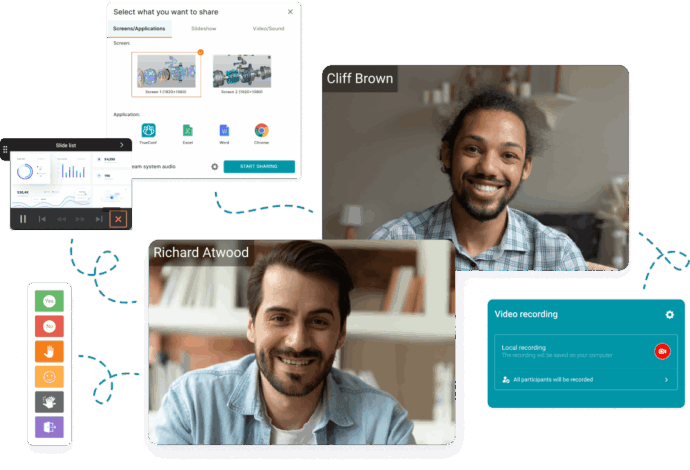
Current sovereign workplace projects demonstrate how broad this category can be.
What Makes a Collaboration Platform Sovereign?
No individual feature makes a collaboration platform sovereign.
The stronger test is whether the organization retains the level of control it requires across the systems needed for everyday work.
|
Area |
What sovereignty requires |
|---|---|
|
Infrastructure |
Core services run on infrastructure accepted by the organization |
|
Data |
Processing, storage and retention remain inside the required boundary |
|
Identity |
The organization can retain control over users and authentication |
|
Administration |
Critical configuration is not exclusively controlled by an external provider |
|
Applications |
Collaboration functions do not unexpectedly send data outside the boundary |
|
Integration |
Components can connect without creating unacceptable dependencies |
|
Portability |
Data and components can be moved or replaced where required |
|
Continuity |
Core collaboration can survive the loss of unacceptable external dependencies |
This is broader than choosing between cloud and on-premises software.
A platform can run inside the customer’s data center and still rely on an external service for authentication, licensing or document processing.
Conversely, an organization may use a sovereign regional cloud if that operating model satisfies its jurisdictional and administrative requirements.
Sovereignty is therefore less about one prescribed architecture and more about who controls the critical dependencies.
Sovereign Collaboration Is More Than Data Residency
Data residency is important, but it answers only one question:
Where is the data located?
Sovereignty asks additional questions:
- Who operates the infrastructure?
- Who administers the platform?
- Which jurisdiction applies?
- Who controls identity?
- Which external services are mandatory?
- Can the organization move its data?
- What happens if the provider becomes unavailable?
A platform may store files in the required country while relying on an externally controlled identity platform or administrative service.
The data location requirement may be satisfied while the wider collaboration environment remains dependent on infrastructure outside the organization’s sovereignty boundary.
A useful shorthand is:
data residency = location
sovereignty = control
The two frequently overlap, but they should not be treated as synonyms.
What Should a Sovereign Collaboration Platform Include?
There is no universal feature list because organizations define collaboration differently.
However, most digital work crosses three broad functional areas.
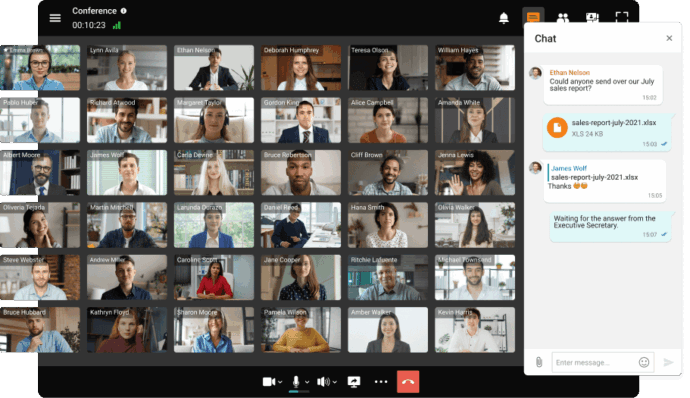
Communication
This layer enables people to exchange information directly:
- personal and group messaging;
- channels;
- voice calls;
- video meetings;
- screen sharing;
- presence.
Communication sovereignty matters because conversations and meetings often contain operational, commercial or government information that organizations do not want to route through uncontrolled services.
Content
Collaboration also produces persistent information:
- files;
- documents;
- presentations;
- spreadsheets;
- meeting artifacts;
- shared knowledge.
A sovereign communication environment can still have a major gap if documents automatically move into an external SaaS platform.
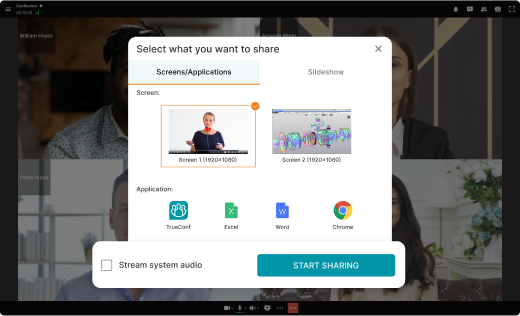
This is why broader sovereign workplace suites often combine communication with document and file services.
Coordination
Teams also need to organize work through:
- calendars;
- tasks;
- projects;
- workflows;
- shared planning;
- notifications.
A sovereign platform does not necessarily need to provide every capability itself.
The important issue is whether the organization can maintain an acceptable collaboration boundary across all of them.
One Sovereign Suite or a Sovereign Collaboration Stack?
Organizations generally have two ways to create a sovereign collaboration environment.
Integrated Sovereign Suite
One platform or closely integrated suite provides most everyday collaboration functions.
Examples can include:
identity → email → messaging → meetings → files → documents → tasks
The main advantage is fewer boundaries between applications.
Users can perform more work without moving information into unrelated external systems.
The tradeoff is concentration. The organization may become more dependent on one suite and its technical architecture.
Sovereign Collaboration Stack
The alternative is to combine specialized systems.
For example:
organizational identity
↓
communication platform
↓
document and file platform
↓
project or workflow system
↓
knowledge platform
This model allows an organization to select the most appropriate system for each layer.
The tradeoff is that integration becomes part of the sovereignty problem.
|
Approach |
Main advantage |
Main tradeoff |
|---|---|---|
|
Integrated sovereign suite |
Fewer application boundaries |
Greater dependence on one suite |
|
Modular sovereign stack |
More component choice |
More integration and governance work |
Neither model is automatically more sovereign.
The important question is whether the organization controls the interfaces and dependencies between the components.
Sovereignty should follow the workflow, not stop at the application boundary.
Where Collaboration Sovereignty Commonly Breaks
A platform can look sovereign when evaluated in isolation while the complete workflow still contains external dependencies.
Several patterns deserve particular attention.
Local Applications, External Identity
Messaging and document systems may run on controlled infrastructure, but users cannot access either platform if an external identity provider is unavailable.
Identity then becomes a critical part of the sovereignty boundary.
Local Messaging, External Documents
A team may discuss sensitive information inside a self-hosted messenger but immediately move attachments into an externally operated office suite for editing.
The communication layer is controlled.
The content workflow is not.
Customer-Hosted Platform, External Control Plane
Running application servers locally does not necessarily mean that all operational functions are local.
Licensing, administration, configuration or other critical services may still require access to vendor infrastructure.
Organizations should identify which of those services are necessary for normal operation.
Controlled Workspace, External AI Processing
AI introduces another possible boundary.
Features such as:
- meeting transcription;
- summarization;
- document analysis;
- translation;
- assistants;
may transfer collaboration content to a separate processing environment.
An AI feature should therefore be evaluated as another collaboration dependency rather than assumed to inherit the sovereignty properties of the main platform.
Internal Collaboration, Uncontrolled External Sharing
The internal environment may be tightly controlled while guest collaboration sends files or conversations into systems governed by another organization.
External collaboration does not make sovereignty impossible, but the boundary needs to be explicit.
These examples lead to a useful test:
Follow one real work item from creation to completion and identify every system that can process, store, authorize or interrupt it.
That often reveals dependencies that a simple hosting checklist misses.
Examples of Sovereign Collaboration Platforms
Different products approach sovereign collaboration from different directions.
They should not be treated as identical substitutes.
|
Platform |
Sovereignty model |
Main collaboration scope |
|---|---|---|
|
TrueConf |
Customer-operated communication infrastructure |
Messaging, calls, video meetings, files and presence |
|
Mattermost |
Self-hosted, private-cloud and isolated deployment |
Messaging, calls and operational workflows |
|
openDesk |
Integrated sovereign workplace |
Office, messaging, video, email, files, projects and identity |
|
Nextcloud-based sovereign suites |
Self-hosted or sovereign-cloud workplace |
Files, documents, communication and productivity |
|
Other modular sovereign workplaces |
Integrated or composable workplace |
Communication, content and coordination |
Mattermost explicitly describes its platform as self-sovereign collaboration and supports self-hosted deployments including private-cloud and air-gapped environments. Its current documentation also covers AD/LDAP synchronization, SSO and cross-organization collaboration capabilities.
openDesk illustrates the integrated-suite model. Its current workspace includes Calendar, Chat, Contacts, Docs, Email, File storage, IAM, Knowledge, Notes, Projects, Tasks and Video calls.
Cleura’s announced EU sovereign collaboration suite illustrates the sovereign-cloud approach. It is based on Nextcloud and is intended to combine productivity, communication, collaboration and identity services on European-operated infrastructure.
The important distinction is therefore not which platform has the longest feature list.
It is which collaboration layer the organization needs the platform to own.
Where TrueConf Fits in a Sovereign Collaboration Environment
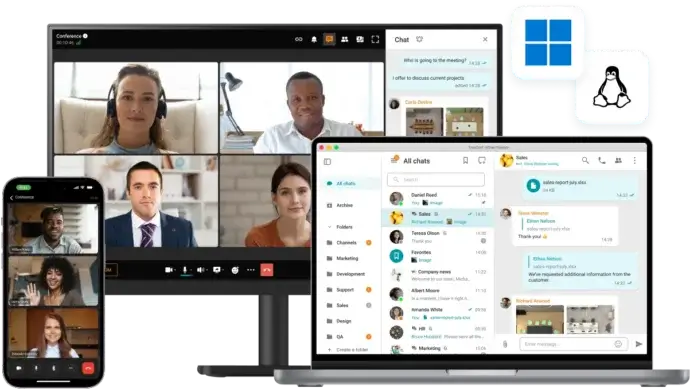
TrueConf Server primarily covers the communication layer of sovereign collaboration.
It combines team messaging and video communication in a customer-operated environment.
Current TrueConf Server materials include:
- personal and group chats;
- channels;
- file exchange;
- voice and video calls;
- video conferences;
- presence;
- screen sharing;
- integration with meeting-room and communication infrastructure.
TrueConf Server is designed to operate on-premises in private networks. The current product documentation states that the full version can operate autonomously inside the network without requiring an internet connection, with corporate chats, files and conference recordings remaining under organizational control.
Organizational Identity
A sovereign communication layer should also fit into the organization’s existing identity environment.
TrueConf Server supports LDAP and LDAPS integration, with documented templates for Active Directory, OpenLDAP, 389 Directory Server and FreeIPA.
This allows the organization’s directory infrastructure to remain part of the collaboration architecture instead of requiring a completely separate public identity system.
Existing Communication Infrastructure
TrueConf Server also supports SIP and H.323 integration.
Its documentation describes built-in support for SIP, H.323, WebRTC and RTSP, allowing the platform to connect with third-party video endpoints, PBXs and other communications infrastructure.
This is relevant to sovereignty because replacing every existing system is not always necessary.
Controlled interoperability can reduce dependency on one isolated vendor ecosystem.
Communication Layer, Not the Entire Workplace
TrueConf should not be treated as a replacement for every sovereign business application.
Its strongest role in this architecture is:
persistent messaging + calls + meetings + file exchange + customer-operated communication infrastructure
Document authoring, project management, email and enterprise knowledge may remain in other controlled systems.
For example:
organizational IAM
↓
TrueConf for communication
↓
controlled document platform
↓
controlled workflow and knowledge systems
The sovereignty of the resulting environment depends on the complete chain, not TrueConf alone.
Sovereignty Does Not Mean Isolation
A sovereign collaboration environment can still connect with external systems.
It may support:
- guest users;
- external organizations;
- federation;
- APIs;
- mobile access;
- email integration;
- telephony;
- external meeting systems.
The distinction is between connection and dependency.
A controlled environment may intentionally connect to another platform while retaining its ability to perform core work without that platform.
This is different from an architecture where one external control plane determines whether internal collaboration can continue at all.
Mattermost’s sovereign collaboration documentation illustrates this distinction through cross-organization workspaces that allow collaboration between trusted organizations while maintaining separate organizational boundaries.
A useful principle is:
A sovereign collaboration environment can connect outward without depending outward for every core function.
How to Evaluate a Sovereign Collaboration Platform
Do not start with a list of product features.
Start by identifying what needs to remain under control.
|
Area |
Verify |
|---|---|
|
Identity |
Can organizational IAM remain authoritative? |
|
Communication |
Where are messages and meeting media processed? |
|
Content |
Where are files and documents processed and stored? |
|
Administration |
Who can configure and access the environment? |
|
Infrastructure |
Which services run on customer, sovereign-cloud or external infrastructure? |
|
Integrations |
Which external components are optional and which are mandatory? |
|
Portability |
Can data and components be moved or replaced? |
|
Continuity |
What stops working if external connectivity or services disappear? |
Then test the platform against real workflows.
For example:
Employee sends a message → starts a video meeting → shares a document → colleague edits it → task is created → final file is archived
Ask where each step happens.
Useful vendor questions include:
- Where do messaging, media, files and application databases run?
- Does normal operation require access to vendor-operated infrastructure?
- Can the organization use its existing identity environment?
- Who can remotely administer the deployment?
- Where are messages, files, recordings and logs stored?
- Which third-party services are mandatory?
- How are AI features processed?
- Can components continue operating without public internet access where required?
- Can existing business systems be integrated through standards or APIs?
- How can users and data be migrated if the architecture changes?
These questions provide more useful evidence than labels such as sovereign, local, European or private.
When Does an Integrated Sovereign Workplace Make Sense?
Not every organization needs a complete sovereign office suite.
An integrated workplace becomes more attractive when many collaboration layers need to move inside the same governance boundary.
Examples include:
- public administration;
- defense organizations;
- regulated environments;
- organizations replacing broad public-cloud productivity suites;
- environments where common identity and administration are important.
openDesk is a good example of this model because it brings office and collaboration applications together specifically for public administration.
A modular stack may make more sense when the organization already has controlled systems it intends to keep.
For example:
- existing document management remains authoritative;
- communication is the main sovereignty gap;
- different departments require specialized workflow systems;
- migration needs to happen gradually.
In those cases, introducing a customer-operated communication platform without replacing the entire digital workplace may be a more practical architecture.
The goal is not necessarily to minimize the number of vendors.
It is to minimize unacceptable dependencies.
FAQ
What is a sovereign collaboration platform?
A sovereign collaboration platform is a digital workspace that gives an organization or accepted jurisdiction meaningful control over the infrastructure, data, identity and operational dependencies behind team collaboration.
What features are included in sovereign collaboration platforms?
Depending on their scope, platforms may provide messaging, video meetings, file sharing, document editing, email, calendars, tasks, projects, knowledge tools and identity services. A sovereign collaboration environment can also combine several specialized platforms instead of using one suite.
Is self-hosted collaboration automatically sovereign?
No. Self-hosting provides control over where an application runs, but the workflow may still depend on external identity, licensing, storage, AI processing or administrative services.
Is data residency the same as digital sovereignty?
No. Data residency describes where information is stored or processed. Sovereignty considers broader control over infrastructure, administration, identity, dependencies and continued operation.
Does sovereign collaboration require one integrated platform?
No. Organizations can use either an integrated sovereign suite or a modular stack of controlled systems. The important issue is whether the dependencies between those systems satisfy the organization’s sovereignty requirements.
Can TrueConf be used for sovereign collaboration?
TrueConf Server can provide the customer-operated communication layer of a sovereign collaboration environment through persistent messaging, file exchange, voice and video communication, and integration with organizational infrastructure. Other controlled platforms may provide document authoring, project management or knowledge-management layers.
Conclusion
Sovereign collaboration is not defined by one application being hosted locally.
Modern work crosses several layers:
communication → content → coordination
and often several different systems.
A sovereign collaboration platform or stack should keep the dependencies behind those workflows inside a boundary the organization understands and accepts.
That makes three questions particularly important:
What work needs to remain under our control?
Which systems does that work depend on?
Where does control leave the intended boundary?
A sovereign suite can bring many functions into one environment. A modular stack can achieve the same objective through several controlled systems.
In either case, sovereignty should follow the work itself, not stop at the server where one application happens to run.
About the Author
Olga Afonina is a technology writer and industry expert specializing in video conferencing solutions and collaboration software. At TrueConf, she focuses on exploring the latest trends in collaboration technologies and providing businesses with practical insights into effective workplace communication. Drawing on her background in content development and industry research, Olga writes articles and reviews that help readers better understand the benefits of enterprise-grade communication.


Follow us on social networks