
Corporate Communications: Definition, Strategies & Best Practices
Updated April 2026
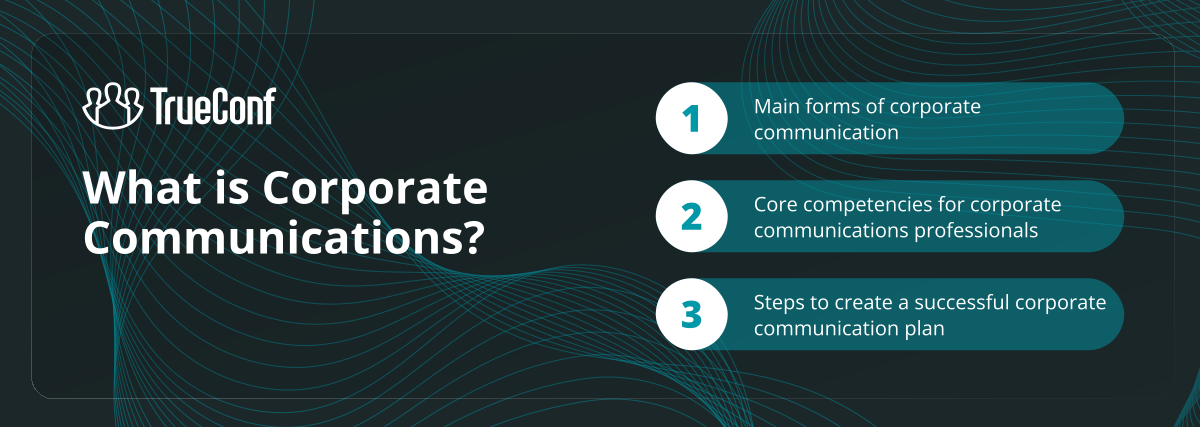
What is Corporate Communication?
Corporate Communications is a vital strategic function that manages an organization’s internal and external messaging. Its primary goal is to ensure seamless information flow, build strong relationships with key stakeholders, and maintain a consistent corporate identity. This function covers multiple communication areas, including:
- Internal Communication – Enhancing collaboration and engagement within the organization.
- External Communication – Managing interactions with customers, media, and the public
- Brand Management – Shaping and maintaining the company’s image and reputation.
- Crisis Communication – Responding effectively to challenges and protecting brand credibility.
- Corporate Social Responsibility (CSR) – Communicating sustainability and community initiatives.
- Investor Relations – Engaging with shareholders and financial stakeholders.
Take your team communication to the next level with TrueConf!
A powerful self-hosted video conferencing solution for up to 1,000 users, available on desktop, mobile, and room systems.
At its core, corporate communication conveys a company’s mission, goals, and values essential for business operations and carving a niche in the marketplace. The ultimate goal of Corporate Communications is to enhance the reputation of the organization, provide meaningful information to stakeholders, and ensure a consistent, positive message about the company.
Corporate Comms vs. PR vs. Marketing: What’s the Difference?
A common source of confusion—here’s how the three functions differ:
|
Function |
Scope |
Primary Audience |
Success Metric |
|---|---|---|---|
|
Corporate Communications |
Entire organization |
All stakeholders |
Trust & reputation index |
|
Public Relations (PR) |
Media & public image |
Journalists, public |
Coverage quality & sentiment |
|
Marketing |
Revenue generation |
Customers & prospects |
Leads, conversions, ROI |
Corporate Communications sits above both—it sets the narrative framework that PR and marketing operate within.
Unique Insight #1: The Alignment Gap
Internal communication platforms (such as self-hosted corporate messengers) reduce the gap between leadership intent and employee understanding by delivering role-targeted, real-time messages without routing through public cloud infrastructure. As a result, organizations using dedicated internal communication tools report up to 25% faster decision-making cycles and measurably lower message distortion across distributed teams.
Most organizations don’t fail because of bad strategy—they fail because strategy never becomes shared understanding. Messages arrive stripped of context. Priorities blur. Employees are left to infer what matters, and inference is a dangerous substitute for clarity.
Structured internal communication tools close this gap not by sending more messages, but by improving message comprehension and traceability.
Internal Corporate Communication
Internal communication helps a company’s team connect and collaborate and is a vital part of the overall corporate culture. It keeps employees informed about their tasks, priorities, and expectations. With more people working in hybrid and distributed environments, structured communication is no longer optional—it is the connective tissue between leadership intent and daily execution. When communication gaps start affecting workflow visibility, collaboration, and process efficiency, organizations may need a broader operational excellence approach — you can learn more about how this works in practice.
Teams should be informed about company goals and plans. This strengthens collaboration, improves work quality, and ensures everyone feels valued. It also helps retain talented employees.
The four layers of internal communication
- Top-down — Leadership to employees: strategic direction, policy updates, change management
- Bottom-up — Employees to leadership: feedback, signals, cultural pulse
- Horizontal (peer-to-peer) — Cross-functional collaboration, knowledge sharing
- Diagonal — Across hierarchies and departments for project-based work
Effective internal communication is not about message volume—it’s about message comprehension. Organizations that treat internal comms as a strategic capability, rather than a delivery function, see measurably stronger alignment between stated goals and operational behavior.
Internal branding introduces employees to the company’s vision and offerings. This alignment is typically achieved through consistent emails, bulletins, intranet portals, and enterprise communication platforms that serve as centralized hubs. Many organizations also hold annual gatherings to launch new sales cycles—events that help unify teams, introduce new working methods, and align on upcoming campaigns. Interactive activities based on corporate photo booth ideas can make these events more engaging while giving employees memorable moments to share.
Self-Hosted Team Messenger with Video Conferencing
A cutting-edge team collaboration server with personal and group chats, UltraHD video conferences, and advanced AI-powered features — free for up to 1,000 users!
External Company Communication
External communication in corporate communications refers to the way a company shares information and messages with people outside the organization—customers, investors, suppliers, industry analysts, media, regulatory bodies, and the general public.
Methods of external communication include press releases, advertisements, websites, social media posts, newsletters, public speeches, blogs, and more. The goal is to shape public perception and strengthen the organization’s reputation.
Key principles of effective external communication
- Consistency — Every channel should reflect the same core message and brand voice
- Accuracy — Factual errors in external communication create legal and reputational risk
- Audience segmentation — Investors, customers, and media require different framing of the same information
- Speed — In the digital era, delays in response are often interpreted as evasion
It is critical to ensure that external communications are clear, accurate, consistent, and aligned with the company’s overall strategy and branding, as they directly affect the company’s image and relationships with external stakeholders.
Executive Communication
For corporations, effective leadership communication is essential both internally and externally. Inside the company, leaders should communicate with employees across all levels to sustain trust and transparency. Externally, they can share expertise through social media, press appearances, and industry events.
Executives often engage with a wider audience through platforms such as LinkedIn, the press, and public events. Their role is not only to inform but also to strengthen brand visibility and support growth.
Key statistic: Around 32% of consumers are more likely to prefer a brand when its CEO maintains an active and authentic presence on social media.
Leadership communication can be challenging, especially when addressing the entire organization. However, transparent and consistent messaging builds trust, supports a cohesive workplace, and helps employees understand the company’s direction.
Executive communication best practices
- Keep messages consistent across internal and external channels
- Make leadership visible during uncertainty—silence is often interpreted as indifference
- Use video formats for high-context messages such as town halls and strategy updates
- Match the medium to the message: a layoff announcement requires a different channel than a product milestone
Unique Insight #2
CEO social media presence, as part of executive communications, creates a human and trustworthy face for the brand that audiences associate with values and accountability. As a result, companies with consistently active executive communicators on LinkedIn and media channels see up to 32% higher consumer preference and measurably stronger talent attraction, because candidates associate leadership transparency with company culture quality.
Brand Management
Brand management within corporate communications means ensuring that every touchpoint—internal documents, press releases, social media, product packaging, SEO campaigns and customer emails—reflects a coherent and intentional identity. This can also include monitoring AI visibility in ChatGPT as AI-generated answers become another brand discovery channel.
Effective brand management strategies include
- Content marketing — Articles, videos, and thought leadership that demonstrate expertise
- Consistent visual identity — Logos, color palettes, and typography applied uniformly across channels
- Employee advocacy — Enabling employees to amplify brand messages through their own networks
- AI-assisted content — Tools that generate on-brand copy at scale while maintaining voice consistency
- Social listening — Monitoring brand sentiment to detect reputation risks before they escalate
Brand management is not just a creative function—it is also a risk management function. Inconsistent brand communication gradually erodes stakeholder trust, even when individual messages are accurate. Consistent logo design also helps reinforce a recognizable and cohesive brand identity across different channels.
Crisis Communication
In corporate communications, crisis communication plays a vital role in managing and controlling information during unexpected events that could damage the organization’s reputation.
During a crisis, demand for information rises sharply, and the way an organization communicates during that period can strongly influence the outcome. Effective crisis communication requires prompt, transparent communication with key stakeholders—including employees, shareholders, and customers. It goes beyond press releases and focuses on building trust, promoting understanding, and reducing negative consequences.
The 3-Phase Crisis Communication Framework
|
Phase |
Timing |
Key Actions |
|---|---|---|
|
Pre-crisis |
Ongoing |
Build a crisis playbook, designate a spokesperson, prepare holding statements |
|
Active crisis |
First 24 hours |
Acknowledge the situation, provide known facts, avoid speculation, communicate the time of the next update |
|
Post-crisis |
Days/weeks after |
Debrief, update stakeholders, adjust strategy, and restore trust |
The single biggest mistake in crisis communication is silence. A statement such as “we are investigating and will update you within 2 hours” is always better than no statement. Stakeholders often interpret silence as guilt or incompetence.
Corporate Social Responsibility (CSR) Communication
CSR communication involves sharing information about initiatives such as environmental sustainability, community development, education, health and wellness, and fair trade. This information is usually communicated through annual CSR reports, press releases, social media, and dedicated events.
CSR communication promotes transparency and trust among stakeholders, including employees, customers, investors, and the broader public. Its purpose is to demonstrate the company’s ethical values and strengthen reputation.
Why CSR communication is becoming strategic, not optional
- Employees—especially younger generations—increasingly choose employers based on purpose alignment
- Investors apply ESG criteria in funding decisions
- Consumers reward brands that demonstrate authentic responsibility
- Many regions now require sustainability reporting through formal regulation
CSR communication is only effective when it is specific and measurable. Vague claims about “commitment to sustainability” reduce credibility—stakeholders now expect concrete metrics such as tons of CO₂ reduced, percentage of recycled materials used, or total community investment.
Investor Relations
Investor relations involves managing communication about company updates, responding to inquiries, and providing accurate financial information. The goal is to maintain transparency and build trust with shareholders and prospective investors. This entails sharing financial transcriptions, supporting financial planning , and explaining the company’s actions and performance. For companies managing multiple financial commitments while expanding operations, options like a Moneylender Debt consolidation loan can help combine liabilities and simplify repayments.
The primary objective is to ensure that the company’s financial performance and future prospects are represented accurately and fairly in the financial markets. Investors should have a clear understanding of strategy, financial planning, performance, growth potential, and governance.
Key investor relations communication channels
- Annual reports and earnings call transcripts
- Investor day presentations and Q&A sessions
- Virtual webinars for multinational investor bases
- Real-time financial disclosure through regulatory platforms
- Dedicated investor relations sections on corporate websites
Effective investor relations is essential for supporting fair share valuation, strengthening investor trust, and building durable relationships with the investor community.
Unique Insight #3
On-premises video conferencing platforms such as TrueConf Server host all communication data within the organization’s own network perimeter, removing third-party data exposure points. As a result, regulated industries—including banking, healthcare, defense, and government—can meet data sovereignty requirements while maintaining enterprise-scale communication capabilities, directly reducing the legal and reputational risk associated with cloud-dependent communication tools.
This matters because highly sensitive discussions—such as crisis response planning, M&A negotiations, investor briefings, and executive strategy—carry the greatest risk when conducted over public cloud platforms governed by third-party data policies.
Try TrueConf Server Free!
- 1,000 online users with the ability to chats and mske one-on-one video calls.
- 10 PRO users with the ability to participate in group video conferences.
- One SIP/H.323/RTSP connection for interoperability with corporate PBX and SIP/H.323 endpoints.
- One guest connection to invite a non-authenticated user via link to your meetings.

Essential Competencies for Corporate Communication Specialists
When hiring for a corporate communications role, employers typically look for a combination of strategic, analytical, and execution-oriented skills.
|
Skill |
What It Involves |
Why It’s Critical |
|---|---|---|
|
Strong writing |
Press releases, internal memos, social content, executive briefs |
Every stakeholder touchpoint is a written artifact |
|
Oratory / presentation |
Pitching, town halls, media interviews |
High-stakes communication requires real-time clarity |
|
Data analytics |
Measuring engagement, sentiment, and reach |
Strategy without measurement is guesswork |
|
Crisis readiness |
Performing under pressure, rapid response |
Crises are not optional—preparation is |
|
Strategic thinking |
Connecting messaging to business outcomes |
Communications must support organizational goals, not simply inform |
|
Flexibility |
Adapting plans to shifting priorities |
Corporate environments change faster than communications cycles |
Crafting a Corporate Communication Plan
Below is a streamlined approach to formulating an impactful corporate communications plan:
- Set clear goals: Start with 3-5 main outcomes you want. This could be raising brand awareness, boosting website visits, or getting more clients.
- Plan step-by-step: Make sure your team knows how to roll out the communication plan in different formats including conference, an email, visual presentation or a pitch deck. Share the plan with all involved teams. Ensure everyone knows their roles and who approves messages and enforces guidelines.
- Understand your audience: Dedicate time to grasp the nuances of your intended audience and their distinct characteristics. This insight will enable you to customize your content for varied segments.
- Formulate core messages: Determine the primary narratives and graphics you want to share. Think about the most effective platforms for sharing, be it a conference, a personalisation email solution, or a visual presentation. Also, provide ways for your audience to ask questions or get more information.
- Track your progress: Before starting, decide how you’ll measure success. Metrics like how many people engage with your content or open your emails can be helpful. Consistently seek feedback from your colleagues and customers to refine strategies and maintain an ongoing dialogue with your target audience.
To move beyond surface-level metrics such as email open rates or media mentions, many organizations complement analytics tools with stakeholder intelligence platforms. These platforms connect communication activity with real-time perception data, helping teams understand how messaging influences trust, reputation, and behavioral intent across key stakeholder groups. This approach enables corporate communications leaders to measure not just visibility, but actual reputation impact.
Final thoughts
Corporate communications are essential for businesses across all industries and regions. Their primary goal is to deliver clear, accessible information, serving as the organization’s central hub for internal discussions, media relations, crisis management, and brand perception.
In today’s competitive landscape, corporate communications play a crucial role in shaping and sustaining a company’s reputation. By effectively managing messaging and stakeholder interactions, they pave the way for long-term growth and success.
FAQ
What is the difference between corporate communications and public relations?
Public relations is a subset of corporate communications focused specifically on managing media relationships and public image. Corporate communications is broader—it includes PR, but also internal communications, investor relations, crisis management, and CSR. Corporate communications sets the unified narrative that PR and marketing operate within.
What does a corporate communications team actually do day-to-day?
Day-to-day responsibilities include drafting internal announcements and executive messaging, managing media inquiries, coordinating crisis responses, preparing investor materials, explaining financial topics such as options like debt consolidation loans, monitoring brand sentiment, and ensuring message consistency across all channels. The team acts as the central nerve system for how the organization speaks to every audience.
How do you measure corporate communications effectiveness?
Effective measurement goes beyond email open rates. Strong metrics include employee comprehension scores, media sentiment analysis, share of voice versus competitors, stakeholder trust surveys, crisis response time, and the correlation between communication campaigns and business KPIs such as retention or sales.
What tools do corporate communications teams use?
Core tools include enterprise communication platforms for internal messaging and video conferencing, media monitoring software such as Meltwater or Cision, stakeholder intelligence platforms, social media management tools, email marketing platforms, intranet portals, and analytics dashboards. Increasingly, AI-assisted writing and sentiment analysis tools are also being integrated.
How should corporate communications change during a crisis?
In a crisis, corporate communications must shift from planned to reactive—but not improvised. Speed, accuracy, and transparency are critical. Acknowledge the situation immediately, share the facts you know, avoid speculation, designate a single spokesperson, and commit to a timeline for updates. After the crisis, conduct a debrief and rebuild stakeholder trust through clear follow-up actions.
What is the role of video conferencing in corporate communications?
Video conferencing bridges the gap between written communication and in-person interaction, especially for high-context messages that depend on tone, body language, and real-time dialogue. It is essential for executive town halls, cross-border stakeholder meetings, crisis briefings, and investor sessions. Secure, self-hosted platforms help keep sensitive communications within the organization’s control.
How does AI impact corporate communications?
AI is reshaping corporate communications in three main ways: content generation for press releases and internal updates, sentiment analysis to track stakeholder perception in real time, and personalization to deliver audience-specific message variants automatically. AI acts as a force multiplier for communications teams, but it does not replace strategic judgment.
About the Author
Olga Afonina is a technology writer and industry expert specializing in video conferencing solutions and collaboration software. At TrueConf, she focuses on exploring the latest trends in collaboration technologies and providing businesses with practical insights into effective workplace communication. Drawing on her background in content development and industry research, Olga writes articles and reviews that help readers better understand the benefits of enterprise-grade communication.


Follow us on social networks