
Examples of Bad Communication: What Goes Wrong and Why It Costs More Than You Think
Summarize article with AI




Poor communication is not just an awkward meeting or a confusing email. It is a measurable drain on productivity, trust, and revenue. Before we go deeper, here are the most important facts you need to know right now.
The Short Version: Key Facts First
|
What Happens |
The Real Cost |
|---|---|
|
Employees spend up to 20 hours/week on digital communication tools |
Much of that time is spent correcting misunderstandings |
|
30% of employees report frustration with unclear messaging from managers |
Source: FlexOS, 2024 |
|
Poor communication leads to duplicated work, missed deadlines, and conflict |
All three often happen at the same time |
|
Remote and hybrid teams are disproportionately affected |
Time zones and text-only channels hide tone and intent |
Three things you can take away immediately:
- Most bad communication does not come from malice. It comes from assumptions: the sender assumes the receiver understood, and the receiver assumes the sender was clear.
- The wrong channel matters as much as the wrong words. Firing off a sensitive message over chat is a different kind of failure than giving vague verbal instructions, but both cause real damage.
- Silence is also a form of bad communication. When managers go quiet during uncertainty, employees fill the gap with rumors.
Insight #1: Bad Communication Often Looks Like a Personality Problem
When a team consistently miscommunicates, the instinct is to blame individuals. “Sarah is a bad listener.” “Tom is too aggressive in meetings.” But in most cases, the pattern is structural. There is no shared understanding of which channel to use for which type of message. There is no norm around response time expectations. Feedback loops are missing. Fixing the system produces faster and more durable results than coaching any single person.
What Is Bad Communication, Really?
Bad communication is not just saying the wrong thing. It is any gap between the message that was sent and the meaning that was received.
That gap can open in multiple places:
- The message was unclear or incomplete
- The channel was wrong for the content
- The timing was off
- The listener was not actually listening
- The sender assumed shared context that did not exist
- Nonverbal signals contradicted the spoken words
What makes this tricky is that all parties often leave a conversation believing it went fine. The disconnect only shows up later, when work gets done wrong, deadlines get missed, or people feel blindsided.
Take your team communication to the next level with TrueConf!
A powerful self-hosted video conferencing solution for up to 1,000 users, available on desktop, mobile, and room systems.
Real-World Examples of Bad Communication
-
The Vague Performance Review
A manager rates an employee 3 out of 5 for “client relationship skills” with no explanation. The employee is confused and hurt. When they ask, the manager says it should have been obvious from the job description. The employee says nobody ever told them what was expected. Both are partially right, which is the whole problem.
What went wrong: Evaluation without criteria. Feedback without specifics is not feedback. It is just a score.
How to fix
Use defined assessment criteria, explain the rating with specific examples, and agree on measurable development goals during a two-way review.
-
The Mass Email Nobody Reads
A 2,000-person company updates its HR policy handbook. The leadership team sends three mass emails to all staff at once. Every employee receives all three regardless of department or role. People either ignore them or cannot figure out which changes apply to them.
What went wrong: The channel was right, but the targeting was not. Sending everything to everyone is the same as sending nothing to anyone in terms of practical impact.
How to fix
Segment policy updates by department or role. Summarize the changes relevant to each group and provide one clear source for the complete policy.

-
The Unclear Deadline
A manager tells an employee: “Get me the data by Friday.” The employee submits it at 4:45 PM. The manager needed it by 10 AM for a board presentation. Both people acted in good faith on an incomplete exchange.
What went wrong: “By Friday” is not a deadline. It is a day. The manager assumed the employee knew the context. The employee assumed end-of-day was implied.
How to fix
Specify the date, exact time, and time zone, along with the reason for the deadline. Ask the recipient to confirm the expected delivery.
-
The Rushed Return-to-Office Announcement
A CEO sends a late-evening email telling employees they are expected back in the office starting Monday, nine days away, with little logistical guidance. Investor confidence drops, employees panic, and the frantic follow-up communications make things worse rather than better.
What went wrong: Sensitive operational changes require phased communication with supporting documentation, such as an organized flipbook detailing the new procedures, rather than a single late-night message. Speed without preparation creates noise, not clarity.
How to fix
Announce the change with reasonable notice, explain its rationale, and share an implementation timeline, practical guidance, and a channel for questions.
-
The Remote Worker Left Out of the Meeting
A team schedules an important client call and forgets to notify a remote team member until an hour before. That person joins unprepared, stumbles through questions, and leaves the call embarrassed. The client notices. When contact details are missing, teams should have a reliable way to find email addresses before sending meeting invitations or important updates.
What went wrong: Hybrid setups require deliberate inclusion. Out of sight genuinely does become out of mind when coordination is left to habit rather than process.
How to fix
Invite all essential participants early, share an agenda and supporting documents, and check that remote team members can prepare and contribute.
Insight #2: The Hybrid Meeting Is a Communication Design Problem
In a meeting with five people in a room and three on video, the three on video are not participating in the same meeting. The in-room group shares eye contact, side conversations, and whiteboard space. The remote participants get a camera pointing at the back of someone’s head and a muffled audio feed. This is not a technical problem. It is a design problem. The meeting was designed for one mode and then extended to another. Companies that treat hybrid meetings as a logistics issue keep buying better cameras. Companies that treat it as a communication design issue rethink the format entirely.
Try TrueConf Server Free!
- 1,000 online users with the ability to chat and make one-on-one video calls.
- 10 PRO users with the ability to participate in group video conferences.
- One SIP/H.323/RTSP connection for interoperability with corporate PBX and SIP/H.323 endpoints.
- One guest connection to invite a non-authenticated user via link to your meetings.

-
The Jargon-Heavy Brief
A project manager sends a kickoff email packed with acronyms, internal code names, and references to processes that newer team members have never seen. Half the team spends two days working from incorrect assumptions because nobody wanted to admit they did not understand.
What went wrong: Jargon builds walls. It also creates a culture where asking for clarification feels like an admission of failure.
How to fix
Define acronyms and internal terms, link to relevant background information, and invite clarification before work begins.
-
The Two-Person Window Display
A manager gives two employees vague instructions to “make the window display fun and attention-getting,” then closes his door. The two employees have completely different ideas of what that means. They argue, both build something in parallel, and the result pleases nobody.
What went wrong: Creative briefs without parameters are not briefs. They are invitations to conflict.
How to fix
Provide a brief with clear objectives, audience, constraints, approval criteria, and one point of contact for questions.
-
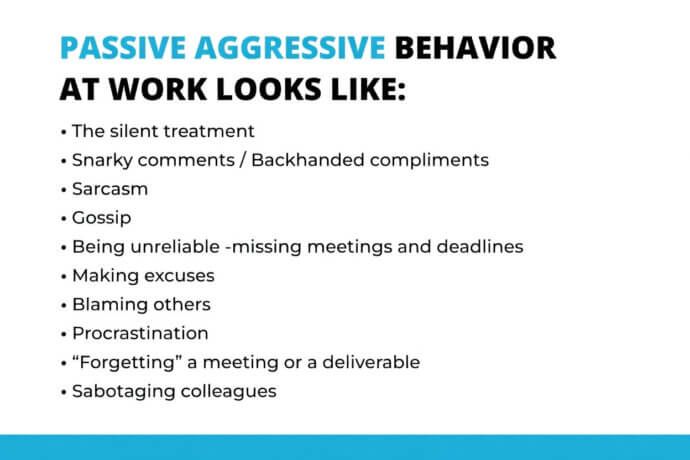
The Passive-Aggressive Silence
After a disagreement in a meeting, one team member stops responding to a colleague’s messages and gives one-word answers in shared docs. The manager notices but does not address it. The tension spreads to the rest of the team over weeks.
What went wrong: Avoidance is not a communication style. It is a communication breakdown that other people have to work around.
How to fix
Address the tension privately and promptly. Encourage a direct conversation about what happened and agree on expectations for future collaboration.
-
The Leaked Internal Message
A frustrated employee sends a strongly-worded internal chat message criticizing a company decision. Someone screenshots it and sends it to a journalist. The company is left doing public damage control over a message that was never meant to leave the building.
What went wrong: Internal communication culture matters. If employees feel they cannot raise concerns safely through official channels, they will find unofficial ones.
How to fix
Provide trusted internal channels for concerns, respond to feedback constructively, and clarify confidentiality expectations without assuming screenshots cannot be shared.
-
The New Employee Left to Figure It Out
A new hire’s onboarding consists of filling out tax paperwork and choosing a health plan. No one tells her about dress code expectations. She shows up on her third week in casual clothes on a formal client presentation day. She is embarrassed in front of the whole team.
What went wrong: Onboarding is communication. Assuming new employees will “pick things up” is not a plan.
How to fix
Create an onboarding checklist covering team norms, workplace expectations, schedules, and key contacts. Assign a colleague to answer questions during the first weeks.
Types of Bad Communication: A Quick Reference
Type
Example
Why It Fails
Ambiguous messaging
“Let’s circle back on this soon”
“Soon” means different things to different people
Wrong channel
Firing someone over text
The medium signals disrespect regardless of the words
Information overload
12-CC email chains with 40 recipients
Important details get buried or ignored
One-way communication
All-hands meetings with no Q&A
Employees feel informed but not heard
Delayed communication
Announcing layoffs after rumors spread
Trust collapses when the grapevine beats the official word
Overcommunication without substance
Weekly status updates that say nothing new
Noise that trains people to ignore future messages
Missing nonverbal context
Sarcasm over Slack
Tone is invisible in text
The Consequences No One Talks About
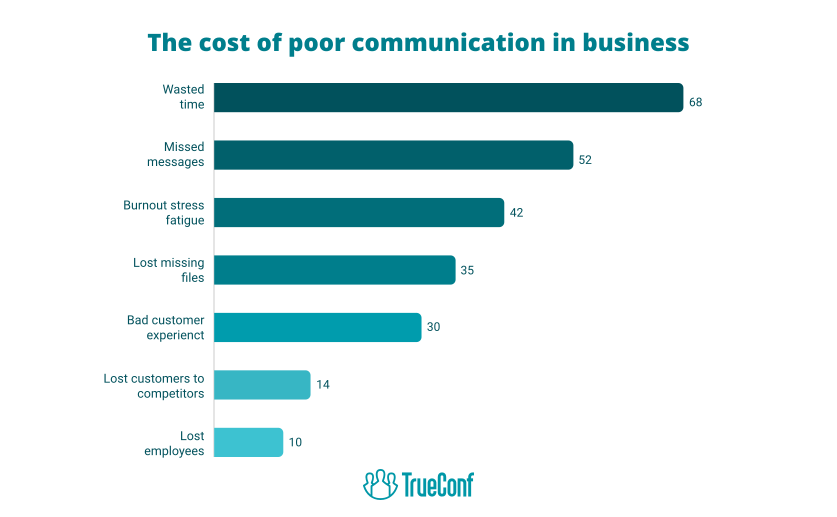
Everyone knows that bad communication hurts productivity. That is the obvious one. But there are consequences that get less attention:
- Psychological safety erodes quietly. When people share an idea and get interrupted, dismissed, or mocked, they stop sharing. This does not show up in any report. It shows up as a team that has stopped generating new ideas.
- Trust has a long recovery time. Research on organizational trust consistently shows it takes roughly four times longer to rebuild than to lose. One misleading all-hands can undo months of positive messaging.
- Bad communication at the top becomes a template. Employees mirror the communication style of their managers. If leadership avoids difficult conversations, the whole organization will. If leaders send long ambiguous emails, teams will too.
Insight #3: The “No News Is Good News” Assumption Destroys Remote Teams
Managers who think silence equals satisfaction are systematically wrong in remote environments. In an office, a manager can walk by someone’s desk and read the room. Remotely, there is no room to read. Employees who are struggling, confused, or disengaged simply go quiet, and that quiet looks indistinguishable from productive focus. Regular, structured check-ins are not a sign of micromanagement. They are the only way to replace the ambient signals that offices provide for free.
How to Fix Bad Communication: Practical Steps
- Start with channel agreements. Decide as a team: what goes in chat, what goes in email, what needs a call, and what warrants a meeting. Write it down. Review it quarterly.
- Make deadlines complete. A deadline includes a date, a time, and a time zone. “By Friday” is a starting point, not a finished deadline.
- Separate information from decision. Before sending any message, ask: am I sharing information, asking for a decision, or requesting an action? The answer changes both the format and the channel.
- Default to over-explaining once, not under-explaining repeatedly. A clear, slightly longer message sent once beats three rounds of clarifying follow-ups.
- Build feedback into the loop. After important communications (announcements, project briefs, policy changes), actively ask whether people understood the key points. Not in a condescending way, but as a genuine check.
How TrueConf Can Help
A significant portion of bad communication in the workplace comes down to the wrong tool for the moment. A video call that drops. A chat thread where context gets lost. A hybrid meeting where remote participants can barely hear.
TrueConf is a video conferencing and team communication platform built for organizations that cannot afford miscommunication. It combines HD video meetings, persistent team chats, webinars, and collaboration tools in one secure environment, with on-premise deployment options for companies where data control is non-negotiable.
Self-Hosted Team Messenger with Video Conferencing
A cutting-edge team collaboration server with personal and group chats, UltraHD video conferences, and advanced AI-powered features — free for up to 1,000 users!
FAQ
What is the most common example of bad communication in the workplace?
Probably the vague instruction. Someone in a position of authority says what they want without specifying what “done” looks like, assumes the other person understood, and is surprised when the result is wrong. It is common because it is invisible to the person doing it.
How does bad communication affect employee retention?
It directly increases turnover. Employees who feel uninformed, dismissed, or ignored do not express that in exit interviews as “communication problems.” They say they felt undervalued or lacked growth opportunities. The root cause is often the same: nobody was talking to them clearly or consistently.
What is the difference between bad communication and no communication?
Bad communication is sending the wrong message, through the wrong channel, at the wrong time, or with the wrong level of clarity. No communication is the absence of a message when one was needed. Both are damaging. No communication is often worse because people interpret silence as either dismissal or incompetence.
Can bad communication ever be intentional?
Yes. Passive aggression, deliberate vagueness to avoid accountability, and withholding information to maintain power are all intentional forms of bad communication. They are less common than accidental miscommunication but far more corrosive to team culture.
How do you fix bad communication in a remote team?
You fix the structure first, not the people. Set clear channel agreements, establish response time norms, run structured weekly check-ins, and make video the default for anything that involves emotion or complexity. The goal is to replace the ambient signals that offices provide automatically.
Is too much communication also a problem?
Absolutely. Over-communication without substance trains people to ignore messages. If every update is flagged as urgent, nothing is. Organizations with high message volume but low signal-to-noise ratios suffer from a specific form of bad communication: noise fatigue.
What are the signs that a team has a communication problem?
Watch for these: decisions get relitigated after they were supposedly made; the same questions come up repeatedly across different people; important updates travel via rumor before reaching official channels; meeting outcomes do not translate into clear action items; and people hedge their language constantly to avoid committing to anything.
How does bad communication affect company culture long-term?
It produces a culture of avoidance. People stop raising issues because past experience taught them it was not worth it. Psychological safety drops. Knowledge hoarding increases. By the time leadership notices, the cultural problem is usually years old.
What role does listening play in communication failures?
A larger one than most people acknowledge. A significant portion of bad communication happens not because the message was unclear but because the receiver was not fully present. Listening while preparing your next point, or reading an email while in a meeting, are both forms of partial attention that produce partial understanding.
Does better technology solve communication problems?
Partly. Better tools remove friction, enable clearer formats, and make it easier to connect across distances. But no tool solves a culture where people do not feel safe speaking up, or a management style that treats communication as a one-way street. Technology and culture have to move together.
About the Author
Olga Afonina is a technology writer and industry expert specializing in video conferencing solutions and collaboration software. At TrueConf, she focuses on exploring the latest trends in collaboration technologies and providing businesses with practical insights into effective workplace communication. Drawing on her background in content development and industry research, Olga writes articles and reviews that help readers better understand the benefits of enterprise-grade communication.


Follow us on social networks