
Employee Retention Strategies That Actually Work in 2026
More than half of your employees are quietly weighing their options right now. Not because they hate their jobs, but because most companies give them no real reason to stop looking. This guide breaks down what drives people out, and what keeps them in, with strategies backed by research and grounded in how modern teams actually work.
The Numbers You Need to Know
|
Stat |
What it means |
|---|---|
|
51% of employees |
are actively looking for a new job right now |
|
42% of all turnover |
is preventable with the right approach |
|
3–4× salary |
the true cost of replacing a single employee |
|
52% higher retention |
with a strong 90-day onboarding program |
Key points up front:
- Toxic culture predicts employee attrition 10 times more accurately than compensation alone.
- Employees with clear career development options have 34% higher retention than those without.
- 89% of HR teams reported better retention after introducing flexible work options.
- Engaged employees are 87% less likely to leave their current role.
- Poor internal communication is one of the most consistent predictors of early departure, particularly in distributed teams.
Take your team communication to the next level with TrueConf!
A powerful self-hosted video conferencing solution for up to 1,000 users, available on desktop, mobile, and room systems.
Why Retention Is a Business Problem, Not Just an HR Problem
Employee retention rarely makes it onto the agenda until someone important hands in their notice. That reaction is expensive. According to research from E.L. Goldberg and Associates, the total cost of replacing a single employee ranges from three to four times the position’s annual salary. That figure covers recruitment fees, lost productivity during the vacancy, onboarding time, and the slower ramp-up period before the new hire reaches full output.
Beyond the money, there is a less visible but equally serious cost: institutional knowledge. When experienced people leave, they take with them an understanding of processes, client relationships, and team dynamics that no job description can fully capture. This is why addressing the underlying factors affecting productivity in the workplace; workload balance, recognition, and management quality; before they drive someone to leave is far cheaper than rebuilding after the fact. The departure of one high-performer can trigger a chain reaction, raising the workload for those who remain and accelerating the pace at which others start looking elsewhere.
The 2026 Retention Report from Work Institute describes the current environment as a “retention crisis.” In 2024 alone, US companies spent an estimated $900 billion filling positions vacated by workers who chose to leave voluntarily. What has changed is the nature of the problem: today, employees who stay are not necessarily satisfied. A significant portion remain only because the job market feels uncertain, which creates a workforce that is physically present but mentally checked out. This is known as quiet quitting.
Unique Insight #1
The “stay-but-disengaged” employee is now a larger retention risk than the one who actively job hunts. Research from Gallup shows that only 23% of employees globally describe themselves as engaged. The remaining 77% include a growing cohort of people who are not looking but are not contributing their full capability either. Their departure, when it comes, is often sudden and catches managers off guard precisely because these employees never signaled dissatisfaction out loud.
Why Employees Leave: The Real Reasons Behind the Numbers
Exit interviews are notoriously unreliable. Departing employees often cite vague reasons like “new opportunity” when the actual driver was a manager they could not stand, a pay structure they considered unfair, or a career path that simply did not exist. Here is what the data consistently shows when employees are surveyed anonymously.
|
Reason for Leaving |
Impact Level |
Preventable? |
Primary Driver |
|---|---|---|---|
|
No career growth path |
High |
Yes |
Lack of development investment |
|
Poor relationship with manager |
High |
Mostly |
Weak leadership training |
|
Below-market compensation |
High |
Yes |
No regular salary benchmarking |
|
Toxic or exclusionary culture |
High |
Mostly |
Leadership behavior, hiring gaps |
|
Burnout and overwork |
Medium–High |
Yes |
Unrealistic workloads, no flexibility |
|
Poor communication from leadership |
Medium–High |
Yes |
Missing communication infrastructure |
|
Lack of recognition |
Medium |
Yes |
No structured recognition program |
|
Remote/hybrid disconnect |
Medium |
Yes |
Weak digital communication tools |
|
Life circumstances |
Lower |
Rarely |
External factors |
Notice that the majority of the high-impact drivers are addressable. The MIT Sloan Management Review found that toxic culture is ten times more predictive of employee attrition than compensation. Yet most retention budgets are directed entirely toward salaries and bonuses, while culture improvement receives far less structured attention.
14 Employee Retention Strategies Worth Implementing
Before Day One: Set the Right Expectations
Strategy 01: Hire for Fit, Not Just Credentials
Retention starts with who you bring in. A candidate who is technically qualified but misaligned with how the team communicates, makes decisions, or handles conflict will drain morale on their way out the door. Modern hiring strategies help businesses recruit top professionals regardless of location while focusing on skills and cultural fit. Include realistic job previews and culture conversations in every hiring process. Ask candidates what kind of work environment helps them do their best. Their answers will tell you more than their resume. For senior leadership positions, finding candidates who align with an organization’s culture and long-term goals can require a more specialized approach. Executive Search Software can help teams organize executive candidates, manage talent pipelines, and coordinate leadership searches.
Strategy 02: Build an Onboarding Experience That Lasts More Than a Week
Onboarding programs that run for 90 days or more produce 52% better retention and 60% faster time-to-productivity compared to one-week orientations. A strong start means clear expectations, an assigned peer contact, early introductions to tools and workflows, and scheduled check-ins throughout the first quarter. When people feel set up to succeed, they invest more quickly in the organization. Workforce monitoring software can support this process by helping managers keep track of workloads and spot when a new employee might need extra guidance.
Compensation and Benefits: More Than Just a Number
Strategy 03: Make Pay Fair and Transparent
Only 32% of employees believe their pay is fair, according to Gartner HR Research. That perception gap is as damaging as an actual underpayment. Companies that share salary bands, explain how pay decisions are made, and run annual internal equity audits see measurably lower turnover. Competitive compensation does not mean paying the highest in the market; it means paying consistently, fairly, and being willing to talk about it. Some organizations apply that same principle to benefits, quietly adding full coverage pet insurance to the package as pet ownership becomes increasingly common among employees.
Strategy 04: Go Beyond the Standard Benefits Package
Base salary gets people in the door. Benefits keep them there. Mental health support has moved from a nice-to-have to an expectation: 82% of workers report experiencing work-related stress in 2026. Wellness stipends, flexible paid time off, childcare support, and access to mental health apps all signal that the company sees employees as full human beings with lives outside work. That perception builds loyalty more durably than any bonus program. For younger companies with limited HR capacity, choosing a PEO for startups can put benefits administration and payroll under one external partner.
Growth and Recognition: The Middle-Distance Problem
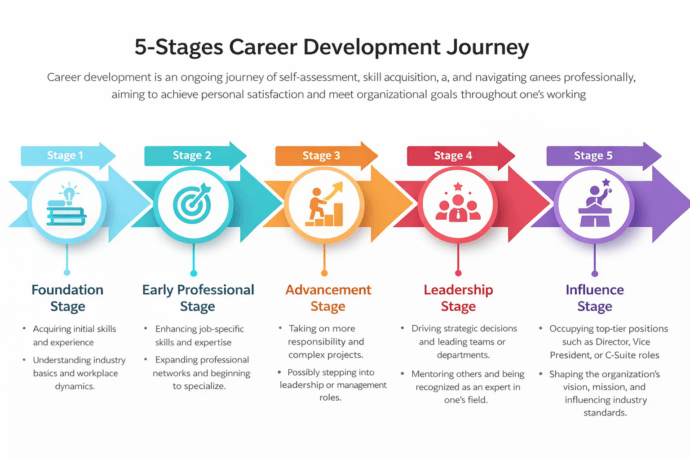
Most organizations lose employees in the 18-to-36-month window, after the novelty of a new role has worn off but before the person has reached a leadership position. This is where career development and recognition carry the heaviest weight. Retention thrives when employees see a clear path forward. Forward-thinking firms apply law firm marketing principles internally: promoting mentorship programs, highlighting advancement success stories, and communicating professional development opportunities with the same clarity used for client-facing campaigns. When your team understands how they can grow with you—and sees that growth celebrated—they’re more likely to build their career with your firm, not your competitor’s.
Strategy 05: Create Visible Career Paths
Employees with career development opportunities have 34% higher retention. That does not mean every person needs a promotion track. Many employees want to deepen their expertise, move laterally into a new function, or take on project leadership without a title change. In specialized sectors like healthcare, visible career paths often involve supporting staff through formal accreditation programs, such as helping a clinical professional transition from PTA to PT through financial aid for training, support for clinical rotations, or flexible scheduling. The key is that growth options exist and are communicated clearly, not discovered by accident. Regular career conversations between managers and direct reports, held at least quarterly, make a tangible difference.
Strategy 06: Invest in Learning, Not Just Training
83% of organizations plan to maintain or increase their investment in career-driven learning this year, according to LinkedIn’s Workplace Learning Report. The distinction between “learning” and “compliance training” matters. Learning investments that employees choose, such as external courses, conference attendance, mentorship programs, or cross-departmental projects, create a sense of personal investment that lowers the appeal of job searching.
Strategy 07: Make Recognition Specific and Frequent
Gallup tracked over 3,500 employee career paths and found that well-recognized employees were 45% less likely to change jobs over a two-year period. More notable: the quality of recognition mattered almost as much as its frequency. A specific, timely acknowledgment (“Your work on the Q3 client migration saved the team two weeks”) outperforms a generic “great job” in terms of retention impact. Peer recognition programs and manager shoutouts in team channels both contribute, particularly for remote employees who lack casual corridor recognition, and some organizations extend this further by pairing internal recognition with a loyalty platform that lets employees earn and redeem rewards for milestones, referrals, and consistent performance.
Culture and Management: The Foundation Under Everything Else
Strategy 08: Invest in Manager Quality
Gallup’s research shows that managers account for up to 70% of the variation in employee engagement scores. The old cliche that people leave managers, not companies, holds up under scrutiny. Management quality is not a personality trait; it is a set of trainable behaviors: regular one-on-ones, clear goal-setting, honest feedback, and the ability to advocate for team members. Companies that treat manager development as optional rather than structural will keep losing good people to organizations that take it seriously. Staff management software can help managers stay organized and keep track of day-to-day team responsibilities more efficiently.
Strategy 09: Build Psychological Safety
Psychological safety means employees can raise a problem, share a bad idea in a brainstorm, or admit a mistake without fear of humiliation or retaliation. Organizations that score high on psychological safety see 40% higher employee engagement and meaningfully lower burnout-related turnover. This is a culture outcome, but it is driven by very specific manager behaviors: asking questions before drawing conclusions, acknowledging uncertainty out loud, and responding to bad news without punishing the messenger.
Strategy 10: Build Inclusion Into Daily Practice
Diversity, equity, and inclusion work only when it extends beyond annual training sessions. Employees who feel excluded or underrepresented are significantly more likely to leave. Retaining a diverse workforce requires consistent attention to meeting dynamics (who gets air time, whose ideas get credited), pay equity audits, and inclusive hiring practices.
Flexibility and Well-Being: The Post-Pandemic Minimum
Strategy 11: Offer Genuine Work Flexibility
89% of HR professionals reported improved retention after implementing flexible work policies. McKinsey found that 87% of employees would accept a flexible role over a rigid one with comparable pay. Flexibility is not exclusively about remote work. It includes schedule control, asynchronous communication options, and the ability to manage personal obligations without penalty. For hourly teams, schedule control in practice means seeing shifts early, setting availability and swapping with coworkers, which employee scheduling software like Homebase lets staff do without going through the manager each time. Companies that enforce flexibility in name only, such as remote work with expected 9-to-5 online presence, get the downsides of distributed work without the retention benefits. Instead, you can give your remote employees the flexibility to set their own hours. Since you still need to track hours for payroll, simply use reliable remote workforce management software to keep an accurate record—no matter when your employees choose to work, still your remote employees won’t feel forced.
Strategy 12: Address Burnout Before It Happens
Burnout is now classified as an occupational phenomenon by the World Health Organization and is cited as a leading reason for departure by 70% of employees who have left a role voluntarily. Prevention requires workload visibility, not wellness apps. Managers need to see when team members are consistently working outside normal hours, carrying an unequal share of urgent requests, or reporting lower energy over time. These are signals that require a structural response, not a mindfulness reminder.
The Practices Most Companies Skip
Strategy 13: Run Stay Interviews, Not Just Exit Interviews
Exit interviews gather data too late to act on. Stay interviews, conducted with current employees who are performing well and have been with the company for at least a year, surface retention risks while there is still time to address them. A stay interview has three simple questions: What about this job keeps you here? What would make you consider leaving? What could we do to make your work more satisfying? The answers rarely match what management assumes.
Strategy 14: Treat Departing Employees as Alumni, Not Defectors
This strategy is almost universally neglected. How a company handles someone’s departure has a direct effect on the morale of everyone who watches it happen. Organizations with structured offboarding processes, genuine farewell acknowledgment, and alumni communities see two concrete benefits: former employees become external brand advocates rather than critics, and a meaningful percentage return as “boomerang hires” with new skills.
Unique Insight #2
Companies that invest heavily in onboarding and almost nothing in “middle-career” engagement create a predictable attrition spike at the 2-year mark. The first-year experience is often strong because attention is high. By year two, the employee is competent, visible, and attractive to competitors, but no longer receiving the structured support they got as a new hire. The retention gap lives in that middle zone, and most organizations have no specific program to address it.
Why Communication Infrastructure Is a Retention Variable
Strong communication does not appear on most retention checklists. That is a mistake. Poor information flow is one of the most common reasons employees describe feeling undervalued, disconnected, or out of the loop. When people do not hear about changes that affect their work until after the fact, when leadership decisions are never explained, or when remote employees consistently feel like they are receiving a filtered version of what is happening, they start questioning whether the organization actually has a place for them.
This problem gets sharper as teams become more distributed. A 2026 BLS teleworking report noted that 1 in 5 employees works remotely. In hybrid environments, the informal communication that naturally builds trust in an office, such as hallway conversations, visible leadership, and spontaneous collaboration, has to be deliberately recreated through tools and structure. Organizations that do not invest in this deliberately end up with two tiers of employees: those who are physically present and informed, and those who are remote and isolated.
How TrueConf Supports Retention Through Connected Communication
TrueConf is a self-hosted video conferencing and team messaging platform designed for organizations that need to keep distributed teams genuinely connected without sending their communication data to external servers.
Face-to-face communication is not trivial. Remote employees who only interact via text lose access to the non-verbal cues and relational warmth that build trust with colleagues and managers. TrueConf’s UltraHD video conferencing, which supports up to 1,500 participants, ensures that regular all-hands meetings, team standups, one-on-ones, and cross-departmental collaboration happen with the kind of presence that text channels cannot replicate.
The built-in team messenger provides persistent group and personal channels, synchronized across all devices. Remote employees can follow projects, get updates, and participate in discussions at their own pace. AI-powered features, including automated meeting transcription and intelligent noise suppression, reduce the friction of remote collaboration, making it easier for distributed employees to stay engaged and informed.
For security-conscious industries where data sovereignty is non-negotiable — finance, healthcare, government, legal — TrueConf’s on-premises deployment means all communication stays within the organization’s infrastructure. Employees in those environments can communicate openly without the compliance anxieties that cloud-only platforms introduce. That clarity reduces stress and builds trust in the employer.
Try TrueConf Server Free!
- 1,000 online users with the ability to chats and mske one-on-one video calls.
- 10 PRO users with the ability to participate in group video conferences.
- One SIP/H.323/RTSP connection for interoperability with corporate PBX and SIP/H.323 endpoints.
- One guest connection to invite a non-authenticated user via link to your meetings.

How to Measure Your Employee Retention Rate
Before you can improve a number, you need to know what it is. The standard formula:
Retention Rate = ((Employees at End of Period – New Hires During Period) / Employees at Start of Period) × 100
Measure monthly, quarterly, or annually. Always break it down by department to identify where turnover is concentrated.
Beyond the headline number, track these:
|
Metric |
What It Tells You |
Warning Threshold |
|---|---|---|
|
Voluntary turnover rate |
How many employees chose to leave |
Over 15% annually |
|
Regrettable attrition rate |
Departures you would have preferred to prevent |
Over 8% annually |
|
Average tenure by department |
Where experience is accumulating or draining |
Under 2 years average |
|
New hire 90-day turnover |
Onboarding effectiveness and hiring accuracy |
Over 10% |
|
Employee engagement score |
Proxy for future retention risk |
Under 50% engaged |
|
Internal promotion rate |
Whether people see a future inside the company |
Under 20% of open roles |
Unique Insight #3
The most underused retention data point is the internal promotion rate. In organizations where fewer than 20% of open roles are filled internally, employees quickly learn that ambition is better rewarded by leaving than by staying. This dynamic is rarely tracked as a retention metric, but it has an outsized effect on whether high-performers stay past the three-year mark. A targeted effort to fill management roles internally before opening external searches signals, more loudly than any communication campaign, that growth is real and available. Employees pursuing those roles can use a mock interview platform to rehearse role-specific questions and review feedback before the internal interview.
Retention Strategies at a Glance
|
Strategy |
Time to Impact |
Cost Level |
Highest Impact Stage |
|---|---|---|---|
|
Structured onboarding (90+ days) |
Short (1–3 months) |
Low–Medium |
Year 1 |
|
Competitive + transparent pay |
Immediate |
Medium–High |
All stages |
|
Flexible work arrangements |
Short |
Low |
All stages |
|
Manager quality training |
Medium (6–12 months) |
Medium |
Year 2–3 |
|
Career path conversations |
Medium |
Low |
Year 2–3 |
|
Learning and development |
Medium |
Medium |
Year 1–4 |
|
Recognition programs |
Short |
Low |
All stages |
|
Stay interviews |
Short |
Very Low |
Year 1–5+ |
|
Psychological safety culture |
Long (12–24 months) |
Low |
All stages |
|
Communication infrastructure |
Short |
Low–Medium |
All stages, esp. remote |
|
Burnout prevention systems |
Medium |
Low |
Year 2–4 |
|
Alumni / offboarding program |
Long |
Very Low |
Exit stage |
What is employee retention and why does it matter? Employee retention refers to an organization’s ability to keep its workforce stable over time by reducing voluntary departures. It matters because replacing a single employee costs between 3 and 4 times their annual salary, and that figure excludes the harder-to-measure costs of lost institutional knowledge and disrupted team dynamics. High retention also correlates with stronger employee engagement, better customer relationships, and a more consistent quality of output. What are the most effective employee retention strategies? The strategies with the highest and most consistent impact are competitive and transparent compensation, strong onboarding that extends through the first 90 days, visible career development paths, regular recognition, flexible work arrangements, and investment in manager quality. Communication infrastructure, specifically ensuring that remote and hybrid employees feel genuinely included and informed, has an outsized effect on distributed teams that is often underestimated in retention planning. How do you calculate employee retention rate? Divide the number of employees who were present at the end of the measurement period (minus any new hires added during that period) by the total headcount at the start of the period, then multiply by 100. For a more complete picture, calculate this rate separately by department, tenure band, and employment type. Aggregate numbers can hide serious retention problems in specific teams or roles. What is a good employee retention rate? A retention rate above 90% is generally considered healthy across most industries. Some highly competitive sectors like technology and consulting accept rates closer to 80–85%. The more useful comparison is your own trend over time and your industry benchmark. A rate that is improving year-over-year in a competitive market is often more meaningful than hitting a specific number. Why do high-performers leave even when they seem satisfied? High-performers are disproportionately attractive to other employers, so the baseline risk of losing them is higher regardless of satisfaction levels. They also have a stronger sense of what good looks like, meaning they notice gaps in culture, leadership, or growth opportunities more quickly than average performers. Regular stay interviews, specific recognition tied to their contributions, and clear seniority progression are the most effective tools for retaining top talent proactively rather than reactively. How does flexible work affect employee retention? The research is consistent: 89% of HR professionals report better retention after implementing flexible work policies, and hybrid work models have been associated with a 25% reduction in turnover in multiple studies. Flexibility matters not just because it enables work-life balance, but because it signals organizational trust. Employees who feel trusted to manage their own time are more committed to the organizations that extend that trust. What role does internal communication play in keeping employees? Communication affects retention in two primary ways. First, employees who feel informed and included, especially in decisions that affect their work, report higher satisfaction and are less likely to look for roles elsewhere. Second, poor communication in distributed teams creates a sense of isolation that accelerates departure. Organizations with clear communication channels, regular video check-ins, and accessible team messaging tools create the conditions for remote employees to feel as engaged as their in-office counterparts. How can small companies compete with large employers on retention? Smaller organizations have structural advantages that large ones cannot easily replicate: faster decision-making, higher individual visibility, and more direct access to leadership. The most effective approach is to lead with these advantages, create genuine career conversations, give employees real ownership over projects, and invest in culture before scaling. On compensation, small companies can close the gap by offering equity participation, stronger benefits, or learning budgets even when base salaries are slightly below large-company rates. What is a stay interview and how is it different from an exit interview? A stay interview is a structured one-on-one conversation with a current, performing employee designed to understand what keeps them at the company and what risks might push them to leave. Unlike exit interviews, which gather data after the damage is done, stay interviews give organizations the opportunity to act on what they learn while the employee is still there. They work best when conducted by a manager the employee trusts, run on a regular cycle, and followed by visible action on what is heard. Can technology tools like video conferencing platforms improve retention? Yes, particularly for remote and hybrid teams. The ability to conduct face-to-face meetings via video, access a shared team messenger, and collaborate in real time reduces the isolation that drives remote workers to leave. Platforms that combine secure video conferencing with persistent team messaging and AI-powered features, such as automated transcription and noise suppression, reduce the friction of distributed collaboration and keep employees more connected to the people and context that make their work meaningful.FAQ
About the Author
Olga Afonina is a technology writer and industry expert specializing in video conferencing solutions and collaboration software. At TrueConf, she focuses on exploring the latest trends in collaboration technologies and providing businesses with practical insights into effective workplace communication. Drawing on her background in content development and industry research, Olga writes articles and reviews that help readers better understand the benefits of enterprise-grade communication.


Follow us on social networks