
How to Turn Raspberry Pi into a Video Conferencing Server
TrueConf offers a trial video conferencing solution for single-board computersuch as the Raspberry Pi 4 or Orange Pi 4. With these microcomputers and TrueConf software, you can create self-service systems in public places, information kiosks located near tourist sites, or use it to build “Smart Home”.
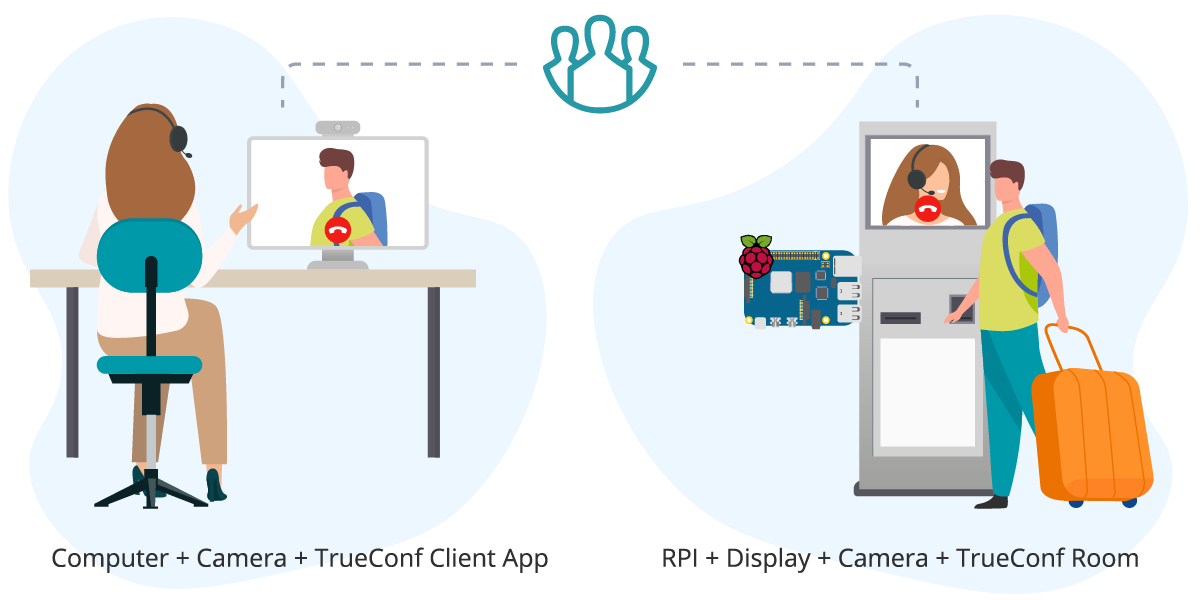
For this configuration we provide a special version of TrueConf Room designed for ARM architecture. You can install this software on your Raspberry Pi for free by following the guide below.
Required equipment
Minimum equipment requirements for video conferencing are listed below:
- Raspberry Pi 4+ or Orange Pi 4+ microcomputer
- MicroSD class 10 memory card with at least 8 GB capacity
- Power supply with USB Type-C connector, AC 220 V, DC 5 V / 3 A
- Micro-HDMI to HDMI cable
- Extra hardware:
- Keyboard and mouse
- USB webcam
- Monitor or TV panel with HDMI input
If your monitor does not support HDMI audio output, you can use a USB speakerphone, a USB headset, or connect speakers or headphones to the 3.5mm (mini-jack) output.
When a microcomputer is running, the board can get very hot. So, to avoid overheating, performance loss, or board failure, we recommend using an active cooling system.
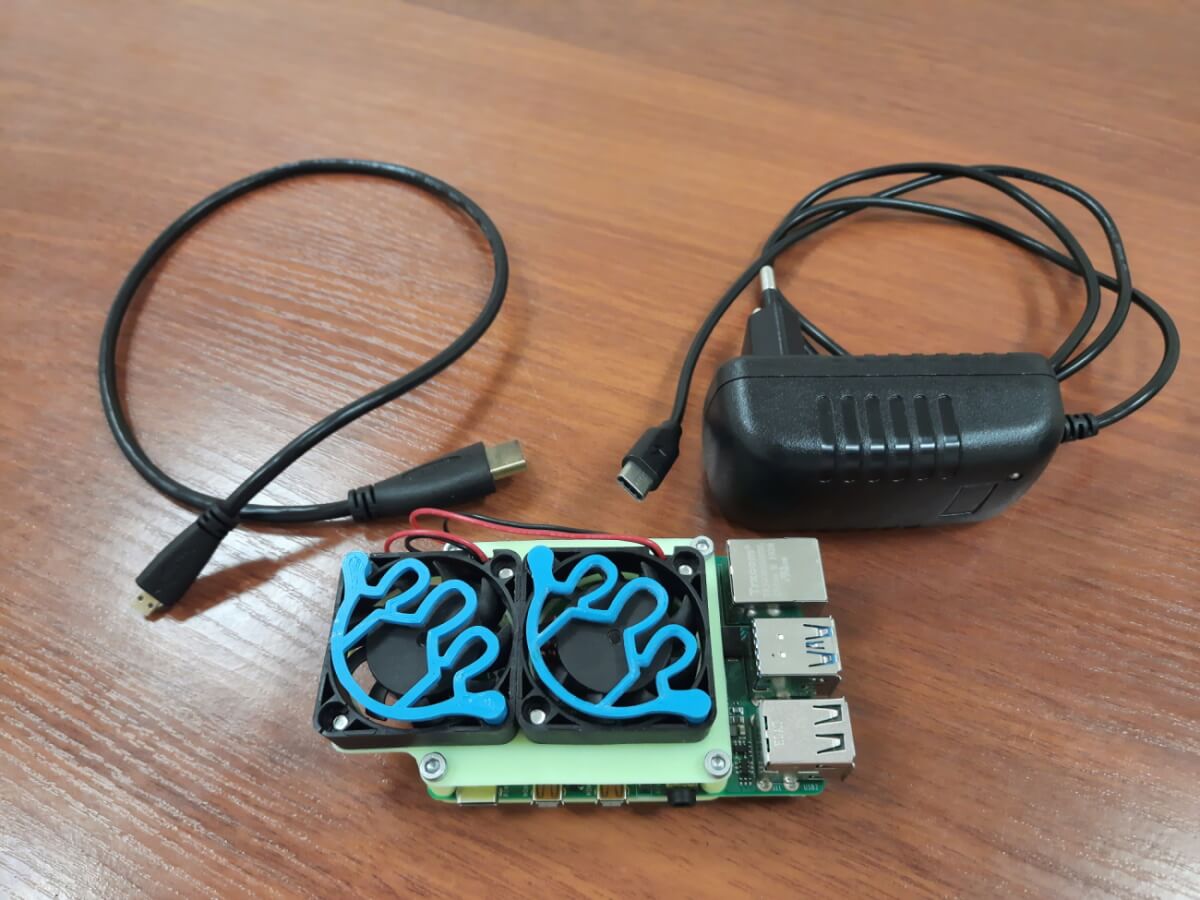
Please note that the Raspberry Pi board is not equipped with a 3.5mm audio input, so it is recommended to use a webcam with a built-in microphone. Otherwise you will need a USB headset, microphone or speakerphone. With the Orange Pi 4, you’ll have access to the microphone built into the board.
You will also need a computer with a card reader to prepare the memory card.
Step 1: Setting up your TrueConf account
To use video conferencing on your Raspberry Pi in a bundle with TrueConf Room application, you need to sign in with either your TrueConf Server account or TrueConf Online cloud service. In the first case, you can request your login details from the administrator of your video conferencing server. To connect to the cloud service, create an account on our website.
Step 2: Installing the operating system
The TrueConf Room version for microcomputers is built for Debian 13, but since Raspberry Pi OS 13 is based on Debian 13, that’s the version we tested. The end result is a fully functional microcomputer running TrueConf Room.
Below is the installation process using a Raspberry Pi 4 with Raspberry Pi OS — you’ll need to install the OS onto a memory card:
- Download Raspberry Pi OS 11 with Desktop distro from the official website.
- Download and install the Raspberry Pi Imager software on your PC.
- In the Device tab, select your Raspberry Pi — in this case, the Raspberry Pi 4.
- In the Operating System tab, select Raspberry Pi OS (64-bit).
- In the Storage tab, select your MicroSD card.
- Set up the localization and account settings by following the installer’s prompts.
- In the Write tab, double-check your settings and click Write. When prompted, confirm that you want to erase all data on the memory card, then wait for the OS to finish writing.
Step 3: Startup and initial setup of the operating system
- Insert the memory card into the corresponding slot of the single-board computer. Then you will need to connect:
- power supply in the USB Type-C connector (do not connect to the electricity yet)
- monitor with micro-HDMI – HDMI cable to HDMI0 connector (audio output is supported)
- network cable into the Ethernet port (it is also possible to use the built-in Wi-Fi)
- keyboard, mouse, webcam, and microphone (if necessary) to available USB ports.
- Plug the power supply into an outlet, thus starting up the Raspberry Pi.
- Once the OS boots up, enter the username and password you set when configuring the image to log in.
If you skipped setting up login credentials while creating the image in Raspberry Pi Imager, it’ll fall back to the defaults — username pi, password raspberry.
Step 4: Installing the TrueConf Room
- Download the TrueConf Room distro for Debian 13 (which, as mentioned above, is also compatible with Raspberry Pi OS) from our website and move it to the single-board computer (if the computer is connected to the Internet, you can download the installation file directly on the device):
- We recommend that you install TrueConf Room using the command line. To do this, go to the directory containing the saved deb package and run the command:
1sudo apt install -yq ./trueconf-room.debwhere
trueconf-room.debis the name of the installation package.
Step 5: Using Video Conferencing on Raspberry Pi
Using TrueConf Room on a single-board computer is no different than using it on Windows or Linux-based desktops. Follow our instructions to get started with the application.
- Login to the TrueConf Room control panel.
- Configure connection to the TrueConf Server instance or TrueConf Online service.
- Set up additional settings, if necessary.
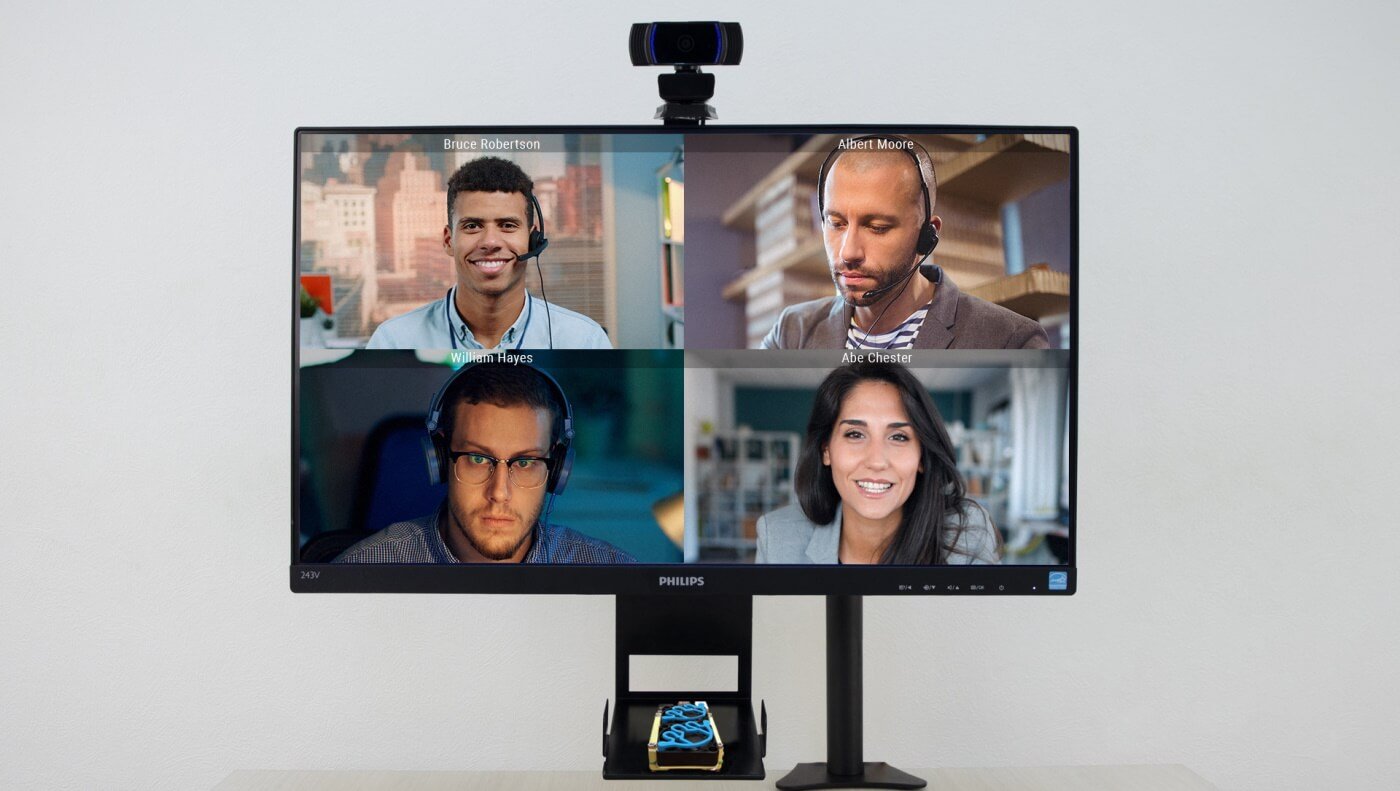
- Make video calls and hold conferences on your Raspberry Pi 4.

Dimitrii Zuikov
Date published: 19.12.2022