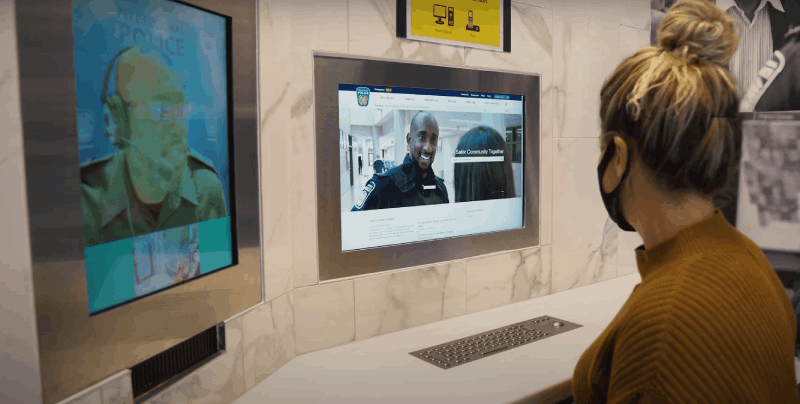




Secure Communications for Mission Partner Environments
Give allied forces, government agencies and contractors a single, secure way to meet, message and share files — without asking any partner to give up control of their own network.

Give allied forces, government agencies and contractors a single, secure way to meet, message and share files — without asking any partner to give up control of their own network.
Multinational Coalition Headquarters
Each nation or agency deploys its own TrueConf Server and keeps administering it independently, while federation lets personnel from every partner reach each other in real time.
Cross-Agency and NGO Coordination
Extend secure video, chat and file exchange to civilian agencies, contractors or humanitarian partners without adding them to your internal directory or handing them access to your infrastructure.
Situational
and Crisis Briefings
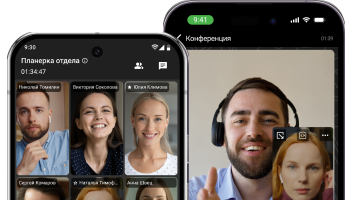
Bring distributed teams into one high-definition session in minutes, with a host who can add recording, transcription or a waiting room mid-call as the situation develops.
Exercises and Short-Term Surge Operations
Stand up a federated environment for a joint exercise, then shut the connection down cleanly afterward — each side's data stays on its own servers throughout.
Field, Vessel and Remote-Site Communication
Keep units connected over degraded or low-bandwidth links, with automatic recovery from dropped connections and NAT/firewall traversal built in.
Command Post and Hardware Room Integration
Bring existing SIP/H.323 conference rooms, PBX lines and VoIP handsets into the same sessions as software clients — no need to replace equipment already in place.
Gain full control over communications and enforce your own security policy by deploying TrueConf Server inside your organization's local or private network.
Mandatory authorization for every participant
PIN-protected meetings and the ability to lock a session against uninvited participants
Media data encryption with AES-256, SRTP or H.235
All signaling and client-server traffic secured with TLS 1.3
Role-based access rights, multi-factor authentication and single sign-on (SSO, NTLM, Kerberos)
Administrator-controlled allow/deny lists for every external server connection
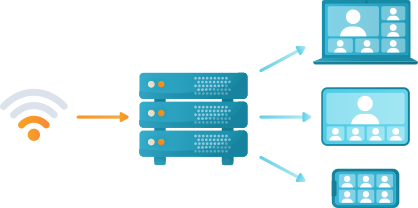
TrueConf Server's SVC-based architecture keeps video and audio quality high even at low bandwidth, handles NAT/proxy/firewall traversal automatically, and recovers gracefully from dropped or degraded links — the conditions that consumer and cloud-only platforms simply aren't built to survive.
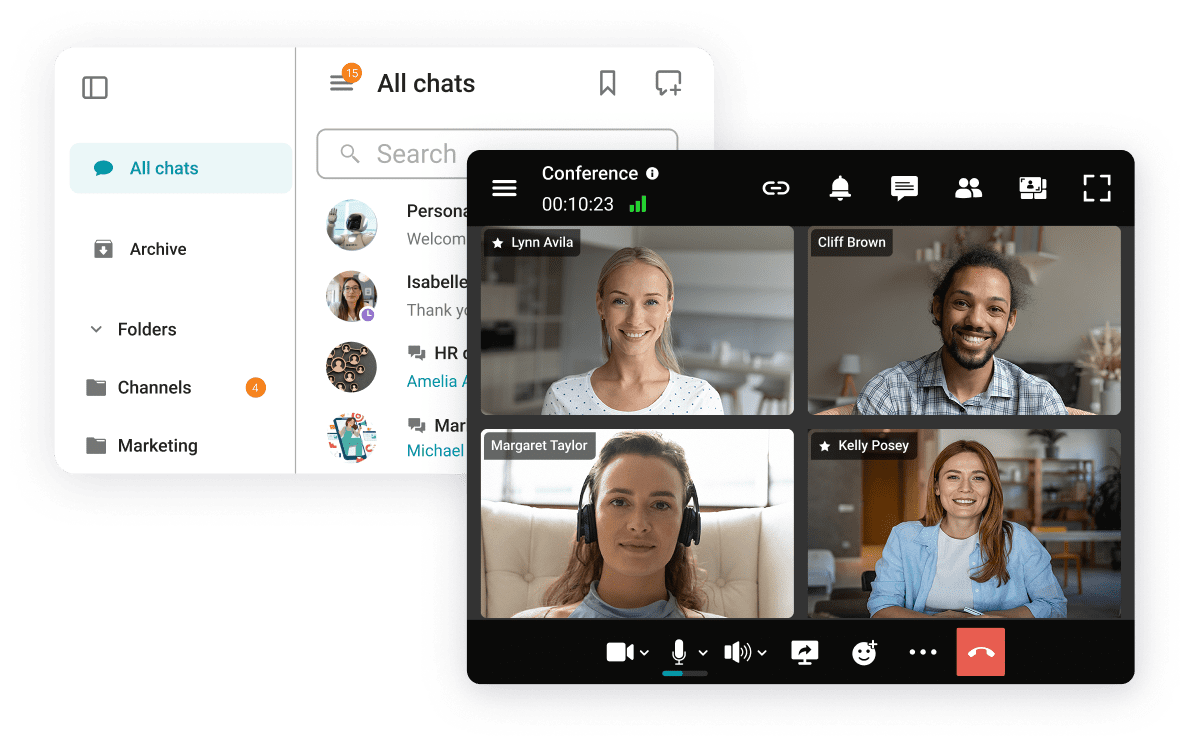
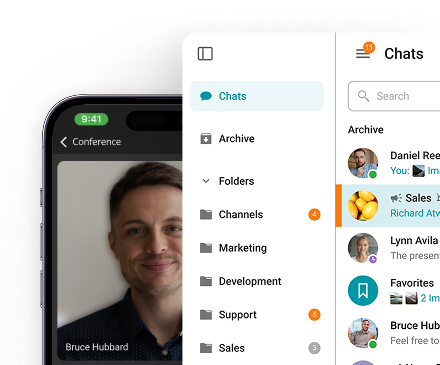
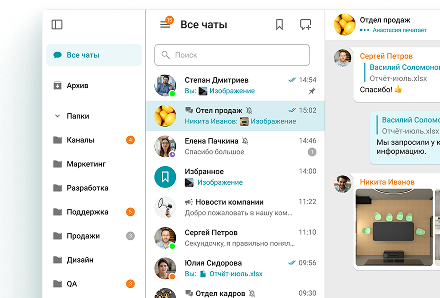
Personal and group chats, presence statuses, convenient contact search, secure file storage and multifunctional chatbots run in the same secure, on-premises system as your video conferences, with chat history and call logs synced automatically across every authorized device.
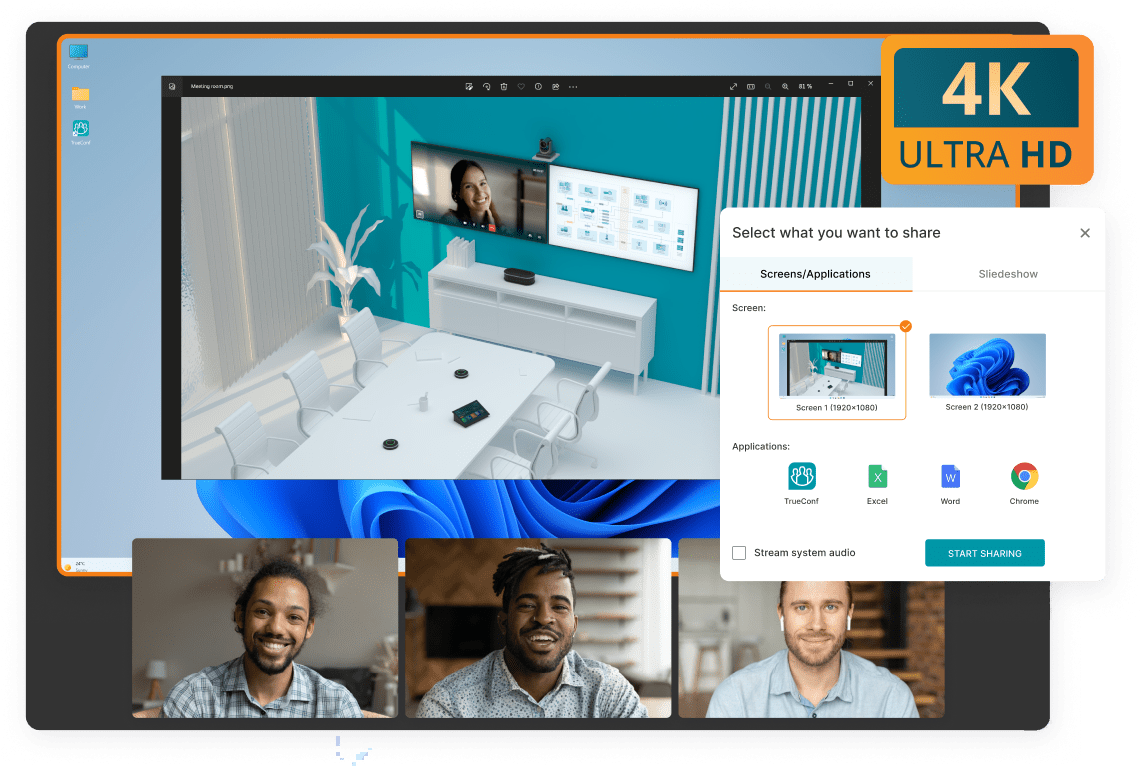
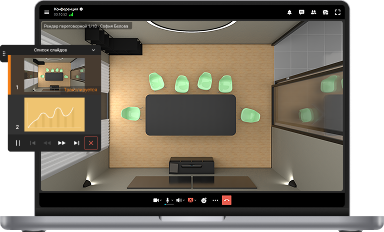
Share maps, CAD models, dashboards and presentations in 4K UltraHD directly from third-party applications during a live session, so distributed planning teams are always looking at the same level of detail.
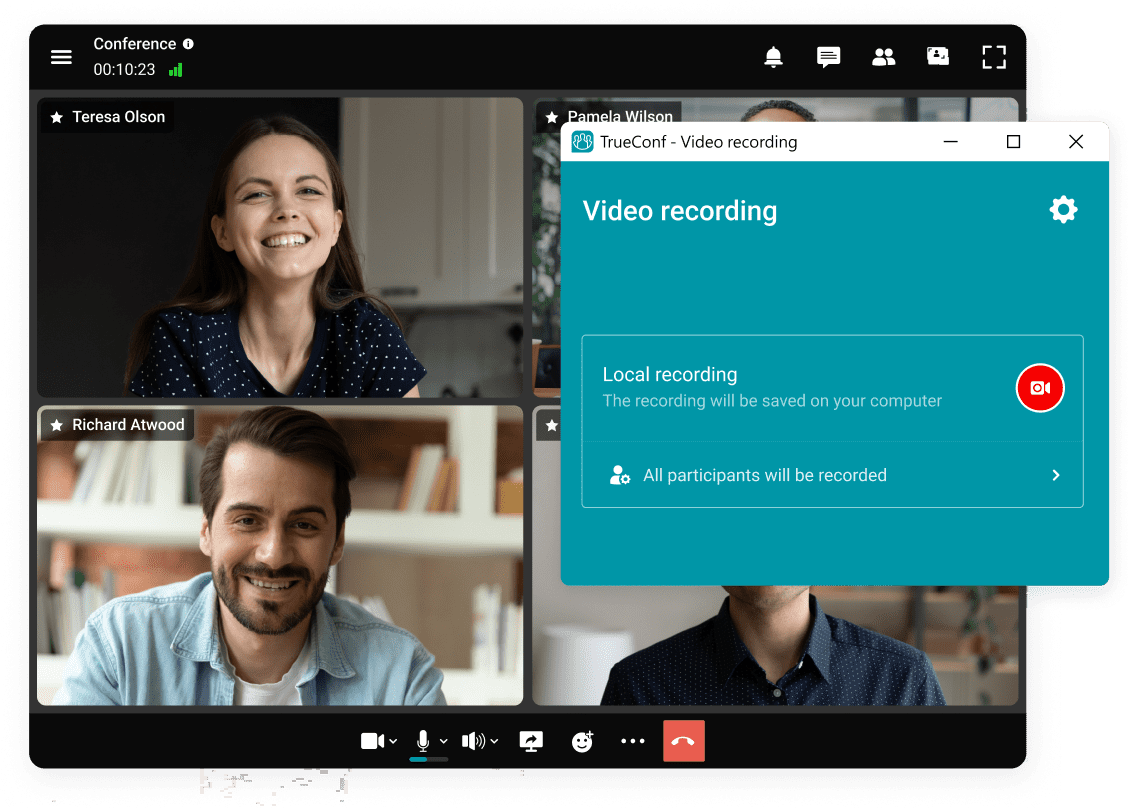
During sensitive planning sessions or cross-agency negotiations, every meeting can be securely recorded and stored on your own server, giving you an accurate record without relying on manual notes.
Instead of merging everyone into a single shared system, TrueConf Server lets each partner organization keep its own independently administered server and connect it to others through federation.
A Mission Partner Environment (MPE) is the secure, interoperable infrastructure that lets military units, government agencies and allied or contracted partners communicate and share information across organizational boundaries.
TrueConf Server fits in as the on-premises communication layer (video conferencing, messaging and calling) that each partner organization can deploy on its own infrastructure and then connect to others through federation.
Yes, TrueConf Server runs fully within a LAN or VPN and supports deployment into isolated or air-gapped network segments, so meetings, messaging and file sharing continue to work even with no outbound internet access.
Through server-to-server federation. Each partner organization runs its own independent TrueConf Server, and administrators on each side decide which external servers and users are allowed to connect, using access lists. No party has to hand over administration of its system to communicate with another.
Yes, TrueConf Server integrates with SIP/H.323 video endpoints and connects to existing PBX and VoIP infrastructure, so command centers and meeting rooms that already have hardware installed can join TrueConf sessions without replacing that equipment.
TrueConf Server is deployed on infrastructure your organization controls, an internal server or a private cloud instance, rather than a shared public cloud service. Combined with AES-256 encryption, this keeps communications and stored data inside a boundary your administrators manage directly.
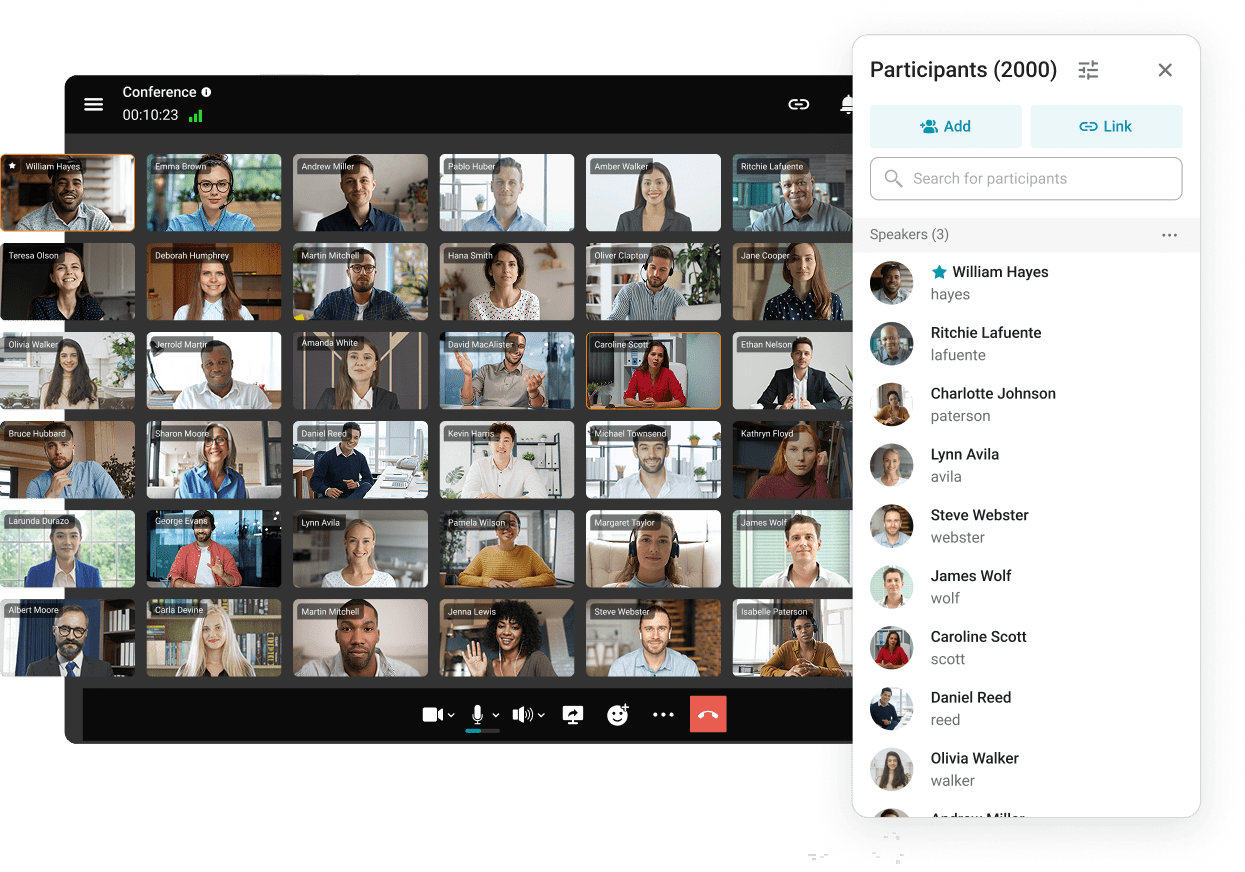
Yes, a single TrueConf Server deployment supports video conferences with up to 2,000 participants, along with features like simultaneous translation, waiting rooms, and on-the-fly layout and participant management, which are useful for large joint briefings involving multiple agencies or coalition partners.
TrueConf Server's on-premises architecture, encryption, role-based access rights, multi-factor authentication and audit-friendly administration tools are built to help support internal security and data-control requirements.
Since specific regulatory obligations vary by sector and jurisdiction, organizations should confirm requirements with their own compliance teams. TrueConf Server is designed to give administrators the infrastructure control needed to meet those requirements rather than certifying compliance itself.