
SBC (Session Border Controller)
A Session Border Controller (SBC) represents a crucial component (a physical device or a digital application integrated within a system) positioned along the perimeter of IP infrastructures to supervise and safeguard live communication interactions. Initially, SBCs were intended to deliver protection and oversee VoIP streams, although nowadays they operate across numerous categories of real-time connectivity, covering IP telephony, video meetings, chat services, and cooperative platforms.
An SBC functions as a specialized “boundary gateway,” guaranteeing reliable transfer of signaling plus media flows across multiple environments.
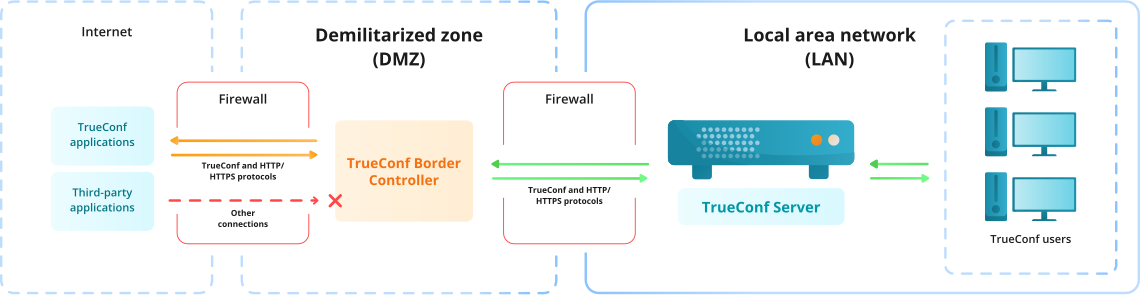
The Scheme of Operation of TrueConf Border Controller
Key Functions of SBC in IP Telephony and Multimedia
-
- Topology hiding and network security
The SBC conceals the hidden network layout, operating like a unified ingress/egress hub for information. This enhances resilience, shields from DoS/DDoS intrusions, blocks telephony abuse, and guarantees encryption within signaling channels and media flows.
-
- Protocol interoperability and interworking
An SBC may enable protocol conversion across various communication standards including SIP, H.323, WebRTC, and alternatives to maintain interoperability. It further strengthens connectivity through efficient NAT traversal.
-
- Media and codec translation
SBCs can perform audio and video transcoding, negotiate formats and codecs between different systems, and ensure compatibility across subscriber networks.
-
- Quality of Service (QoS)
The border controller examines link attributes, emphasizes multimedia streams, applies Call Admission Control (CAC), and provides consistent audio together with video performance.
-
- Access control, accounting, and monitoring
An SBC executes authentication plus authorization of sessions, aggregates metrics with billing records, documents activities, and guarantees adherence to regulatory obligations.
SBC Vendors and Modern Solutions (2025)
- AudioCodes: Mediant portfolio series: ranging between smaller devices and ultra-capable carrier-level gateways with virtual SBCs.
- Ribbon Communications: Physical SBC appliances plus software-driven SWe platforms for business and operator infrastructures.
- Oracle: Acme Packet portfolio, extensively deployed across telecommunications ecosystems.
- Cisco: Cisco Unified Border Element (CUBE) integrated for ISR/ASR alongside Catalyst systems.
- Avaya: Session Border Controller for Enterprise (ASBCE), tailored specifically for Avaya Aura deployments.
- Others: Nokia, Mitel, Huawei, Genesys, TE-Systems (anynode), Metaswitch (Perimeta SBC), among additional suppliers.
Contemporary SBC offerings appear as appliance-based, software instances, hosted-cloud editions, and fully managed SBC-as-a-Service alternatives.
The Role of SBC in Multi-Protocol Communications
- Security: Screens signaling plus media exchanges, thwarts intrusions, and ensures video with audio confidentiality.
- Interoperability: Transforms SIP, H.323, WebRTC, and resolves protocol variations.
- Quality of service (QoS): Manages capacity, restricts simultaneous call volumes, prioritizes streaming sessions, and tracks latency or packet failures.
- Codec translation: Executes transcoding while session attributes alignment
- WebRTC gateway: Links browser-based endpoints into SIP infrastructures, managing encryption together with codec alignment.
Choosing an SBC for a Hybrid Multimedia Infrastructure
When selecting an SBC, it is important to consider:
- Certification plus interoperability across the platforms being deployed.
- Implemented protection mechanisms (TLS, SRTP, anti-intrusion functions, access management);
- Media processing with QoS enhancements.
- Capacity and extensibility.
- Implementation method (hardware-based or software-driven SBC).
- Vendor assistance standards together with ecosystem reliability.
A Session Border Controller (SBC) remains a critical element within enterprise frameworks, supporting protected and premium-grade unification of telephony alongside video collaboration inside a consolidated communications environment.
TrueConf Border Controller
Mask the real IP address of your video conferencing system and restrict access to it from unwanted connections outside the corporate network.
FAQ
Do I need to purchase a separate hardware SBC if I deploy a self-hosted video conferencing platform?
Not necessarily, as many modern enterprise platforms include built-in SBC functionality to simplify architecture and reduce hardware costs. For example, TrueConf Server features an integrated border controller that securely manages SIP/H.323 interoperability and NAT traversal without requiring extra physical appliances. This allows organizations to protect their network perimeter and connect legacy hardware seamlessly within a single software ecosystem.
How can we connect our legacy SIP and H.323 conference room systems to browser-based WebRTC users?
An SBC acts as a vital gateway that translates signaling and media protocols between older hardware endpoints and modern web clients. TrueConf handles this interoperability natively, allowing seamless communication between traditional room systems and users joining via a standard web browser. This ensures you can leverage your existing AV investments while supporting flexible, browser-based remote participants.
What specific security threats does an SBC protect against in a unified communications environment?
An SBC shields your network from topology exposure, DDoS attacks, toll fraud, and unauthorized session hijacking by inspecting and filtering all incoming signaling and media traffic. When utilizing a solution like TrueConf, the built-in border controller enforces strict access policies and encrypts streams, ensuring that your internal infrastructure remains completely hidden from external threats. This creates a highly secure perimeter for sensitive corporate and government communications.
How does an SBC solve connectivity issues for remote employees working behind strict corporate firewalls?
An SBC resolves complex Network Address Translation (NAT) and firewall traversal issues by acting as a secure proxy for media and signaling streams. TrueConf’s integrated SBC capabilities ensure that remote users and external guests can reliably join video conferences without requiring IT to open vulnerable ports on the corporate firewall. This guarantees smooth, high-quality connectivity for distributed teams while maintaining strict network security policies.
Will routing video and audio traffic through an SBC degrade the quality of our meetings?
On the contrary, a properly configured SBC enhances call quality by performing real-time codec translation, managing bandwidth, and prioritizing multimedia streams through Quality of Service (QoS) policies. TrueConf’s border controller optimizes media flows and dynamically adapts to network conditions, ensuring crystal-clear audio and video even when participants have varying connection speeds. This prevents packet loss and latency, delivering a seamless collaboration experience.
What should we look for when choosing an SBC for a hybrid enterprise video infrastructure?
When selecting an SBC, prioritize deep interoperability with your existing PBX and room systems, robust security features like TLS/SRTP encryption, and scalable media processing capabilities. TrueConf offers a highly efficient, software-defined SBC integrated directly into its enterprise server, eliminating the need for complex third-party integrations. This unified approach simplifies deployment, reduces total cost of ownership, and ensures reliable, secure communications across your entire organization.

Follow us on social networks