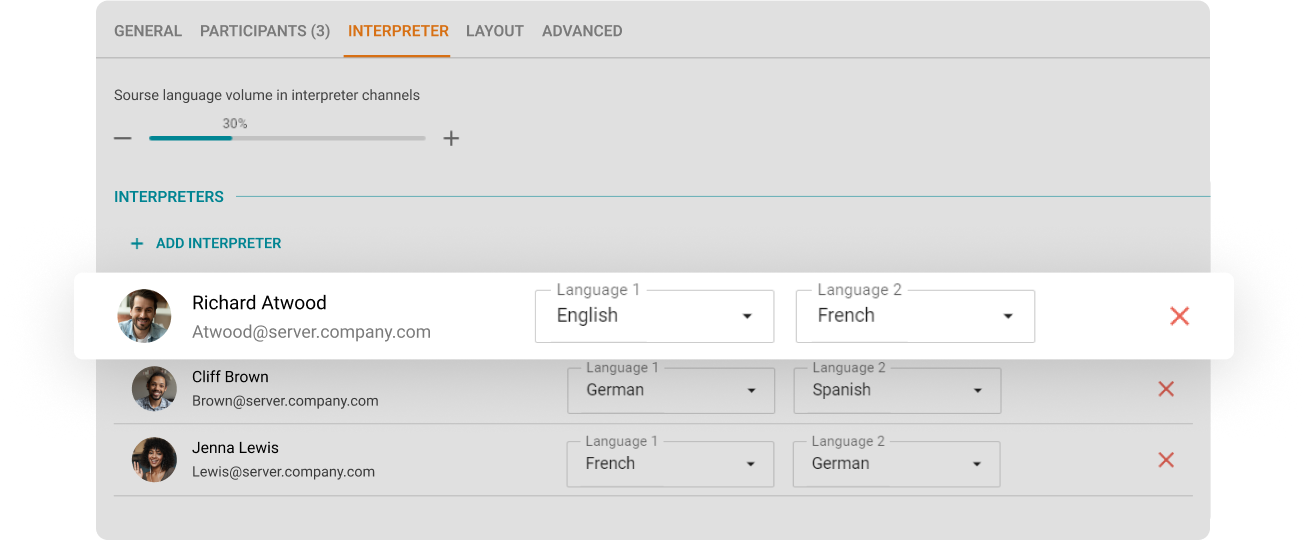
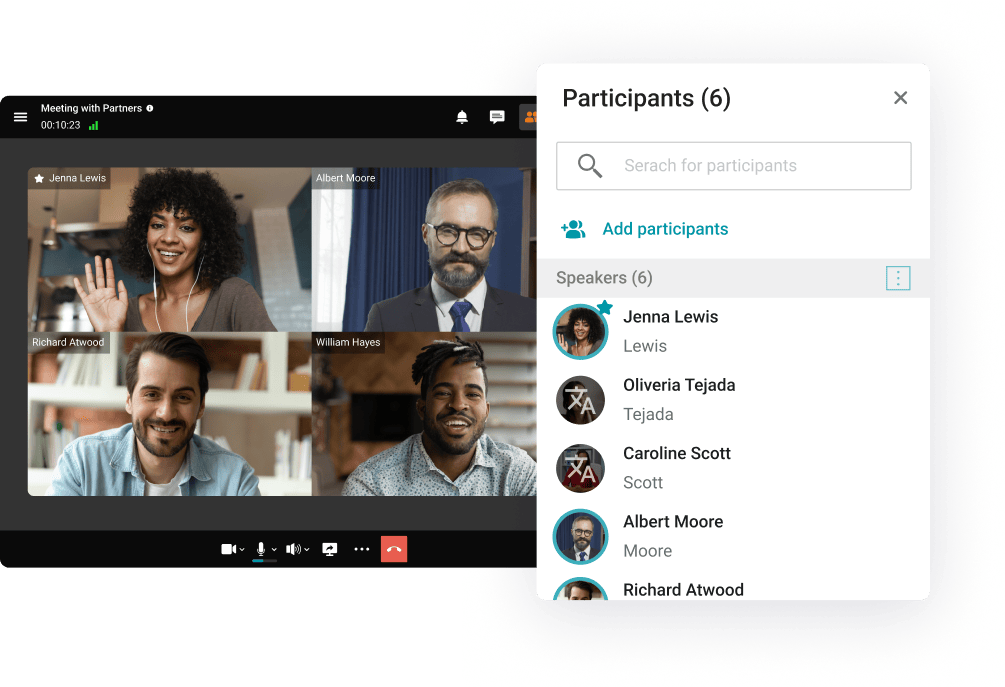
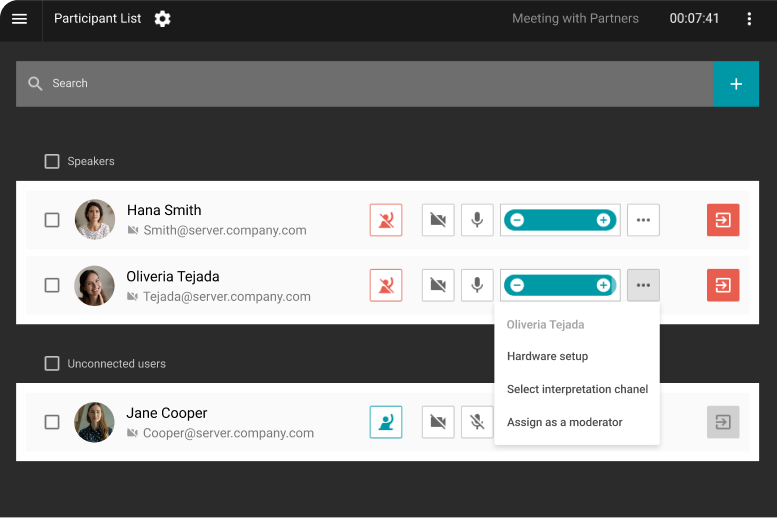
Atribua um idioma de origem e de destino para cada intérprete participante da conferência.
Os intérpretes são automaticamente ocultados do layout e só podem ser ouvidos quando a trilha de áudio apropriada é selecionada.
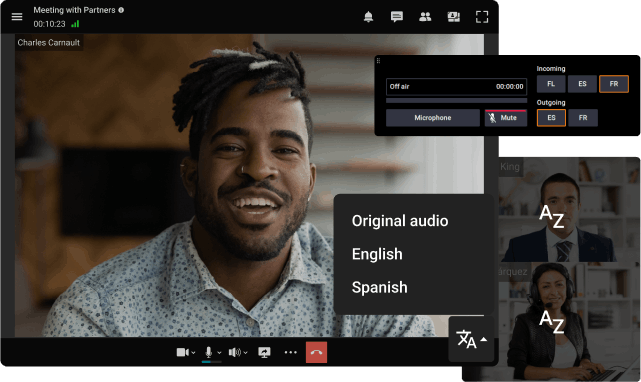
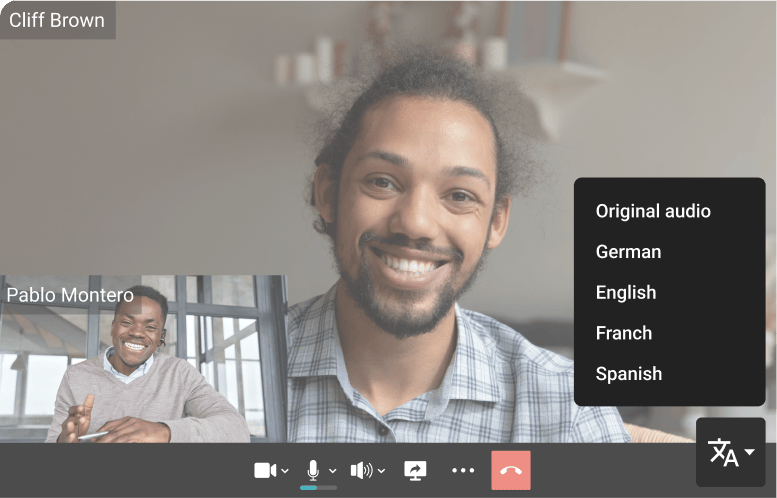
Alterne facilmente entre as faixas de áudio disponíveis trocando os intérpretes rapidamente e ajustando o volume deles!
O proprietário da conferência pode controlar as faixas de áudio dos usuários, trocá-las remotamente e ajustar o volume.
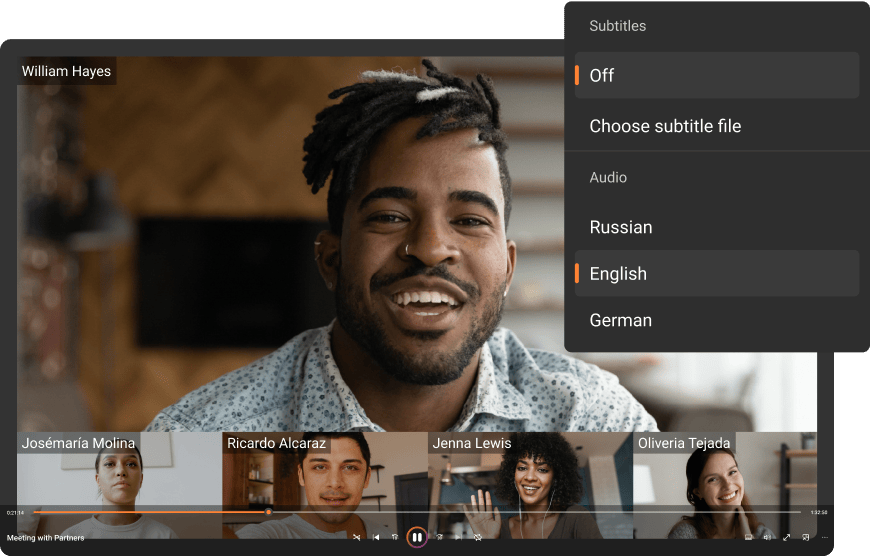
Grave conferências no servidor, seguidas da capacidade de selecionar faixas de idiomas.
Negociações online com parceiros estrangeiros
EaD em universidades internacionais
Conferências de imprensa internacionais
Sessões judiciais com o envolvimento de tradutores profissionais
Masterclass com especialistas estrangeiros
Colaboração com colegas de outros países
Experimente os recursos de ponta do TrueConf Server agora mesmo.
Interpretação é a tradução da fala por uma pessoa, na qual um especialista traduz o idioma original enquanto ouve.
A tradução simultânea envolve a tradução quase instantânea da fala do idioma original à medida que é ouvida pelo intérprete.
A interpretação remota, ou interpretação simultânea remota, é a tradução de videoconferências por intérpretes profissionais de qualquer lugar do mundo.
Para adicionar intérpretes a uma reunião online ou webinar, basta criar uma conferência agendada e atribuir o par de idiomas apropriado. Assim que a reunião online começar, os tradutores serão automaticamente adicionados à conferência, mas não serão refletidos no layout.
Para gerenciar sua função de tradutor, basta selecionar o idioma de origem necessário para posterior tradução e ligar o microfone. A aplicação também inclui um painel multilíngue especial para os tradutores poderem trabalhar confortavelmente em tempo real.
Simultaneous interpretation for video conferencing is a way to provide live language interpretation during an online meeting. Interpreters listen to the original speaker and translate the speech in real time into a separate audio channel that participants can select. In TrueConf, this workflow can be used to organize multilingual video conferences with dedicated interpretation tracks.
The host assigns interpreters to specific language pairs. Interpreters listen to the original audio and speak into dedicated interpretation channels. Participants then choose the language track they want to hear. TrueConf supports this model by allowing interpreters to work with separate language channels during a video conference.
Yes. In a video conference with multiple interpretation channels, participants can select the language track they need instead of listening only to the original speaker. In TrueConf, users can switch between available interpretation tracks during the meeting.
Yes. Different interpreters can be assigned to different source and target languages, allowing one meeting to support several interpretation channels at the same time.
Yes, if the platform supports multi-channel recording. TrueConf can preserve multiple audio tracks, which makes it possible to keep the original speech and interpreted language tracks for later use.
Simultaneous interpretation usually involves a human interpreter who translates speech live into a separate audio channel. AI real-time translation uses speech recognition and machine translation to translate automatically. These approaches solve similar language-access problems but use different workflows.
Yes. Simultaneous interpretation is commonly used for multilingual webinars, conferences and large online meetings where participants need to follow the same event in different languages. TrueConf can support this through dedicated interpretation channels within the conference.