
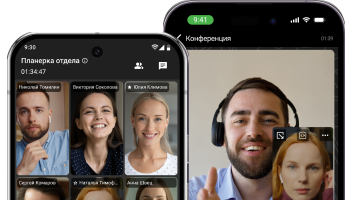
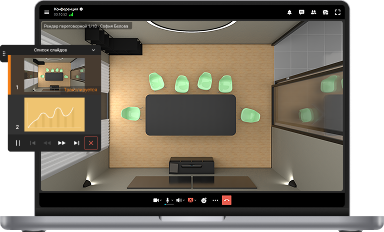


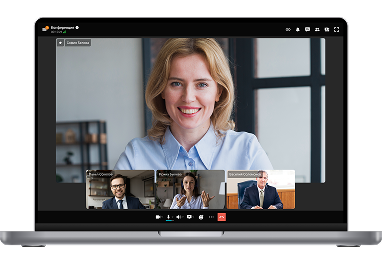
Virtuelles Meeting
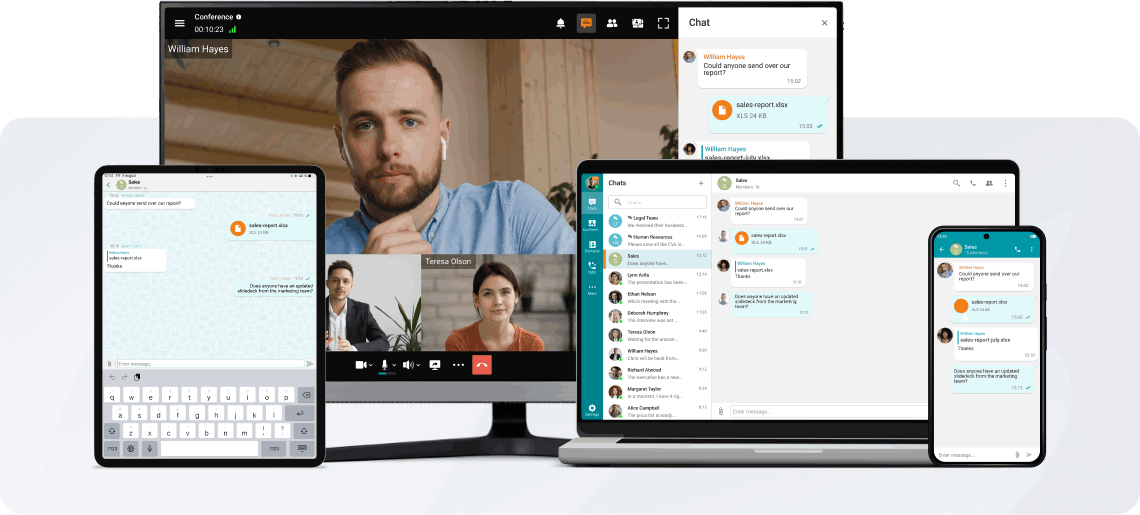
Der Verlauf des Online-Meetings liegt vollständig in Ihrer Hand! Führen Sie Videokonferenzen in einem speziellen Modus durch, in dem die Teilnehmer nur die vom Moderator ernannten Sprecher sehen und hören.
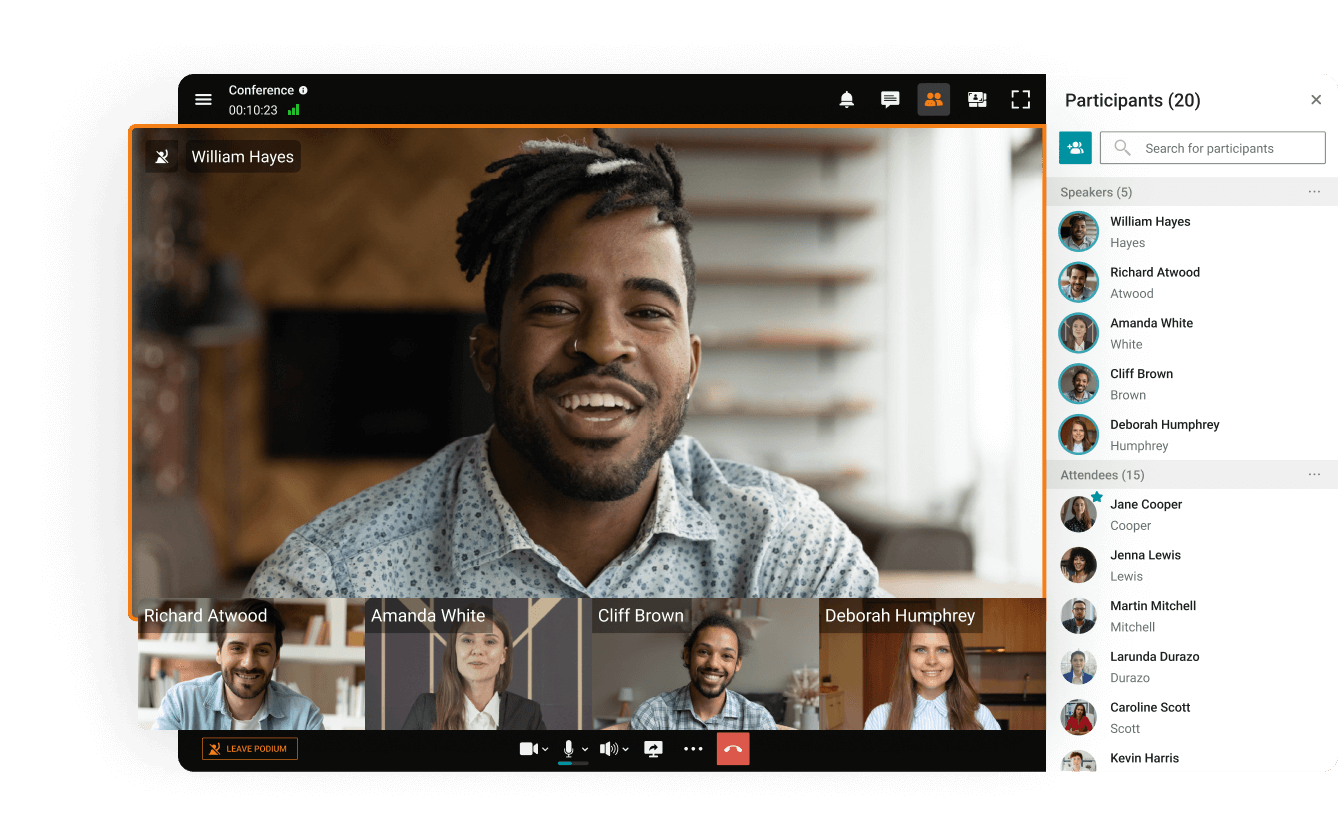

Der Verlauf des Online-Meetings liegt vollständig in Ihrer Hand! Führen Sie Videokonferenzen in einem speziellen Modus durch, in dem die Teilnehmer nur die vom Moderator ernannten Sprecher sehen und hören.
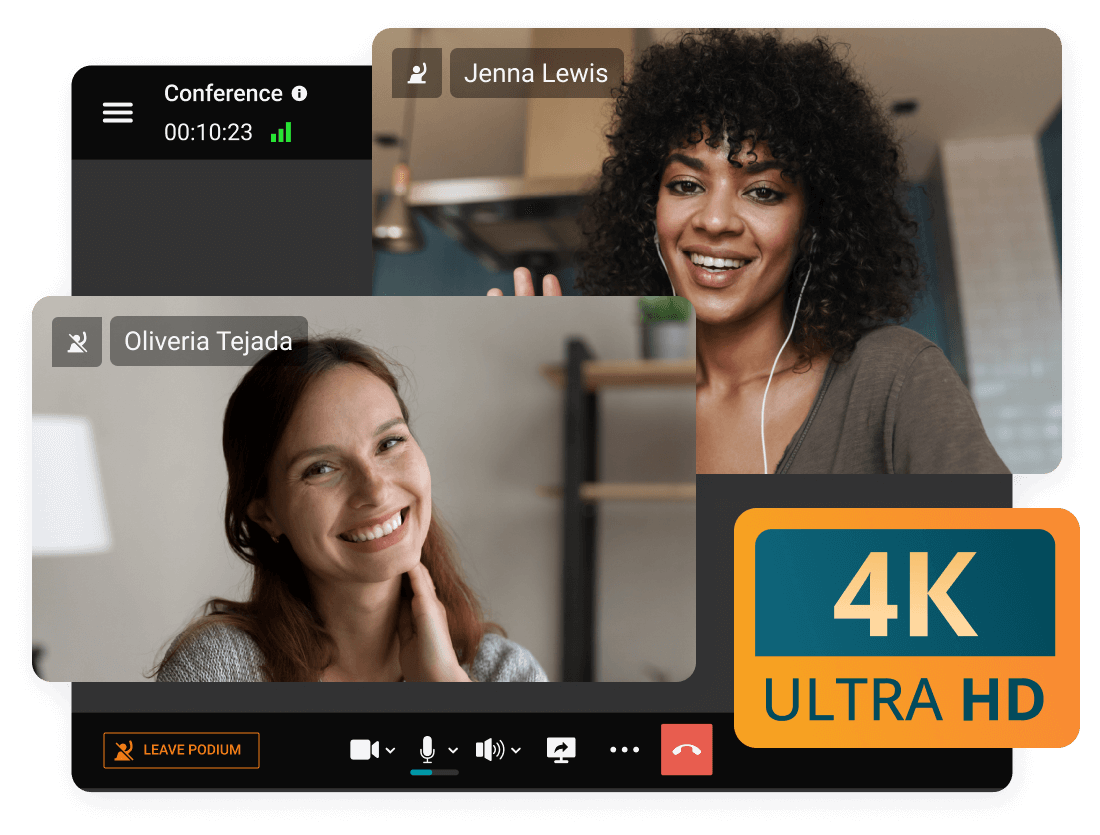
Führen Sie Eins-zu-Eins-Audio- und Videoanrufe in 4K UltraHD, kommunizieren Sie ohne Zeitbegrenzung!
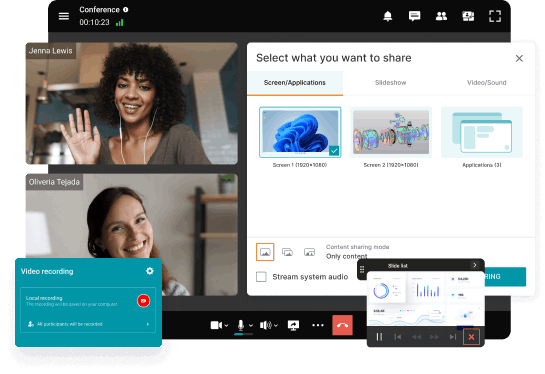
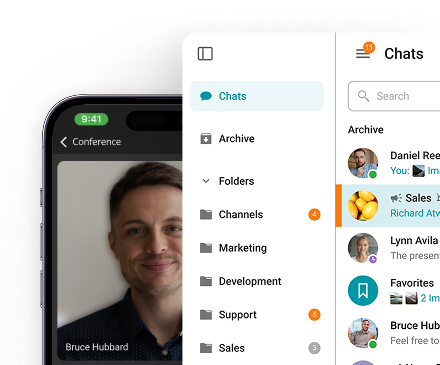
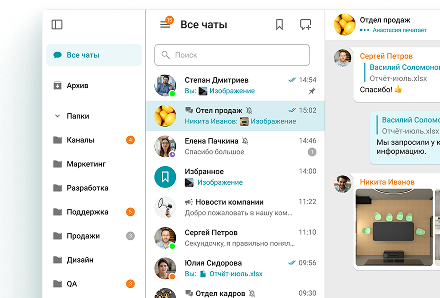
Kommunizieren Sie im Konferenzchat mit anderen Teilnehmern, teilen Sie Bilder, Präsentationen, Videos und Dokumente, steuern Sie Ihren Desktop aus der Ferne und zeichnen Sie Online-Meetings auf.
Genießen Sie fortschrittliche Kommunikationsfunktionen: Nehmen Sie an Videokonferenzen auch bei externen Geräuschen teil, verwischen, ersetzen und gestalten Sie den Hintergrund und wandeln Sie Konferenzaufzeichnungen in detaillierte Transkripte um.
Intelligente Geräusch-unterdrückung
Hintergrund verwischen und ersetzen
Transkription der Meetings
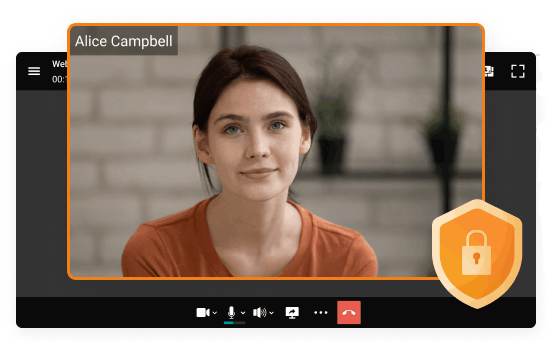
Arbeiten Sie in einem geschlossenen Netzwerk ohne Internetverbindung, mit Datenverschlüsselung und voller Kontrolle über die Kommunikation.
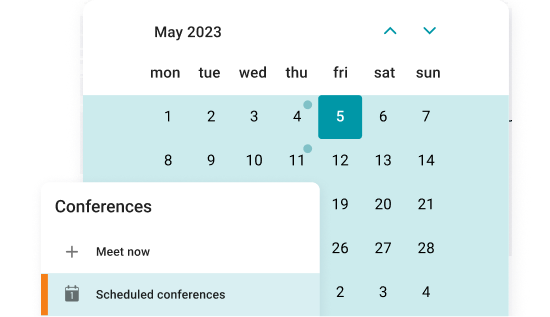
Planen Sie Videokonferenzen im Voraus — legen Sie Datum, Uhrzeit, Dauer und regelmäßigen Zeitplan für Konferenzen fest.
Anrufe annehmen und an Konferenzen auf jedem Gerät teilnehmen, um die Kontinuität der Kommunikation aufrechtzuerhalten!
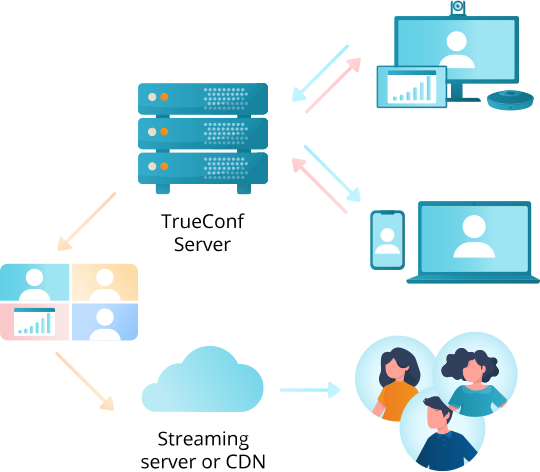
Erweitern Sie Ihr Publikum auf Millionen von Zuschauern, indem Sie Videokonferenzen über Plattformen oder CDN-Dienste mit dem RTSP-Protokoll streamen!
With TrueConf Server, you can join any meeting either from your client application or from your browser. Read our guide on how to join web meetings to learn more.
TrueConf offers four main roles, each designed to manage permissions and define responsibilities during a conference:
• Besitzer: Der Organisator des Meetings, verantwortlich für die Erstellung der Sitzung und die Verwaltung ihrer Gesamtstruktur. Der Besitzer hat die volle Kontrolle über die Teilnehmerrollen und die Konferenzeinstellungen.
• Moderators: Oversee the meeting's flow and keep discussions on track. Moderators can manage permissions, mute/unmute participants, and handle disruptive behavior.
• Speakers: Can share their audio, video, and content with all participants. Ideal for presenters, trainers, or panelists who need to actively engage the audience.
• Attendees: Passive participants who cannot share audio or video during the meeting. They can interact through chat replies and audio remarks when allowed, making this role well suited to large-scale webinars or lectures where most participants are listeners.
The conference owner or moderators can enable/disable participants' cameras and microphones from the contact's context menu. More advanced device configuration, such as selecting a specific input device or adjusting microphone sensitivity, is available in the advanced meeting management section.
Yes, TrueConf Server lets you invite SIP and H.323 room systems into your virtual meetings, bridging modern virtual meeting platforms with legacy video conferencing hardware. This means organizations can keep using existing conference-room equipment or dedicated video endpoints while adopting more advanced, feature-rich virtual meetings.
Yes, TrueConf Server administrators can schedule meetings from the TrueConf Server control panel, while TrueConf users can schedule meetings from the guest page or directly within their client applications. Learn more in our guide on how to schedule meetings.
Online meetings make it easy for people to connect and work together in real time, regardless of location. Teams can collaborate across countries, teachers can reach students far away, and families can celebrate milestones even when they're apart. Internet-based tools make these virtual get-togethers simple and remove the friction of distance.
There are several ways to hold online meetings: video and audio calls, webinars, and virtual classrooms. Teams brainstorm face-to-face on video calls, webinars bring large audiences together for shared learning, and virtual classrooms let students connect with teachers and classmates much as they would in person.
These tools have become central to how businesses stay productive, how teachers keep students engaged, and how communities stay connected in an increasingly digital world.
• Flexibility: A designer in New York and a developer in Tokyo can collaborate effortlessly without leaving their desks. Online meetings let people connect anytime, anywhere, removing the need to share a room, ideal for remote teams and busy professionals.
• Cost savings: Virtual meetings cut travel expenses like flights, hotels, and meals, freeing up budget for projects, tools, or hiring.
• Efficiency: Starting an online meeting is as easy as sharing a link. Without travel or complex logistics, teams get straight to work, whether it's a quick update or an in-depth discussion.
• Collaboration: Virtual meetings connect people across time zones, making it easy to share ideas in real time. Bringing together team members from different locations often sparks fresh ideas and creative solutions.
Virtual meetings come in different formats, each suited to specific needs:
• Audio Conferences focus on voice communication, letting people join by phone or computer audio. They're ideal for quick updates or brainstorms when video isn't necessary, or when internet connections are unreliable, for example, a manager sharing project updates or a team trading ideas during a busy day. They're simple to set up, which is why so many professionals rely on them.
• Video Conferences bring people together through live video and audio so they can meet face-to-face regardless of location. Teams can share ideas, present projects, and collaborate in real time, for instance, a team spread across cities using screen sharing to give updates or work through a problem together. These are common for team meetings, client calls, and training sessions.
• Webinars suit larger groups and focus on sharing knowledge interactively. A speaker or panel hosts the session, delivering training, insights, or information via live video, while tools like live chat, polls, and Q&A let the audience participate. Webinars are often used for product launches, professional training, and educational events, helping presenters reach people worldwide.
1. Test your equipment: Make sure your computer, camera, microphone, and internet connection are all working properly before the meeting.
2. Find a quiet location where you won't be interrupted or distracted.
3. Dress professionally, as you would for an in-person meeting. Avoid bright colors, busy patterns, or jewelry that may be distracting on camera.
4. Prepare your workspace: Keep it clean and organized, and remove any clutter that might be visible on camera.
5. Create an agenda: Share it with all participants in advance so everyone stays on track and important topics get covered.
6. Practice good video conferencing etiquette: Mute your microphone when you're not speaking, avoid multitasking, and maintain eye contact with the camera.
7. Consider a virtual background: If your workspace isn't ideal for the meeting, a virtual background can help create a professional, distraction-free environment.
Following these tips will help your meeting run smoothly and effectively.
1. Two truths and a lie: Each person shares three statements about themselves, two true and one false. Others guess which one is the lie.
2. Virtual scavenger hunt: Participants are given a list of items to find in their homes or offices within a set amount of time. A fun way to get people up and moving during the meeting.
3. Virtual backgrounds: Encourage participants to use a fun or interesting virtual background and share why they chose it.
4. Word association: Pick a word relevant to the meeting's topic and have participants share the first thing that comes to mind.
5. Never have I ever: Participants take turns naming something they've never done; anyone who has done it responds accordingly (traditionally with a drink, though a point system works just as well for a work setting).
6. Picture sharing: Ask participants to share a photo that represents their personality or interests, a great way to learn more about each other and find common ground.
Advantages
• Lower cost and effort: No travel expenses, and far less logistical overhead than in-person meetings.
• Recording and playback: Record conferences to revisit earlier discussions anytime, and share recordings with colleagues who couldn't attend.
• Multi-device access: Sign in to your account on multiple devices at once, with chat and call history automatically synced across all of them.
• Ongoing connection: Stay in touch with your team through personal and group chats before, during, and after meetings.
• Efficient content sharing: Present slides, photos, drawings, diagrams, documents, and PDFs to remote participants using TrueConf's slideshow feature.
Disadvantages
• Technical issues: Whatever video conferencing software you use, you'll occasionally run into problems: an unstable internet connection, a hardware glitch, or team members unfamiliar with the tools who need help getting set up.
• Keeping participants engaged: It can be harder to keep everyone focused than in an in-person meeting. Even with cameras on, it's easy to become passive behind a screen, especially in larger groups.
Consider these factors when evaluating a virtual meeting platform for your business:
• User-friendly: Choose software that's easy to pick up for everyone on your team, so connecting and collaborating feels as natural as speaking in person.
• Comprehensive platform: Look for one platform that covers all your needs (video conferencing, screen sharing, webinar hosting) rather than juggling several disconnected tools.
• High value, low cost: Pricing depends heavily on your business's requirements, so favor a platform with flexible pricing that lets you pay for what you actually need.
• Video calling experience: Frame rate and resolution both affect how natural a call feels. TrueConf supports 4K resolution in conferences and, on compatible cameras, up to 60 fps in point-to-point video calls, noticeably smoother than the 30 fps most competing platforms top out at, though the highest frame rates require supporting hardware and aren't guaranteed in every call type.